
 A SCHOLARLY BOOK REPOSITORY
81 start with O start with O
Even the most brilliant minds have to eat. And for some scholars, food preparation is more than just a chore; it’s a passion. In this unique culinary memoir and cookbook, renowned cultural critic Elisabeth Bronfen tells of her lifelong love affair with cooking and demonstrates what she has learned about creating delicious home meals. She recounts her cherished food memories, from meals eaten at the family table in postwar Germany to dinner parties with friends. Yet, in a thoughtful reflection on the pleasures of cooking for one, she also reveals that some of her favorite meals have been consumed alone.
Though it contains more than 250 mouth-watering recipes, Obsessed is anything but a conventional cookbook. As she shares a lifetime of knowledge acquired in the kitchen, Bronfen hopes to empower both novice and experienced home chefs to improvise, giving them hints on how to tweak her recipes to their own tastes. And unlike cookbooks that assume readers have access to an unlimited pantry, this book is grounded in reality, offering practical advice about food storage and reusing leftovers. As Bronfen serves up her personal stories and her culinary wisdom, reading Obsessed is like sitting down to a home-cooked meal with a clever friend.

“Simply superb.”
—Nation
A landmark study reconstructs the magnificent architecture of Keats’s odes beam by beam.
With the exception of Shakespeare, John Keats has garnered more critical attention than probably any other English poet, above all for his six great odes. Composed in the span of just a few months in 1819, the odes mark the high point of Keats’s all-too-short literary career, forming, as Helen Vendler puts it, “the group of works in which the English language finds an ultimate embodiment.”
Even with the mountain of criticism that precedes it, The Odes of John Keats nonetheless accomplishes something bracingly new: it reveals that the odes, typically read separately, demand to be read as a unified whole. Only when we read them together, Vendler argues, do we see how each ode builds upon, and contradicts, the one that came before it—a progression that expresses Keats’s sustained and deliberate inquiry into nature of creativity itself. From fruitless revery in “Ode on Indolence,” to successive explorations of music and mimetic art in “Ode to a Nightingale” and “Ode on a Grecian Urn,” to the final triumph of lyric poetry in “To Autumn,” each ode advances tentative theses about the relationship between truth, beauty, and sensory experience, only to subsequently overturn them from a higher vantage point.
Exquisitely attentive to the warp and weft of Keats’s “many languages,” from Greek mythology to eighteenth-century allegory, Vendler’s architectonic reading masterfully achieves criticism’s highest aim: keeping these classic poems, to borrow Keats’s own words, “forever warm and still to be enjoy’d.”


Of Spaces and Ideas provides a deeper insight into the work of two contemporary British novelists, Jim Crace and Simon Mawer, with a particular emphasis on spatial sensibility as one of the defining elements of their poetics. Drawing on a range of literary-theoretical approaches to space, the study analyzes selected novels by the two writers to demonstrate the ways in which they render space and place and, above all, the ways in which their spatial representations allow them to express the key ideas behind their stories, namely those of identity, history, and the relationship between an individual and the environment in which they live.
"Derrida's ruminations should intrigue anyone interested in Post-Structuralism. . . . . This study of Heidegger is a fine example of how Derrida can make readers of philosophical texts notice difficult problems in almost imperceptible details of those texts."—David Hoy, London Review of Books
"Will a more important book on Heidegger appear in our time? No, not unless Derrida continues to think and write in his spirit. . . . Let there be no mistake: this is not merely a brilliant book on Heidegger, it is thinking in the grand style."—David Farrell Krell, Research in Phenomenology
"The analysis of Heidegger is brilliant, provocative, elusive."—Peter C. Hodgson, Religious Studies Review

"Derrida's ruminations should intrigue anyone interested in Post-Structuralism. . . . . This study of Heidegger is a fine example of how Derrida can make readers of philosophical texts notice difficult problems in almost imperceptible details of those texts."—David Hoy, London Review of Books
"Will a more important book on Heidegger appear in our time? No, not unless Derrida continues to think and write in his spirit. . . . Let there be no mistake: this is not merely a brilliant book on Heidegger, it is thinking in the grand style."—David Farrell Krell, Research in Phenomenology
"The analysis of Heidegger is brilliant, provocative, elusive."—Peter C. Hodgson, Religious Studies Review
Just a year earlier the campus seemed immune to such disruptions. President Nixon considered it safe enough to plan an address at commencement. Yet a year later the campus erupted into a spasm of violent protest exceeding even that of traditional hot spots like Berkeley and Wisconsin. How could conditions have changed so dramatically in just a few short months?
Using contemporary news stories, long overlooked archival materials, and first-person interviews, The Ohio State University in the Sixties explores how these tensions built up over years, why they converged when they did and how they forever changed the university.
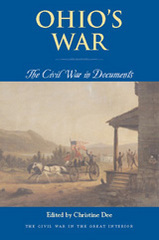
In 1860, Ohio was among the most influential states in the nation. As the third-most-populous state and the largest in the middle west, it embraced those elements that were in concert-but also at odds-in American society during the Civil War era. Ohio’s War uses documents from that vibrant and tumultuous time to reveal how Ohio’s soldiers and civilians experienced the Civil War. It examines Ohio’s role in the sectional crises of the 1850s, its contribution to the Union war effort, and the war’s impact on the state itself. In doing so, it provides insights into the war’s meaning for northern society.
Ohio’s War introduces some of those soldiers who left their farms, shops, and forges to fight for the Union. It documents the stories of Ohio’s women, who sustained households, organized relief efforts, and supported political candidates. It conveys the struggles and successes of free blacks and former slaves who claimed freedom in Ohio and the distinct wartime experiences of its immigrants. It also includes the voices of Ohioans who differed over emancipation, freedom of speech, the writ of habeas corpus, the draft, and the war’s legacy for American society.
From Ohio’s large cities to its farms and hamlets, as the documents in this volume show, the war changed minds and altered lives but left some beliefs and values untouched. Ohio’s War is a documentary history not only of the people of one state, but also of a region and a nation during the pivotal epoch of American history.

At the beginning of the twentieth century, the Austrian Empire ranked third among the world's oil-producing states (surpassed only by the United States and Russia), and accounted for five percent of global oil production. By 1918, the Central Powers did not have enough oil to maintain a modern military. How and why did the promise of oil fail Galicia (the province producing the oil) and the Empire?
In a brilliantly conceived work, Alison Frank traces the interaction of technology, nationalist rhetoric, social tensions, provincial politics, and entrepreneurial vision in shaping the Galician oil industry. She portrays this often overlooked oil boom's transformation of the environment, and its reorientation of religious and social divisions that had defined a previously agrarian population, as surprising alliances among traditional foes sprang up among workers and entrepreneurs, at the workplace, and in the pubs and brothels of new oiltowns.
Frank sets this complex story in a context of international finance, technological exchange, and Habsburg history as a sobering counterpoint to traditional modernization narratives. As the oil ran out, the economy, the population, and the environment returned largely to their former state, reminding us that there is nothing ineluctable about the consequences of industrial development.
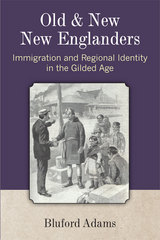
In Old and New New Englanders, Bluford Adams provides a reenvisioning of New England’s history and regional identity by exploring the ways the arrival of waves of immigrants from Europe and Canada transformed what it meant to be a New Englander during the Gilded Age. Adams’s intervention challenges a number of long-standing conceptions of New England, offering a detailed and complex portrayal of the relations between New England’s Yankees and immigrants that goes beyond nativism and assimilation. In focusing on immigration in this period, Adams provides a fresh view on New England’s regional identity, moving forward from Pilgrims, Puritans, and their descendants and emphasizing the role immigrants played in shaping the region’s various meanings. Furthermore, many researchers have overlooked the newcomers’ relationship to the regional identities they found here. Adams argues immigrants took their ties to New England seriously. Although they often disagreed about the nature of those ties, many immigrant leaders believed identification with New England would benefit their peoples in their struggles both in the United States and back in their ancestral lands.
Drawing on and contributing to work in immigration history, as well as American, gender, ethnic, and New England studies, this book is broadly concerned with the history of identity construction in the United States while its primary focus is the relationship between regional categories of identity and those based on race and ethnicity. With its interdisciplinary methodology, original research, and diverse chapter topics, the book targets both specialist and nonspecialist readers.

After the defeat and exile of Napoleon and the restoration of the Bourbons, the political climate of France was one of seething unrest, intrigue, and dissent. A clandestine and conspiratorial movement known as the Carbonari, or Charbonnerie, arose in the early 1820's with the aim of overthrowing the monarchy of Louis XVIII. Modeling itself after the Italian Carbonari, this coalition of young French republicans--bonapartists, retired army officers, junior and non-commissioned officers, and leaders of the extreme liberal wing of the Chamber of Deputies--set up cells throughout France, hoping in particular to infiltrate vulnerable army units. Old Hatreds and Young Hopes follows the movement from its beginnings to its ultimate failure, from plots to trials.
Sources of information about secret societies and political conspiracies are always scattered and complex, and often unreliable. Spitzer demonstrates that the secrets of a conspiracy and its place in the broader history of a nation can nevertheless be brought to light by evaluating one kind of evidence against another, by checking and testing government sources, particularly police documents, against such other materials as the memoirs and letters of conspirators and contemporary journalistic accounts. His book is much more than the story of the conspirators. In showing why the conspiracy developed and how it was handled, the author has illuminated the workings of the politicalsystem of the Restoration--the structure and organization of its administration and political police and the operation of political justice in its courts. He also situates the French Carbonari in the history of secret societies and radical movements in the first half of the nineteenth century and works out links with similar groups in other countries.
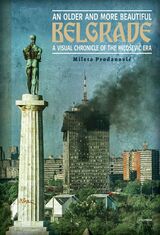
This substantial essay depicts urban collapse in an exceptionally difficult period of the Serbian capital. The author has marshalled facts, reflections, photographs and other imagesto demonstrate the transformation of Belgrade during the Milošević years. With the theoretical grounding of cultural anthropology, history studies, culture of memory, history of art, and urbanism, Mileta Prodanović considers changes to the built environment and urban landscape in the city in the 1990s. He covers many visual aspects of life with great ingenuity: shopping centers, unregulated construction and “wild” modifications of buildings, new buildings (broadcasting studios, shops, homes) that do not fit the surroundings, bad taste in home furnishings (camp, kitsch), boondoggles such as the international art center, problematic historical markers like the obelisk of the eternal flame, billboards, store displays, electoral propaganda, graffiti, grave-markers and cemetery memorials, coins and paper money, calendars, beer labels, and even religious icons (and more). All this information is provided with some critique and much implied comparison to past standards.
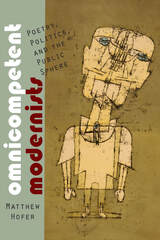
“It is difficult / to get the news from poems / yet men die miserably every day / for lack / of what is found there,” as the poet William Carlos Williams memorably declared. In Omnicompetent Modernists: Poetry, Politics, and the Public Sphere, Matthew Hofer examines, through a multilayered literary critique of interwar modernist poetry, what it might mean to get the news, and more, from a poet.
Using pragmatist ideas about the public sphere as a tool, Hofer reveals how Langston Hughes, Ezra Pound, and Mina Loy sought to use literature to both express and enable thought. In Hughes, Pound, and Loy, Hofer attends to poets whose work vigorously imagined possible new relationships between language, thinking, and public society. Each poet had different goals and used different methods, but all found both inspiration and encouragement in popular political theory. Hughes advocated for a more just vision of color and class in the United States. Pound sought to condemn those whom he associated with public harm, linguistically, socially, economically, and politically. Loy championed the “psycho-democratic” representation of women, in both public and private life.
Although Hughes, Pound, and Loy are rarely considered together, what unites these three writers is how each reconceived the public realm, and revolutionized aesthetic form to articulate those visions. Hofer combines sharp intellectual historiography with rigorous literary criticism and the result is a study that reinvigorates both the poems and poets under consideration and speaks to the immense power of language in manipulating public opinion—with pertinent implications for the politics of the present.
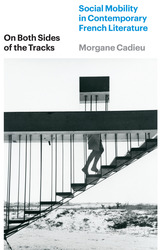
Social climbers have often been the core characters of novels. Their position between traditional tiers in society makes them touchstones for any political and literary moment, including our own. Morgane Cadieu’s study looks at a certain kind of social climber in contemporary French literature whom she calls the parvenant. Taken from the French term parvenu, which refers to one who is newly arrived, a parvenant is a character who shuttles between social groups. A parvenant may become part of a new social class but devises literary ways to come back, constantly undoing any fixed idea of social affiliation.
Focusing on recent French novels and autobiographies, On Both Sides of the Tracks speaks powerfully to issues of emancipation and class. Cadieu offers a fresh critical look at tales of social mobility in the work of Annie Ernaux, Kaoutar Harchi, Michel Houellebecq, Édouard Louis, and Marie NDiaye, among others, shedding fascinating light on upward mobility today as a formal, literary problem.
Descartes has long been associated with mind-body dualism, but Marion argues here that this is a historical misattribution, popularized by Malebranche and popular ever since both within the academy and with the general public. Actually, Marion shows, Descartes held a holistic conception of body and mind. He called it the meum corpus, a passive mode of thinking, which implies far more than just pure mind—rather, it signifies a mind directly connected to the body: the human being that I am. Understood in this new light, the Descartes Marion uncovers through close readings of works such as Passions of the Soul resists prominent criticisms leveled at him by twentieth-century figures like Husserl and Heidegger, and even anticipates the non-dualistic, phenomenological concepts of human being discussed today. This is a momentous book that no serious historian of philosophy will be able to ignore.

Honorable Mention, 2025 PCA Emily Toth Award For Best Single Work In Women’s Studies
Finalist, 2025 Mystery Writers of America's Edgar Awards, Best Critical/Biographical Category
Finalist, Bouchercon New Orleans 2025 Anthony Awards, Best Critical/Non-Fiction
Nominated for the 2025 Macavity Awards, Best Mystery-related Nonfiction/Critical
Ashley Lawson’s On Edge presents a new picture of postwar American literature, arguing that biases against genre fiction have unfairly disadvantaged the legacies of authors like Shirley Jackson, Patricia Highsmith, and Leigh Brackett. Each of these women navigated a male-dominated postwar publishing world without compromising their values. Their category-defying treatment of gender roles and genre classifications created suspense in their work that spoke to the tensions of the “Age of Anxiety.” Lawson engages with foundational voices in American literature, genre theory, and feminism to argue that, by merging the dominant mode of literary realism with fantastical or heightened elements, Brackett, Jackson, and Highsmith responded to the big questions of their era with startling and unnerving answers. By elevating genre play to a marker of literary skill, Lawson contends, we can secure these writers a more prominent place within the canon of midcentury American literature and open the door for the recovery of their similarly innovative peers.
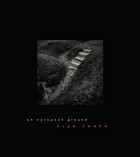
Cohen's images achieve a solemn beauty even as they engage history at its most topical. Pictures of trenches and bunkers at the battlefields of Somme and Verdun explore the tension between the violence of the past and the inscrutability of its remnants. Photographs from the grounds of Dachau and Auschwitz solicit a provocative dialogue between the ordinariness of these sites today and their haunting memory. They teach us, as the New Art Examiner notes, "that the living perceptual connection to the Holocaust is vanishing." Images of the Berlin Wall show only the footprint of the barricade that once separated two hostile ideologies. They record the physical erosion and looming disappearance of the Wall while capturing its reappearance as a memorialized abstraction.
Accompanying the photographs in On European Ground are essays by Sander Gilman and Jonathan Bordo, as well as an interview with Cohen by critic Roberta Smith of the New York Times. The essays present both an introduction to and aesthetic analysis of Cohen's work, while the interview discusses the intractable problems of history and memory that his photographs so uniquely capture.
“Vendler is a commentator almost clairvoyant...Her book ought to be read, with care and gratitude, by every reader of Stevens, for no critic before her has understood so well his major poems.”
—Harold Bloom, New York Times Book Review
A virtuosic reading of Stevens’s most difficult poems brings their austere beauty and elaborately mannered movements to life.
If “poetry is the subject of the poem,” as Wallace Stevens once declared, so too is the poet. A poet’s temperament, his attractions and repulsions, his sense of the world: all are integral to his style. And while Stevens’s short poems are perhaps his most anthologized, it is only in his longer works that we find his unique sensibilities on full display.
Tracing the great modernist’s development through fourteen poems, from “Sunday Morning” (1915) to “An Ordinary Evening in New Haven” (1949), Helen Vendler reveals the longer poems as the proving grounds where Stevens tested formal innovations and discovered his own formidable strengths. Chief among these, she argues, is a gift for equivocation. Neither ascetic nor hedonist, neither solipsist aesthete nor engaged poet of the social, Stevens “trembles always at halfway points.” He departs from his romantic forbears, deprecating the pure imagination by letting flights of poetic fancy degenerate into intentional decadence and triviality. But he finds desperate clutching at “things as they are” equally fruitless: “endless struggle with fact” is the poet’s inevitable lot. From this ambivalence springs a whole world of grammatical and syntactic innovation, from his ambiguous use of tense to the welter of qualifications that seem to thwart every affirmative declaration.
An unsurpassed classic in the canon of Stevens criticism, On Extended Wings gives us the full sweep his of his oeuvre—from the somber to the whimsical, from high stoic elegy to grotesque comedy—as no one but the brilliant Helen Vendler can.
“Vendler is a commentator almost clairvoyant...Her book ought to be read, with care and gratitude, by every reader of Stevens, for no critic before her has understood so well his major poems.”
—Harold Bloom, New York Times Book Review
A virtuosic reading of Stevens’s most difficult poems brings their austere beauty and elaborately mannered movements to life.
If “poetry is the subject of the poem,” as Wallace Stevens once declared, so too is the poet. A poet’s temperament, his attractions and repulsions, his sense of the world: all are integral to his style. And while Stevens’s short poems are perhaps his most anthologized, it is only in his longer works that we find his unique sensibilities on full display.
Tracing the great modernist’s development through fourteen poems, from “Sunday Morning” (1915) to “An Ordinary Evening in New Haven” (1949), Helen Vendler reveals the longer poems as the proving grounds where Stevens tested formal innovations and discovered his own formidable strengths. Chief among these, she argues, is a gift for equivocation. Neither ascetic nor hedonist, neither solipsist aesthete nor engaged poet of the social, Stevens “trembles always at halfway points.” He departs from his romantic forbears, deprecating the pure imagination by letting flights of poetic fancy degenerate into intentional decadence and triviality. But he finds desperate clutching at “things as they are” equally fruitless: “endless struggle with fact” is the poet’s inevitable lot. From this ambivalence springs a whole world of grammatical and syntactic innovation, from his ambiguous use of tense to the welter of qualifications that seem to thwart every affirmative declaration.
An unsurpassed classic in the canon of Stevens criticism, On Extended Wings gives us the full sweep his of his oeuvre—from the somber to the whimsical, from high stoic elegy to grotesque comedy—as no one but the brilliant Helen Vendler can.
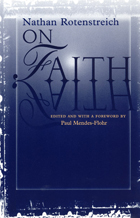
Rotenstreich's phenomenological study will be of great importance for religious scholars as well as for philosophers.
Nathan Rotenstreich (1913-93) was professor of philosophy at the Hebrew University of Jerusalem. He was elected to the Israel Academy of Sciences and Humanities, and his works include Jews and German Philosophy and Reason and Its Manifestations: A Study of Kant and Hegel.
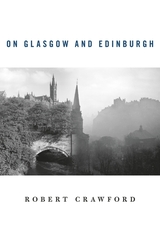
Edinburgh and Glasgow enjoy a famously scratchy relationship. Resembling other intercity rivalries throughout the world, from Madrid and Barcelona, to Moscow and St. Petersburg, to Beijing and Shanghai, Scotland’s sparring metropolises just happen to be much smaller and closer together—like twin stars orbiting a common axis. Yet their size belies their world-historical importance as cultural and commercial capitals of the British Empire, and the mere forty miles between their city centers does not diminish their stubbornly individual nature.
Robert Crawford dares to bring both cities to life between the covers of one book. His story of the fluctuating fortunes of each city is animated by the one-upping that has been entrenched since the eighteenth century, when Edinburgh lost parliamentary sovereignty and took on its proud wistfulness, while Glasgow came into its industrial promise and defiance. Using landmarks and individuals as gateways to their character and past, this tale of two cities mixes novelty and familiarity just as Scotland’s capital and its largest city do. Crawford gives us Adam Smith and Walter Scott, the Scottish Enlightenment and the School of Art, but also tiny apartments, a poetry library, Spanish Civil War volunteers, and the nineteenth-century entrepreneur Maria Theresa Short. We see Glasgow’s best-known street through the eyes of a Victorian child, and Edinburgh University as it appeared to Charles Darwin.
Crawford's lively account, drawing on a wealth of historical and literary sources, affirms what people from Glasgow and Edinburgh have long doubted—that it is possible to love both cities at the same time.

On Internal War reviews the contrasting theory and practice in Soviet and American approaches to their competition in the Third World and relates them to indigenous causes of internal wars. Odom also integrates the military dimensions of insurgencies with external influences and internal politics. Drawing on political development theory, he underscores the sources of instability in Third World states that make insurgencies more likely and offers ways to assess the prospects for democracy in specific cases.
The centerpiece of the study is a practical application of the author’s analysis to three case studies—El Salvador, Guatemala, and the Philippines—and a regional assessment of the Middle East. Odom provides no panaceas but suggests that more promising strategies can be devised.
This volume—the second in a series—leaves behind natural science themes to embrace freedom, power, and history, which, McKeon argues, lay out the whole field of human action. The authors McKeon considers—Hobbes, Machiavelli, Spinoza, Kant, and J. S. Mill—show brilliantly how philosophic methods work in action, via analyses that do not merely reduce or deconstruct meaning, but enhance those texts by reconnecting them to the active history of philosophy and to problems of ethics, politics, and history. The waves of modernism and post-modernism are receding. Philosophic pluralism is now available, fully formulated, in McKeon’s work, spreading from the humanities to the social sciences.


An incisive, unified account of modern poetry in the Western tradition, arguing that the emergence of the lyric as a dominant verse style is emblematic of the age of the individual.
Between the end of the eighteenth century and the beginning of the twentieth, poetry in the West was transformed. The now-common idea that poetry mostly corresponds with the lyric in the modern sense—a genre in which a first-person speaker talks self-referentially—was foreign to ancient, medieval, and Renaissance poetics. Yet in a relatively short time, age-old habits gave way. Poets acquired unprecedented freedom to write obscurely about private experiences, break rules of meter and syntax, use new vocabulary, and entangle first-person speakers with their own real-life identities. Poetry thus became the most subjective genre of modern literature.
On Modern Poetry reconstructs this metamorphosis, combining theoretical reflections with literary history and close readings of poets from Giacomo Leopardi to Louise Glück. Guido Mazzoni shows that the evolution of modern poetry involved significant changes in the way poetry was perceived, encouraged the construction of first-person poetic personas, and dramatically altered verse style. He interprets these developments as symptoms of profound historical and cultural shifts in the modern period: the crisis of tradition, the rise of individualism, the privileging of self-expression and its paradoxes. Mazzoni also reflects on the place of poetry in mass culture today, when its role has been largely assumed by popular music.
The result is a rich history of literary modernity and a bold new account of poetry’s transformations across centuries and national traditions.
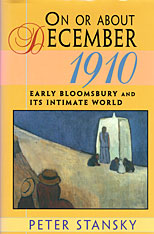
On or about December 1910 human character changed, Virginia Woolf remarked, and well she might have. The company she kept, the Bloomsbury circle, took shape before the coming of World War I, and would have a lasting impact on English society and culture after the war. This book captures the dazzling world of Bloomsbury at the end of an era, and on the eve of modernism.
Peter Stansky depicts the vanguard of a rising generation seizing its moment. He shows us Woolf in that fateful year, in the midst of an emotional breakdown, reaching a turning point with her first novel, The Voyage Out, and E. M. Forster, already a success, offering Howards End and acknowledging his passion for another man. Here are Roger Fry, prominent art critic and connoisseur, remaking tradition with the epochal exhibition “Manet and the Post-Impressionists”; Vanessa Bell and Duncan Grant beginning their most interesting phase as artists; Lytton Strachey signing the contract for his first book; and John Maynard Keynes entering a significant new stage in his illustrious career.
Amid the glittering opulence and dismal poverty, the swirl of Suffragists, anarchists, agitators, and organizers, Stansky—drawing upon his historical and literary skills—brings the intimate world of the Bloomsbury group to life. Their lives, relationships, writings, and ideas entwine, casting one member after another in sharp relief. Even their Dreadnought Hoax, a trick played on the sacred institution of the navy, reveals their boldness and esprit. The picture Stansky presents, with all its drama and detail, encompasses the conflicts and sureties of a changing world of politics, aesthetics, and character.

Available for the first time in English: the complete and annotated transcripts of Deleuze’s 1981 seminars on painting
From 1970 until 1987, Gilles Deleuze held a weekly seminar at the Experimental University of Vincennes and, starting in 1980, at Saint-Denis. In the spring of 1981, he began a series of eight seminars on painting and its intersections with philosophy. The recorded sessions, newly transcribed and translated into English, are now available in their entirety for the first time. Extensively annotated by philosopher David Lapoujade, On Painting illuminates Deleuze’s thinking on artistic creation, significantly extending the lines of thought in his book Francis Bacon.
Through paintings and writing by Rembrandt, Delacroix, Turner, Cézanne, Van Gogh, Klee, Pollock, and Bacon, Deleuze explores the creative process, from chaos to the pictorial fact. The introduction and use of color feature prominently as Deleuze elaborates on artistic and philosophical concepts such as the diagram, modulation, code, and the digital and the analogical. Through this scrutiny, he raises a series of profound and stimulating questions for his students: How does a painter ward off grayness and attain color? What is a line without contour? Why paint at all?
Written and thought in a rhizomatic manner that is thoroughly Deleuzian—strange, powerful, and novel—On Painting traverses both the conception of art history and the possibility of color as a philosophical concept.
Retail e-book files for this title are screen-reader friendly with images accompanied by short alt text and/or extended descriptions.
Eze draws on an extraordinary command of Western philosophical thought and a deep knowledge of African philosophy and cultural traditions. He explores models of rationality in the thought of philosophers from Aristotle, René Descartes, Francis Bacon, and Thomas Hobbes to Noam Chomsky, Richard Rorty, Hilary Putnam, and Jacques Derrida, and he considers portrayals of reason in the work of the African thinkers and novelists Chinua Achebe, Ngugi wa Thiong’o, and Wole Soyinka. Eze reflects on contemporary thought about genetics, race, and postcolonial historiography as well as on the interplay between reason and unreason in the hearings of South Africa’s Truth and Reconciliation Commission. He contends that while rationality may have a foundational formality, any understanding of its foundation and form is dynamic, always based in historical and cultural circumstances.
In this volume, the extraordinary nature and extent of Robert Antelme's accomplishment, and of the reverberations he set in motion in French life and literature, finds eloquent expression. The pieces Antelme wrote for journals—including essays on "principles put to the test," man as the "basis of right," and the question of revenge—appear here alongside appreciations of The Human Race by authors from Perec to Maurice Blanchot to Sarah Kofman. Also included are Antelme's personal recollections and interviews with, among others, Dionys Mascolo (who brought Antelme back from Dachau), Marguerite Duras (Antelme's wife, who tells of his return from Germany), and Mitterand.
Also available: Antelme's The Human Race
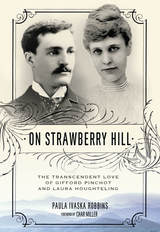
At its core, Paula Ivaska Robbins’s On Strawberry Hill: The Transcendent Love of Gifford Pinchot and Laura Houghteling is a human interest story that cuts a neat slice across nineteenth-century America by bringing into juxtaposition a wide array of topics germane to the period—the national fascination with spiritualism, the death scourge that was tuberculosis, the rise of sanitariums and tourism in the southern highlands, the expansion of railroad travel, the rage for public parklands and playgrounds, and the development of professional forestry and green preservation―all through the very personal love story of two young blue bloods.
Born into a wealthy New York family, Gifford Pinchot (1865–1946) served two terms as Pennsylvania’s governor and was the first chief of the US Forest Service, which today manages 192 million acres across the country. Pinchot also created the Society of American Foresters, the organization that oversees his chosen profession, and the Yale School of Forestry and Environmental Studies, the oldest forestry school in America. Ultimately, he and his friend President Theodore Roosevelt made forestry the focus of a national land conservation movement.
But before these accomplishments, Gifford Pinchot fell in love with Laura Houghteling, daughter of the head of the Chicago Board of Trade, while she recuperated from “consumption” at Strawberry Hill, the family retreat in Asheville, North Carolina. In his twenties at the time and still a budding forester, Pinchot was working just across the French Broad River at George Vanderbilt’s great undertaking, the Biltmore Estate, when the young couple’s relationship blossomed. Although Laura would eventually succumb to the disease, their brief romance left an indelible mark on Gifford, who recorded his ongoing relationship, and mental conversations, with Laura in his daily diary entries long after her death. He steadfastly remained a bachelor for twenty years while accomplishing the major highlights of his career.
This poignant book focuses on that phenomenon of devotion and inspiration, providing a unique window into the private practice of spiritualism in the context of Victorian mores, while offering new perspectives on Pinchot and early American forestry. In addition, preeminent Pinchot biographer Char Miller contributes an excellent foreword.

A new globally significant relationship arising after the break-up of the Soviet Union is the main topic of this unparalleled volume – the geopolitical link between Russia, Ukraine and the three bordering ‘Central European’ states, Hungary, Poland and Slovakia. On the Edge is a path-breaking analysis of this triangular relationship with an in-depth focus on economic, political and, more importantly, security issues.
The expansion of NATO up to Ukraine’s borders is likely to leave Ukraine in a delicate position vis-à-vis Russia. On the Edge addresses key questions, such as: how are events in Ukraine affecting the security calculations of the Central European states; Central European relations with Russia and NATO; and relations among Central European states themselves? The volume examines what Central European states can do to solidify Ukraine’s independence and help it avoid international isolation.
On the Edge gives a Central European perspective on all these issues and suggests concrete forms of co-operation.
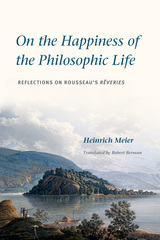
On the Happiness of the Philosophic Life presents Heinrich Meier’s confrontation with Rousseau’s Rêveries, the philosopher’s most beautiful and daring work, as well as his last and least understood. Bringing to bear more than thirty years of study of Rousseau, Meier unfolds his stunningly original interpretation in two parts.
The first part of On the Happiness of the Philosophic Life approaches the Rêveries not as another autobiographical text in the tradition of the Confessions and the Dialogues, but as a reflection on the philosophic life and the distinctive happiness it provides. The second turns to a detailed analysis of a work referred to in the Rêveries, the “Profession of Faith of the Savoyard Vicar,” which triggered Rousseau’s political persecution when it was originally published as part of Émile. In his examination of this most controversial of Rousseau’s writings, which aims to lay the foundations for a successful nonphilosophic life, Meier brings to light the differences between natural religion as expressed by the Vicar and Rousseau’s natural theology. Together, the two reciprocally illuminating parts of this study provide an indispensable guide to Rousseau and to the understanding of the nature of the philosophic life.
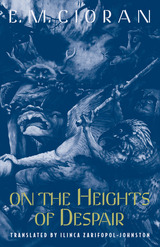
On the Heights of Despair shows Cioran's first grappling with themes he would return to in his mature works: despair and decay, absurdity and alienation, futility and the irrationality of existence. It also presents Cioran as a connoisseur of apocalypse, a theoretician of despair, for whom writing and philosophy both share the "lyrical virtues" that alone lead to a metaphysical revelation.
"No modern writer twists the knife with Cioran's dexterity. . . . His writing . . . is informed with the bitterness of genuine compassion."—Bill Marx, Boston Phoenix
"The dark, existential despair of Romanian philosopher Cioran's short meditations is paradoxically bracing and life-affirming. . . . Puts him in the company of Nietzsche and Kierkegaard."—Publishers Weekly, starred review
"This is self-pity as epigram, the sort of dyspeptic pronouncement that gets most people kicked out of bed but that has kept Mr. Cioran going for the rest of his life."—Judith Shulevitz, New York Times Book Review
Estonia is perhaps the only country in Europe that lacks a comprehensive history of its Jewish minority. Spanning over 150 years of Estonian Jewish history, On the Margins is a truly unique book. Rebuilding a life beyond so-called Pale of Jewish Settlement in the Russian Empire, the Jewish cultural autonomy in interwar Estonia, and the trauma of Soviet occupation of 1940–41 are among the issues addressed in the book but most profoundly, the book wrestles with the subject of the Holocaust and its legacy in Estonia.
Specifically, it examines the quasi-legal system of murder instituted in Nazi-occupied Estonia, confiscation of Jewish property, and Jewish forced labor camps and develops an analysis of the causes of collaboration during the Holocaust. The book also explores the dynamics of war crimes trials in the Soviet Union since the 1960s and so-called denaturalization trials in the United States in the 1980s. The haunting memory of Soviet and Nazi rule, the book concludes, prevents a larger segment of today’s Estonian population from facing up to the Holocaust and the universal message that it carries.E
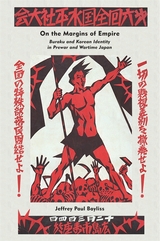
Two of the largest minority groups in modern Japan—Koreans, who emigrated to the metropole as colonial subjects, and a social minority known as the Burakumin, who descended from former outcastes—share a history of discrimination and marginalization that spans the decades of the nation’s modern transformation, from the relatively liberal decade of the 1920s, through the militarism and nationalism of the 1930s, to the empire’s demise in 1945.
Through an analysis of the stereotypes of Koreans and Burakumin that were constructed in tandem with Japan’s modernization and imperial expansion, Jeffrey Bayliss explores the historical processes that cast both groups as the antithesis of the emerging image of the proper Japanese citizen/subject. This study provides new insights into the majority prejudices, social and political movements, and state policies that influenced not only their perceived positions as “others” on the margins of the Japanese empire, but also the minorities’ views of themselves, their place in the nation, and the often strained relations between the two groups.

In the beginning, they rallied behind Hitler in the national interest of Germany; in the end, they sacrificed their lives to assassinate him. A history of German resistance to Hitler in high places, this book offers a glimpse into one of the most intractable mysteries. Why did high-ranking army officers, civil servants, and religious leaders support Hitler? Why did they ultimately turn against him? What transformed these unlikely men, most of them elitist, militaristic, and fiercely nationalistic, into martyrs to a universal ideal?
The resisters in On the Road to the Wolf's Lair are not the singular souls doomed to failure by the massive Nazi machinery, but those who emerged from the Third Reich itself--those people whose cultural, administrative, and military positions allowed them, ultimately, to form a systematic, organized opposition to the Nazi regime. These were people with a vested interest in the Third Reich, and their slow and painful awakening to its evils makes a dramatic story, marked as much by temporizing and compromise, vacillation and reluctance--a resistance to conscience--as by the intrigue and heroics of political resistance that finally emerged. Hamerow follows these men as, one by one, they find themselves overwhelmed by guilt and contrition over their support of a murderous regime. He shows how their awakened moral reckonings and higher interests overrode lifetime habits and disciplines on the road to "the wolf's lair."
The result is an unsparing history of the German resistance to Hitler--one where the players emerge for the first time as real people with complex motives and evolving characters. Almost a history of the possibility of an emerging collective moral conscience within a destructive environment, the book adds to our understanding of the fall of the Third Reich and of the task of history itself.

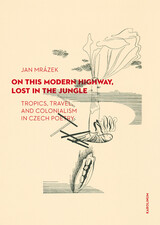
In 1926, the Communist avant-garde poet Konstantin Biebl (1898–1951) traveled from Czechoslovakia to the Dutch East Indies. In the writings from his journal—texts simultaneously poetic and comic—both landlocked Bohemia and the colonized tropical islands are seen in disorienting new perspectives, like “mirrors looking at themselves in each other.”
Jan Mrázek’s On This Modern Highway, Lost in the Jungle takes us on a journey of our own, crisscrossing Biebl’s life and work—with particular attention to his travel writing—as they mirror Mrázek’s own experiences as a multinational academic: a Prague conservatory graduate, educated at Michigan and Cornell, and now a scholar of Indonesia living in Singapore. Biebl’s writings are also the book’s point of departure for a broader exploration of the intersections of travel and poetry, issues of colonial and social injustice, and the representation of otherness in the Czech literary and visual imagination. In its attention to how poetic travel reflects the Czech historical experience in the shadow of imperial nations, Mrázek’s book elevates scholarly reflection on literary travel, modernity, and colonialism to a new level.
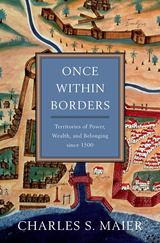
Throughout history, human societies have been organized preeminently as territories—politically bounded regions whose borders define the jurisdiction of laws and the movement of peoples. At a time when the technologies of globalization are eroding barriers to communication, transportation, and trade, Once Within Borders explores the fitful evolution of territorial organization as a worldwide practice of human societies. Master historian Charles S. Maier tracks the epochal changes that have defined territories over five centuries and draws attention to ideas and technologies that contribute to territoriality’s remarkable resilience.
Territorial boundaries transform geography into history by providing a framework for organizing political and economic life. But properties of territory—their meanings and applications—have changed considerably across space and time. In the West, modern territoriality developed in tandem with ideas of sovereignty in the seventeenth century. Sovereign rulers took steps to fortify their borders, map and privatize the land, and centralize their sway over the populations and resources within their domain. The arrival of railroads and the telegraph enabled territorial expansion at home and abroad as well as the extension of control over large spaces. By the late nineteenth century, the extent of a nation’s territory had become an index of its power, with overseas colonial possessions augmenting prestige and wealth and redefining territoriality.
Turning to the geopolitical crises of the twentieth century, Maier pays close attention to our present moment, asking in what ways modern nations and economies still live within borders and to what degree our societies have moved toward a post-territiorial world.
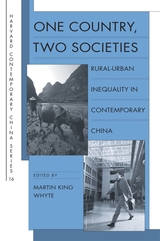
This timely and important collection of original essays analyzes China’s foremost social cleavage: the rural–urban gap. It is now clear that the Chinese communist revolution, though professing dedication to an egalitarian society, in practice created a rural order akin to serfdom, in which 80 percent of the population was effectively bound to the land. China is still struggling with that legacy. The reforms of 1978 changed basic aspects of economic and social life in China’s villages and cities and altered the nature of the rural-urban relationship. But some important institutions and practices have changed only marginally or not at all, and China is still sharply divided into rural and urban castes with different rights and opportunities in life, resulting in growing social tensions.
The contributors, many of whom conducted extensive fieldwork, examine the historical background of rural–urban relations; the size and trend in the income gap between rural and urban residents in recent years; aspects of inequality apart from income (access to education and medical care, the digital divide, housing quality and location); experiences of discrimination, particularly among urban migrants; and conceptual and policy debates in China regarding the status and treatment of rural residents and urban migrants.
Through compelling personal accounts and family correspondence, One Step Ahead documents Alfred Feldman’s harrowing flight into exile as he and his family fled the pogroms that flooded across Nazi-occupied Europe. It is a memoir of horror and hope recounted by a man who survived the organized terror of Hitler’s "Final Solution" as it destroyed entire generations of European Jewish life within ten catastrophic years in the mid-twentieth century. Feldman’s memoir conveys the searing pain that has never left him, while demonstrating the triumphant humanity of a survivor.
Feldman vividly describes the impact of the escalating anti-Semitic hatred and violence in Germany during the 1930s, the impact of the notorious Nuremberg Laws in 1935, and the terrifying Kristallnacht pogrom in 1938. By age sixteen, Feldman was living with his parents and three younger sisters in Antwerp, Belgium, during the 1939 German invasions of Poland, marking the start of World War II. In the face of increasing persecution, Feldman’s extended family scattered over the globe in a desperate attempt to remain one step ahead of their Nazi pursuers.
Recalling his life on the run, Feldman describes what few survivors have chosen to write about: the Vichy raids of August 26, 1942; the French labor brigades; the Comité Dubouchage; and life in super-vised residence in France under the Italians. While in the south of France, Feldman endured food shortages and Nazi anti-Semitic measures, beginning with work camps and culminating in the deportation and ultimate death of his mother and sisters at Auschwitz.
To evade the Germans, Feldman and his father fled into the Italian Alps in September of 1943, hiding between the Allies and the Germans. Aided by local villagers, the Feldmans survived precariously for over a year and a half, along with other Jewish refugees, until that region was liberated. Only then, and only gradually, did Feldman manage to piece together the fate of his surviving family and learn at last of the death of his mother and sisters.
Now, as an adult, Alfred Feldman has retraced his escape and exile, taking his wife and children to his hometown in Germany, the mountains in Italy, and Montagnac, where a plaque commemorates his mother and sisters.
Focusing on the concept of personal identity, Ricoeur develops a hermeneutics of the self that charts its epistemological path and ontological status.
Agreeing with Marx that ontology is production and production is ontology, Nishida in these three essays—"Expressive Activity" (1925), "The Standpoint of Active Intuition" (1935), and "Human Being" (1938)—addresses sense and reason, language and thought, intuition and appropriation, ultimately arguing that in this concept of production, ideality and materiality are neither mutually exclusive nor oppositional but, rather, coimmanent. Nishida's forceful articulation of the radical nature of Marx's theory of production is, Haver contends, particularly timely in today's speculation-driven global economy. Nishida's reading of Marx, which points to the inseparability of immaterial intellectual labor and material manual labor, provokes a reconsideration of Marxism's utility for making sense of—and resisting—the logic of contemporary capitalism.
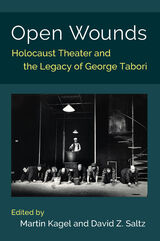
This volume collects original essays on Hungarian-German playwright and screenwriter George Tabori (1914–2007) and his remarkable contributions to the stage. Tabori, a Jewish refugee and a truly transnational author, was best known for his work in New York theater that irreverently explored the Jewish experience, particularly the Holocaust. Although his illustrious career spanned a century, two continents, several languages, and a variety of literary genres, Tabori’s work has received scant attention in American letters, in spite of its significance for U.S. theater and Holocaust studies.
Until Tabori, most dramas about the Holocaust were either rooted in American domestic realism, striving to create a strong empathetic connection between the audience and Holocaust victims, or featured an unembellished documentary style. Tabori staked out a third position, beyond realism and documentation. The volume brings together the voices of international scholars to provide a comprehensive introduction to Tabori’s theater as well as in-depth analyses of his work, discussing all of his major plays. Individual essays address Tabori’s postdramatic theater in relation to sacrificial ritual, performance studies, and post-humanist approaches to the contemporary stage, as well as performance aspects of his productions, questions of ethics and aesthetics raised by his theater, and his plays’ relation to Holocaust representation in popular culture.
What role did the Bible really play in Puritan New England? Many have treated it as a blunt instrument used to cudgel dissenters into submission, but Lisa M. Gordis reveals instead that Puritan readings of the Bible showed great complexity and literary sophistication—so much complexity, in fact, that controversies over biblical interpretation threatened to tear Puritan society apart.
Drawing on Puritan preaching manuals and sermons as well as the texts of early religious controversies, Gordis argues that Puritan ministers did not expect to impose their views on their congregations. Instead they believed that interpretive consensus would emerge from the process of reading the Bible, with the Holy Spirit assisting readers to understand God's will. Treating the conflict over Roger Williams, the Antinomian Controversy, and the reluctant compromises of the Halfway Covenant as symptoms of a crisis that was as much literary as it was social or spiritual, Opening Scripture explores the profound consequences of Puritan negotiations over biblical interpretation for New England's literature and history.
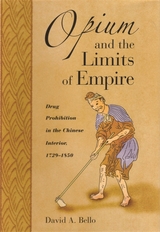
The British opium trade along China's seacoast has come to symbolize China's century-long descent into political and social chaos. In the standard historical narrative, opium is the primary medium through which China encountered the economic, social, and political institutions of the West. Opium, however, was not a Sino-British problem confined to southeastern China. It was, rather, an empire-wide crisis, and its spread among an ethnically diverse populace created regionally and culturally distinct problems of control for the Qing state.
This book examines the crisis from the perspective of Qing prohibition efforts. The author argues that opium prohibition, and not the opium wars, was genuinely imperial in scale and is hence much more representative of the actual drug problem faced by Qing administrators. The study of prohibition also permits a more comprehensive and accurate observation of the economics and criminology of opium. The Qing drug traffic involved the domestic production, distribution, and consumption of opium. A balanced examination of the opium market and state anti-drug policy in terms of prohibition reveals the importance of the empire's landlocked western frontier regions, which were the domestic production centers, in what has previously been considered an essentially coastal problem.
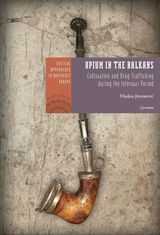
Macedonian raw opium was a highly sought-after pharmaceutical raw material. This book focuses on its cultivation and production, and the trafficking of opium-based narcotics. Vladan Jovanović offers fresh insight into a neglected and marginalized subject, tracing and contextualizing both the licit and the illicit processing and trade of opium alkaloids from the Western Balkans through Turkey, and on to the rest of the world between the two World Wars.
His approach is to explore the subject both from the top down, involving the League of Nations and politicians and diplomats, as well as from the bottom up, through the analysis of the activities of smugglers, police, and ordinary people who participated in the production and distribution of opium. The author describes the process of relocating the illegal processing industry from Turkey and Bulgaria to Yugoslavia. He insightfully shows the implicit continuity of relations between the former Ottoman Empire and the newly constituted Yugoslav state in the form of bilateral political agreements.
He pays special attention to the illegal activities within the legal pharmaceutical industry and also exposes the role of criminal networks, which he situates in the appropriate political and social context. The exploration of this sensitive historical subject extends to other Balkan countries, along with Turkey, Western Europe, and the United States.
The League of Nations Advisory Committee on the Traffic in Opium and Other Dangerous Drugs, created in 1920, culminated almost eight decades of political turmoil over opium trafficking, which was by far the largest state-backed drug trade in the age of empire. Opponents of opium had long struggled to rein in the profitable drug. Opium’s Long Shadow shows how diverse local protests crossed imperial, national, and colonial boundaries to gain traction globally and harness public opinion as a moral deterrent in international politics after World War I.
Steffen Rimner traces the far-flung itineraries and trenchant arguments of reformers—significantly, feminists and journalists—who viewed opium addiction as a root cause of poverty, famine, “white slavery,” and moral degradation. These activists targeted the international reputation of drug-trading governments, first and foremost Great Britain, British India, and Japan, becoming pioneers of the global political tactic we today call naming and shaming. But rather than taking sole responsibility for their own behavior, states in turn appropriated anti-drug criticism to shame fellow sovereigns around the globe. Consequently, participation in drug control became a prerequisite for membership in the twentieth-century international community. Rimner relates how an aggressive embrace of anti-drug politics earned China and other Asian states new influence on the world stage.
The link between drug control and international legitimacy has endured. Amid fierce contemporary debate over the wisdom of narcotics policies, the 100-year-old moral consensus Rimner describes remains a backbone of the international order.
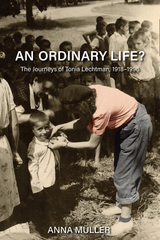
One woman’s national, political, ethnic, social, and personal identities impart an extraordinary perspective on the histories of Europe, Polish Jews, Communism, activism, and survival during the twentieth century.
Tonia Lechtman was a Jew, a loving mother and wife, a Polish patriot, a committed Communist, and a Holocaust survivor. Throughout her life these identities brought her to multiple countries—Poland, Palestine, Spain, France, Germany, Switzerland, and Israel—during some of the most pivotal and cataclysmic decades of the twentieth century. In most of those places, she lived on the margins of society while working to promote Communism and trying to create a safe space for her small children.
Born in Łódź in 1918, Lechtman became fascinated with Communism in her early youth. In 1935, to avoid the consequences of her political activism during an increasingly antisemitic and hostile political environment, the family moved to Palestine, where Tonia met her future husband, Sioma. In 1937, the couple traveled to Spain to participate in the Spanish Civil War. After discovering she was pregnant, Lechtman relocated to France while Sioma joined the International Brigades. She spent the Second World War in Europe, traveling with two small children between France, Germany, and Switzerland, at times only miraculously avoiding arrest and being transported east to Nazi camps. After the war, she returned to Poland, where she planned to (re)build Communist Poland. However, soon after her arrival she was imprisoned for six years. In 1971, under pressure from her children, Lechtman emigrated from Poland to Israel, where she died in 1996.
In writing Lechtman’s biography, Anna Müller has consulted a rich collection of primary source material, including archival documentation, private documents and photographs, interviews from different periods of Lechtman’s life, and personal correspondence. Despite this intimacy, Müller also acknowledges key historiographical questions arising from the lacunae of lost materials, the selective preservation of others, and her own interpretive work translating a life into a life story.

Published by Bucknell University Press. Distributed worldwide by Rutgers University Press.
Origin of the German Trauerspiel was Walter Benjamin’s first full, historically oriented analysis of modernity. Readers of English know it as “The Origin of German Tragic Drama,” but in fact the subject is something else—the play of mourning. Howard Eiland’s completely new English translation, the first since 1977, is closer to the German text and more consistent with Benjamin’s philosophical idiom.
Focusing on the extravagant seventeenth-century theatrical genre of the trauerspiel, precursor of the opera, Benjamin identifies allegory as the constitutive trope of the Baroque and of modernity itself. Allegorical perception bespeaks a world of mutability and equivocation, a melancholy sense of eternal transience without access to the transcendentals of the medieval mystery plays—though no less haunted and bedeviled. History as trauerspiel is the condition as well as subject of modern allegory in its inscription of the abyssal.
Benjamin’s investigation of the trauerspiel includes German texts and late Renaissance European drama such as Hamlet and Calderón’s Life Is a Dream. The prologue is one of his most important and difficult pieces of writing. It lays out his method of indirection and his idea of the “constellation” as a key means of grasping the world, making dynamic unities out of the myriad bits of daily life. Thoroughly annotated with a philological and historical introduction and other explanatory and supplementary material, this rigorous and elegant new translation brings fresh understanding to a cardinal work by one of the twentieth century’s greatest literary critics.
When critics of poet Phillis Wheatley, the first African American to publish a collection of poetry, dismiss her work as derivative, they fail to see her writing as part of a new creative pantheon, sitting alongside other works that, like the popular copybooks in antebellum America, are structured as a conversation between artistic allies. Different kinds of copying in this period were distinctly feminized practices, such as artistic copying, pedagogical recitation, and literary imitation. Ekphrasis, the literary description of a work of visual art, reveals a particularly interesting form of copying, as the artwork in question becomes a kind of mediated space between author and reader; this practice, then, becomes the emblematic form of literature as collective production.
Original Copy frames ekphrasis and other forms of literary and visual copy-work as key concepts for understanding the discussions of nationalism, originality, and gender that dominated US literary circles during the first half of the nineteenth century. Christa Holm Vogelius focuses on four major writers of the period—Phillis Wheatley, Margaret Fuller, Sophia Hawthorne, and Henry Longfellow—to offer a narrative of a self-consciously feminine antebellum literary culture that was equally invested in literary nationality and convention. The explicitly feminized forms of the copy between and within media, she argues, became a productive means by which writers across a variety of genres interrogated the ill-defined but ubiquitous idea of an “original” American literature. Original Copy bridges three bodies of scholarship that have remained largely distinct—studies of literary nationalism and transnationalism, scholarship on gender in nineteenth century literary culture, and aesthetic and media theory—to argue for the significance of both imitation and intimate author-reader relations to the development of an American literature.
The Origins of Modern Polish Democracy is a series of closely integrated essays that traces the idea of democracy in Polish thought and practice. It begins with the transformative events of the mid-nineteenth century, which witnessed revolutionary developments in the socioeconomic and demographic structure of Poland, and continues through changes that marked the postcommunist era of free Poland.
The idea of democracy survived in Poland through long periods of foreign occupation, the trials of two world wars, and years of Communist subjugation. Whether in Poland itself or among exiles, Polish speculation about the creation of a liberal-democratic Poland has been central to modern Polish political thought. This volume is unique in that is traces the evolution of the idea of democracy, both during the periods when Poland was an independent country—1918-1939—and during the periods of foreign occupation before 1918 through World War II and the Communist era. For those periods when Poland was not free, the volume discusses how the idea of democracy evolved among exile and underground Polish circles.
This important work is the only single-volume English-language history of modern Polish democratic thought and parliamentary systems and represents the latest scholarly research by leading specialists from Europe and North America.

On July 10, 1940, by a 570 to 80 margin, the representatives in the French parliament voted full powers to Philippe Pétain, ending the Third Republic and paving the way for the collaborationist Vichy regime. Olivier Wieviorka offers a nuanced portrait of the individuals who determined the fate of France at this critical moment.
Pétain claimed to be saving France from ruin. The day of the vote has been described as a journée des dupes, the legislators so ignorant or fearful that they voted without a thought to the consequences. But Wieviorka shows that most of the deputies made a considered decision to vote for Pétain. He analyzes the factors, such as political culture and regional origins, that motivated the voting on both sides, and traces the men’s fates through the war.
Recreating the tense atmosphere of summer 1940, Wieviorka shows how pressures brought on by defeat could affect even the most hardened republicans. He illuminates the complex moral issues inherent in accommodation and collaboration in a time of crisis.
As it seeks to win the hearts and minds of citizens in the Muslim world, the United States has poured millions of dollars into local television and radio programming, hoping to generate pro-American currents on Middle Eastern airwaves. However, as this fascinating new book shows, the Middle Eastern media producers who rely on these funds are hardly puppets on an American string, but instead contribute their own political and creative agendas while working within U.S. restrictions.
Bookended by Giambattista Vico and Antonio Gramsci, this strand of Renaissance-influenced philosophy rose in reaction to the major revolutions of the time in Italy, such as national unity, fascism, and democracy. Exploring the ways its thinkers critically assimilated the thought of their northern counterparts, Rubini uncovers new possibilities in our intellectual history: that antihumanism could have been forestalled, and that our postmodern condition could have been entirely different. In doing so, he offers an important new way of thinking about the origins of modernity, one that renews a trust in human dignity and the Western legacy as a whole.
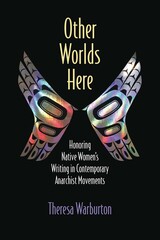
All is not lost, however. Rather than centering a critical indictment of contemporary anarchist politics, Other Worlds Here maintains that a defining characteristic of New Anarchism is its ability to adapt and transform. Through close readings of texts by Native women authors, Warburton argues that anarchists must shift the paradigm that another world is possible to one that recognizes other worlds already here: stories, networks, and histories that lay out methods of building reciprocal relationships with the land and its people. Analyzing memoirs, poetry, and novels by writers including Deborah Miranda, Elissa Washuta, Heid E. Erdrich, Janet Rogers, and Leslie Marmon Silko, Other Worlds Here extends the study of Native women’s literatures beyond ethnographic analysis of Native experience to advance a widely applicable, contemporary political critique.
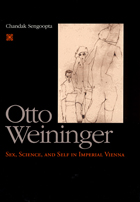
This provocative, enlightening study explores the milieu in which the philosopher Otto Weininger (1880-1903) wrote his controversial book Sex and Character. Shortly after its publication, Weininger committed suicide at the age of twenty-three. His book, which argued that women and Jews were mere sexual beings who lacked individuality, became a bestseller.
Hailed as a genius by intellectuals such as Ludwig Wittgenstein and Karl Kraus, Weininger was admired, not for his prejudices, but for his engagement with the central issues of the time—the nature and meanings of identity. Sengoopta pays particular attention to how Weininger appropriated scientific language and data to defend his views and examines the scientific theories themselves.
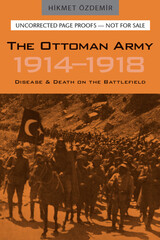
What kind of relationship exists between wars and epidemics? It is widely held that epidemics affected the outcomes of many wars and, until World War II, more victims of war died of disease than of battle wounds. Many disease vectors are present in times of conflict, including mass movements of people across borders and increased contact between persons of different geographic regions, yet disease is rarely treated in depth in histories of war.
Hikmet Özdemir’s The Ottoman Army, 1914–1918 provides extensive documentation of disease and death across the Ottoman Empire during World War I, when epidemic diseases annihilated armies and caused civilians to perish en masse. Drawing on hospital records and information on regional disease prevalence, Özdemir examines the effects that disease and epidemic had on the outcome of the war.
The information on disease mortality explains much that has never been properly understood about wartime events and government actions, events that only begin to make sense when the disease factor is considered. Rich in detail, this is an extremely valuable book that illuminates a facet of the war that has not been adequately considered until now.
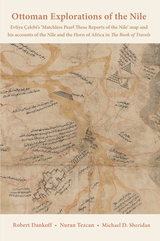
Evliya Çelebi’s account of his Nile journeys, in the tenth volume of his Book of Travels (Seyahatname), has been known to the scholarly world since 1938, when that volume was first published. The map, held in the Vatican Library, has been studied since at least 1949. Numerous new critical editions of both the map and the text have been published over the years, each expounding upon the last in an attempt to reach a definitive version. The Ottoman Explorations of the Nile provides a more accurate translation of the original travel account. Furthermore, the maps themselves are reproduced in greater detail and vivid color, and there are more cross-references to the text than in any previous edition. This volume gives equal weight and attention to the two parts that make up this extraordinary historical document, allowing readers to study the map or the text independently, while also using each to elucidate and accentuate the details of the other.
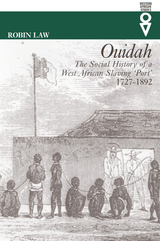
Ouidah, an African town in the Republic of Benin, was the principal precolonial commercial center of its region and the second-most-important town of the Dahomey kingdom. It served as a major outlet for the transatlantic slave trade. Between the seventeenth and the nineteenth centuries, Ouidah was the most important embarkation point for slaves in the region of West Africa known to outsiders as the Slave Coast. This is the first detailed study of the town’s history and of its role in the Atlantic slave trade.
Ouidah is a well-documented case study of precolonial urbanism, of the evolution of a merchant community, and in particular of the growth of a group of private traders whose relations with the Dahomian monarchy grew increasingly problematic over time.
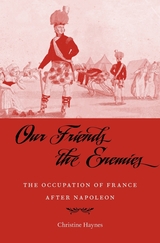
The Napoleonic wars did not end with Waterloo. That famous battle was just the beginning of a long, complex transition to peace. After a massive invasion of France by more than a million soldiers from across Europe, the Allied powers insisted on a long-term occupation of the country to guarantee that the defeated nation rebuild itself and pay substantial reparations to its conquerors. Our Friends the Enemies provides the first comprehensive history of the post-Napoleonic occupation of France and its innovative approach to peacemaking.
From 1815 to 1818, a multinational force of 150,000 men under the command of the Duke of Wellington occupied northeastern France. From military, political, and cultural perspectives, Christine Haynes reconstructs the experience of the occupiers and the occupied in Paris and across the French countryside. The occupation involved some violence, but it also promoted considerable exchange and reconciliation between the French and their former enemies.
By forcing the restored monarchy to undertake reforms to meet its financial obligations, this early peacekeeping operation played a pivotal role in the economic and political reconstruction of France after twenty-five years of revolution and war. Transforming former European enemies into allies, the mission established Paris as a cosmopolitan capital and foreshadowed efforts at postwar reconstruction in the twentieth century.
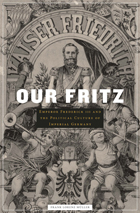
On June 15, 1888, a mere ninety-nine days after ascending the throne to become king of Prussia and German emperor, Frederick III succumbed to throat cancer. Europeans were spellbound by the cruel fate nobly borne by the voiceless Fritz, who for more than two decades had been celebrated as a military hero and loved as a kindly gentleman. A number of grief-stricken individuals reportedly offered to sacrifice their own healthy larynxes to save the ailing emperor.
Frank Lorenz Müller, in the first comprehensive life of Frederick III ever written, reconstructs how the hugely popular persona of “Our Fritz” was created and used for various political purposes before and after the emperor’s tragic death. Sandwiched between the reign of his ninety-year-old father and the calamitous rule of his own son, the future emperor William II, Frederick III served as a canvas onto which different political forces projected their hopes and fears for Germany's future. The book moves beyond the myth that Frederick’s humane liberalism would have built a lasting Anglo-German partnership, perhaps even preventing World War I, and beyond the castigations and exaggerations of parties with a different agenda. Surrounded by an unforgettable cast of characters that includes the emperor’s widely hated English wife, Vicky—daughter of Queen Victoria—and the scheming Otto von Bismarck, Frederick III offers in death as well as in life a revealing, poignant glimpse of Prussia, Germany, and the European world that his son would help to shatter.
Just after 9/11, President George W. Bush climbed the rubble where the World Trade Center had stood. Surrounded by shouts of anger, he said, “The people who knocked these buildings down will hear all of us soon!” With these words, Bush ushered in the War on Terror. Quickly, a global protest movement mobilized against it, reshaping the political, moral, and media landscape.
Jeremy Varon’s Our Grief Is Not a Cry for War is the definitive history of that movement. Millions of Americans participated in thousands of acts of protest, from demonstrations to civil disobedience to peace encampments in Iraq. On February 15, 2003, up to 30 million people worldwide took to the streets in the largest protest in human history. But this enormous outcry was not enough to stop the US invasion of Iraq. Varon explores the limits to the movement’s power but also shows how it worked to make opposition to the Iraq War a part of public debate, hastening its end and limiting the broader War on Terror. In the book, you’ll meet the families of the 9/11 victims, Iraq War veterans, and Gold Star families who spoke out against war.
Written with a lively and revelatory voice, Our Grief Is Not a Cry for War illuminates the passion of the peace movement, the mark it made, and the enduring legacies of the War on Terror.
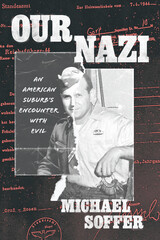
Reinhold Kulle seemed like the perfect school employee. But in 1982, as his retirement neared, his long-concealed secret came to light. The chief custodian at Oak Park and River Forest High School outside Chicago had been a Nazi, a member of the SS, and a guard at a brutal slave labor camp during World War II.
Similar revelations stunned communities across the country. Hundreds of Reinhold Kulles were gradually discovered: men who had patrolled concentration camps, selected Jews for execution, and participated in mass shootings—and who were now living ordinary suburban lives. As the Office of Special Investigations raced to uncover Hitler’s men in the United States, neighbors had to reconcile horrific accusations with the helpful, kind, and soft-spoken neighbors they thought they knew. Though Nazis loomed in the American consciousness as evil epitomized, in Oak Park—a Chicago suburb renowned for its liberalism—people rose to defend Reinhold Kulle, a war criminal.
Drawing on archival research and insider interviews, Oak Park and River Forest High School teacher Michael Soffer digs into his community’s tumultuous response to the Kulle affair. He explores the uncomfortable truths of how and why onetime Nazis found allies in American communities after their gruesome pasts were uncovered.
“An intellectual feast.”
—John Leonard, Harper’s Magazine
A monumental study reveals the patient and meticulous labor behind the Irish Nobel laureate’s immaculate poetic craft.
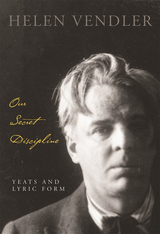
The fundamental difference between rhetoric and poetry, according to Yeats, is that rhetoric is the expression of one’s quarrels with others while poetry is the expression (and sometimes the resolution) of one’s quarrel with oneself. This is where Helen Vendler’s Our Secret Discipline begins. Through exquisite attention to outer and inner forms, Vendler explores the most inventive reaches of the poet’s mind. This book is a space-clearing gesture, an attempt to write about lyric forms in Yeats in unprecedented and comprehensive ways. The secret discipline of the poet is his vigilant attention to forms—whether generic, structural, or metrical. Yeats explores the potential of such forms to give shape and local habitation to volatile thoughts and feelings.
Helen Vendler remains focused on questions of singular importance: Why did Yeats cast his poems into the widely differing forms they ultimately took? Can we understand Yeats’s poetry better if we pay attention to its form, both its internal architectonic and its external organization into conventional verse structures? Chapters of the book take up many Yeatsian ventures, such as the sonnet, the lyric sequence, paired poems, blank verse, and others. With elegance and precision, Vendler offers brilliant insights into the creative process and speculates on Yeats’s aims as he writes and rewrites some of the most famous poems in modern literature.
The writers recall being on the run between different countries, escaping over mountains, hiding and even sometimes forgetting their Jewish identities in convents and rescuers’ homes and hovels, basements and attics. Some were left on their own; others found themselves embroiled in rescuer family conflicts. Some writers chose to write story clusters, each one capturing a moment or incident and often disconnected by memory or temporal and spatial divides.
Out of Mind makes a compelling case for understanding narrative forms and cognitive-scientific frameworks as co-emergent and cross-pollinating. To this end, Ghosal harnesses narrative theory, multimodality studies, cognitive sciences, and disability studies to track competing perspectives on remembering, reading, and sense of place and self. Through new readings of the works of Kamila Shamsie, Aleksandar Hemon, Mark Haddon, Lance Olsen, Steve Tomasula, Jonathan Safran Foer, and others, Out of Mind generates unique insights into literary imagination’s influence on how we think and perceive amid twenty-first-century social, technological, and environmental changes.
This striking contribution to Black literary studies examines the practices of Black writers in the mid-twentieth century to revise our understanding of the institutionalization of literary studies in America. Andy Hines uncovers a vibrant history of interpretive resistance to university-based New Criticism by Black writers of the American left. These include well-known figures such as Langston Hughes and Lorraine Hansberry as well as still underappreciated writers like Melvin B. Tolson and Doxey Wilkerson. In their critical practice, these and other Black writers levied their critique from “outside” venues: behind the closed doors of the Senate Permanent Subcommittee on Investigations, in the classroom at a communist labor school under FBI surveillance, and in a host of journals. From these vantages, Black writers not only called out the racist assumptions of the New Criticism, but also defined Black literary and interpretive practices to support communist and other radical world-making efforts in the mid-twentieth century. Hines’s book thus offers a number of urgent contributions to literary studies: it spotlights a canon of Black literary texts that belong to an important era of anti-racist struggle, and it fills in the pre-history of the rise of Black studies and of ongoing Black dissent against the neoliberal university.
This is an auto-narrated audiobook edition of this book.
A timely reconsideration of the history of the profession, Outside Literary Studies investigates how midcentury Black writers built a critical practice tuned to the struggle against racism and colonialism.
This striking contribution to Black literary studies examines the practices of Black writers in the mid-twentieth century to revise our understanding of the institutionalization of literary studies in America. Andy Hines uncovers a vibrant history of interpretive resistance to university-based New Criticism by Black writers of the American left. These include well-known figures such as Langston Hughes and Lorraine Hansberry as well as still underappreciated writers like Melvin B. Tolson and Doxey Wilkerson. In their critical practice, these and other Black writers levied their critique from “outside” venues: behind the closed doors of the Senate Permanent Subcommittee on Investigations, in the classroom at a communist labor school under FBI surveillance, and in a host of journals. From these vantages, Black writers not only called out the racist assumptions of the New Criticism, but also defined Black literary and interpretive practices to support communist and other radical world-making efforts in the mid-twentieth century. Hines’s book thus offers a number of urgent contributions to literary studies: it spotlights a canon of Black literary texts that belong to an important era of anti-racist struggle, and it fills in the pre-history of the rise of Black studies and of ongoing Black dissent against the neoliberal university.
In The Outsider, veteran journalist and best-selling author Dan Rottenberg deftly chronicles the astonishing rises, falls, and countless reinventions of this savvy businessman. Greenfield's power allowed him to cross social, religious, and ethnic boundaries with impunity. He alarmed Philadelphia's conservative business and social leaders-Christians and Jews alike-some of whom plotted his downfall.
In this engaging account of Greenfield's fascinating life, Rottenberg demonstrates the extent to which one uniquely brilliant and energetic man pushed the boundaries of society's limitations on individual potential. The Outsider provides a microcosmic look at three twentieth-century upheavals: the rise of Jews as a crucial American business force, the decline of America's Protestant establishment, and the transformation of American cities.
Owning Performance follows the careers of some of the 18th century’s most influential playwrights, actors, and theater managers as they vied for control over the period’s most popular shows. Without protection for dramatic literary property, these figures developed creative extra-legal strategies for controlling the performance of drama—quite literally performing their ownership. Their various strategies resulted in a culture of ephemerality, with many of the period’s most popular works existing only in performance and manuscript copies. Author Jane Wessel explores how playwrights and actors developed strategies for owning their works and how, in turn, theater managers appropriated these strategies, putting constant pressure on artists to innovate. Owning Performance reveals the wide-reaching effects of property law on theatrical culture, tracing a turn away from print that affected the circulation, preservation, and legacy of 18th century drama.
READERS
Browse our collection.
PUBLISHERS
See BiblioVault's publisher services.
STUDENT SERVICES
Files for college accessibility offices.
RECENTLY PUBLISHED




UChicago Accessibility Resources
home | accessibility | search | about | contact us
BiblioVault ® 2001 - 2026
The University of Chicago Press