
 A SCHOLARLY BOOK REPOSITORY
96 start with S start with S
As Germany faced inevitable defeat in World War II, the Allies became concerned that the Nazis would attempt to hide their assets in neutral countries—Switzerland, Sweden, Portugal, Spain, and Turkey—in order to revive their cause in later years. To address this danger, the United States, along with Britain and France as reluctant partners, started the “Safehaven” program to probe questions of secret foreign bank accounts, the German wartime gold trade, and the actions of German companies abroad toward the end of the Nazi regime. Initiated by the Federal Economic Administration, Safehaven was soon integrated with U.S. plans, advocated by Treasury Secretary Henry Morgenthau, to avert future German aggression. These proposals quickly fell out of favor, but the Morgenthau Plan’s suggestion to use all German assets as reparations remained attractive.
In this first detailed historical study of Safehaven in English, Martin Lorenz-Meyer focuses on policies of the Allies, revealing their disagreements about the program and addressing the historical roots of a problem that over decades the Cold War had successfully buried. Lorenz-Meyer shows how American administrative agencies were constantly at odds regarding Safehaven’s administration and how coordination of the program was further complicated by different assumptions held by the United States and Britain regarding its aims. Using Sweden as an example, he offers an investigation of the effects of Safehaven in the neutral countries, drawing comparisons with experiences of the program in Switzerland. His research discloses the sums involved and the neutral countries’ positions and also explores the complications posed by international law for any plan to expropriate German assets.
Over time, the neutral countries objected to uncompensated confiscations for a war in which they had not participated, and the United States gradually lost interest in infringing on German wealth because Germany was needed as a new ally. Lorenz-Meyer tells how Safehaven suffered from the discontinuation of wartime controls in a renewed climate of free trade. He also contends that the very problem that necessitated the program raised questions regarding the true neutrality of the countries involved.
Safehaven is a significant addition to the history of Third Reich and international relations, notably concerning American foreign policy. As America continues to face foreign-policy dilemmas regarding trade with enemies and issues of neutrality, Safehaven offers an illuminating case history that sheds new light on current affairs.
In the winter of 1917, with most of the world at war, twenty-three-year-old Irving Edward Sheely of Albany, New York, enlisted in Naval Aviation and began his training at Pensacola Naval Air Station. When Congress declared ware on Germany on April 6, 1917, the combined strength of aviation within the Navy and Marine Corps was 48 officers, 239 enlisted men, 54 airplanes, one airship, and one air station.

Joseph Butwin’s oral history presents conversations with ten Jewish veterans of the ALB. Recorded from 1992–94 in the wake of European communism’s collapse, the interviews explore the milieus that formed the volunteers. Immigrants established the secular Yiddish-speaking socialism that became a part of many Jewish American communities. Their children, reacting to economic depression and the rise of fascism, enlisted in the ALB. Butwin follows their stories from their youthful motives and choices through their lives as Jews and leftists, and records the reckonings that took place as they reflected on their past.
Insightful and revealing, Salud y Shalom explores the forces of identity and history that led young Jewish leftists to fight fascism.
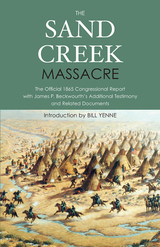
On the morning of November 29, 1864, Colorado state cavalry under the command of Col. John Chivington attacked a peaceful encampment of mostly Cheyenne Indians along the Sand Creek in Colorado, slaughtering perhaps as many as 160 people, mostly women and children. It was one of the most egregious atrocities of the Indian Wars. Even with the country embroiled in a Civil War, the gravity of the situation can be gauged by the fact that within six weeks of the killings, a Joint Committee of Congress conducted a public hearing. Congress vilified Chivington in summarizing his cowardly and racist attack in their published report: “Wearing the uniform of the United States, which should be the emblem of justice and humanity . . . he deliberately planned and executed a foul and dastardly massacre.” The Sand Creek Massacre: The Official 1865 Report contains a facsimile of the “Report of the Joint Committee on the Conduct of the War: Massacre of the Cheyenne Indians” along with unique annotations made by a reader at the time and the attached typescript testimony of the African American pioneer James P. Beckwourth, in which he recounts the atrocity. This edition is introduced by Bill Yenne. who places the Sand Creek Massacre in context within the Civil War and Indian Wars and provides biographical information about the main persons involved.

Deserts, the Arctic, outer space—these extreme environments are often seen as inhospitable places at the edges of our maps. But from the 1940s through the 1960s, spurred by the diverse and unfamiliar regions the US military had navigated during World War II, the United States defense establishment took a keen interest in these places, dispatching troops to the Aleutian Islands, North Africa, the South Pacific, and beyond. To preserve the country’s status as a superpower after the war, to pave runways and build bridges, engineers had to understand and then conquer dunes, permafrost, and even the surface of the moon.
Sand, Snow, and Stardust explores how the US military generated a new understanding of these environments and attempted to master them, intending to cement America’s planetary power. Operating in these regions depended as much on scientific and cultural knowledge as on military expertise and technology. From General George S. Patton learning the hard way that the desert is not always hot, to the challenges of constructing a scientific research base under the Arctic ice, to the sheer implausibility of modeling Martian environments on Earth, Gretchen Heefner takes us on a wry expedition into the extremes and introduces us to the people who have shaped our insight into these extraordinary environments. Even decades after the first manned space flight, plans for human space exploration and extraplanetary colonization are still based on what we know about stark habitats on Earth.
An entertaining survey of the relationship between environmental history and military might, Sand, Snow, and Stardust also serves as a warning about the further transformation of the planet—whether through desertification, melting ice caps, or attempts to escape it entirely.
Ralph Alger Bagnold was born in 1896 into a military family and educated as an engineer. Posted to Egypt in 1926, he was one of a group of officers who adapted Model T Fords to desert travel and in 1932 made the first east-west crossing—6,000 miles—of the Libyan desert. Bagnold established such a name for himself that in World War II he was again posted to Egypt where he founded and trained the Long Range Desert Group that was to confound the German and Italian armies.
Bagnold’s fascination with the desert included curiosity over the formation of dunes, and beginning in 1935 he conducted wind tunnel experiments with sand that led to the book The Physics of Blown Sand and Desert Dunes. Eventually, he was to see his findings called on by NASA to interpret data on the sands of Mars. He devoted subsequent research to particle flow in fluids, and also served as a consultant to Middle Eastern governments concerned with the interference of sand flow in oil drilling.
Sand, Wind, and War is the life story of a man who not only helped shape events in one part of the world but also contributed to our understanding of it. It is a significant benchmark not only in the history of science, but also in the annals of adventure.
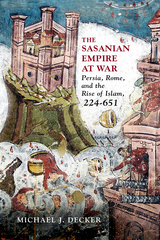
A comprehensive military history of one of the most important empires of Late Antiquity
The Sasanian Empire at War: Persia, Rome, and the Rise of Islam, 224–651 is the first comprehensive study in English examining war and society in one of the most important empires in world history: the Persian Empire of 224-651 AD, ruled by the Sasanian clan. At its height the Sasanians governed lands from the Indus River in the east to Egypt and the Mediterranean in the west. Adversaries of Rome, they also faced grave challenges from nomadic powers from Central Asia, notably the Huns and Turks. The Sasanians were able to maintain their empire for hundreds of years through nearly constant warfare, but when their expansion was checked in the north by the Byzantines at Constantinople in 626, and with the Muslim invasions to their south and west beginning in the 630s, the empire could no longer be sustained, and it finally collapsed.
In this book, Michael J. Decker examines Sasanian warfare, including military capabilities, major confrontations, organization and weapons of the Persian army. In addition to providing a comprehensive overview of the conflicts that marked this vital period in the history of Eurasia, The Sasanian Empire at War challenges long cherished notions of the inferiority of Sasanian military capabilities and renders a new image of a sophisticated, confident culture astride the heart of Eurasia at the end of the ancient world and birth of the Silk Road. Persian arms were among the many features of their culture that drew widespread admiration and was one of the keys to the survival of Iranian culture beyond the Arab Conquest and into the present day.
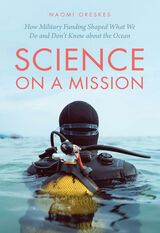
What difference does it make who pays for science?
Some might say none. If scientists seek to discover fundamental truths about the world, and they do so in an objective manner using well-established methods, then how could it matter who’s footing the bill? History, however, suggests otherwise. In science, as elsewhere, money is power. Tracing the recent history of oceanography, Naomi Oreskes discloses dramatic changes in American ocean science since the Cold War, uncovering how and why it changed. Much of it has to do with who pays.
After World War II, the US military turned to a new, uncharted theater of warfare: the deep sea. The earth sciences—particularly physical oceanography and marine geophysics—became essential to the US Navy, which poured unprecedented money and logistical support into their study. Science on a Mission brings to light how this influx of military funding was both enabling and constricting: it resulted in the creation of important domains of knowledge but also significant, lasting, and consequential domains of ignorance.
As Oreskes delves into the role of patronage in the history of science, what emerges is a vivid portrait of how naval oversight transformed what we know about the sea. It is a detailed, sweeping history that illuminates the ways funding shapes the subject, scope, and tenor of scientific work, and it raises profound questions about the purpose and character of American science. What difference does it make who pays? The short answer is: a lot.
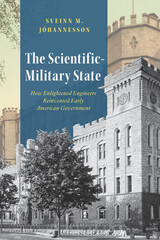
In The Scientific-Military State, Sveinn M. Jóhannesson charts the emergence of a new kind of governance in early-nineteenth-century America: the scientific-military state. Federal officials used mathematics, science, and other forms of enlightened knowledge to launch the nation’s very first experiments in scientific education and expert administration. These figures forged a new intellectual elite that socially elevated itself above ordinary soldiers, workers, and civilians and reshaped the military state itself beyond familiar models of standing army or militia. Originating primarily from the US Military Academy at West Point, these experts, who were often engineers, debated statecraft, analyzed topography, designed fortifications, manufactured weapons, built infrastructure, and exercised military power as the United States spread across the continent. But the even deeper result was a transformed relationship between the government and its citizens, one that echoes today.
Scientists at War examines the ethical debates that severely tested the American scientific community during the Cold War. Sarah Bridger highlights the contributions of scientists to military technologies and strategic policymaking, from the dawning atomic age in the 1940s through the Strategic Defense Initiative (“Star Wars”) in the 1980s, which sparked a cross-generational opposition among scientists.
The Manhattan Project in the early 1940s and the crisis provoked by the launch of Sputnik in 1957 greatly enhanced the political clout of American scientists. Yet many who took up government roles felt a duty to advocate arms control. Bridger investigates the internal debate over nuclear weapons policy during the Eisenhower and Kennedy administrations, when scientific advisors did not restrict themselves to technical assessments but made an impassioned moral case for a nuclear test ban. The relationship between government and science began to fray further during the Vietnam War, as younger scientists inside and outside of government questioned the morality of using chemical defoliants, napalm, and other non-nuclear weapons. With campuses erupting in protest over classified weapons research conducted in university labs, many elder statesmen of science, who once believed they could wield influence from within, became alienated. The result was a coalition that opposed “Star Wars” during the 1980s—and a diminished role for scientists as counselors to future presidents.
Illuminates the early American period in the upper Caribbean
Scourge of the Caribbean explores the mysterious and dramatic life and career of Charles E. Hawkins, a relatively unknown naval figure in early national America. Hawkins’s action-packed life at sea in his brief but accomplished career reveals much about an era when the rules of the maritime world, especially in the Caribbean, were in flux. For the US Navy and its commanders, the Caribbean presented an untold number of ambiguities: revolutionary juntas, privateering, piracy, and deadly disease, all within some of the most beautiful landscapes and waterscapes on earth.
Hawkins, from a well-connected family, took to the sea as a midshipman in the US Navy. Stalled promotion, economic setbacks, and blunted opportunities stymied the young officer, but ambition, combined with varied experiences and maritime pursuits, presented other prospects. At a time when individual agency mattered most, Hawkins stepped outside traditional boundaries of conduct on numerous occasions. Hawkins followed a mentor into the Mexican navy and became the most successful and feared raider of Spanish ships, earning the sobriquet “scourge” because of his raids along Cuba’s northern coast. In 1835, Hawkins joined the Texas independence movement against Mexico. Within the historical narrative are lurid accounts of adultery, affairs of honor, a bloody assassination, and complicated maritime legal battles. Based on prodigious research, this lively tale will appeal to those interested in maritime and early American history and the upper Caribbean in the Age of Sail.
A miscellany of minor works.
Xenophon (ca. 430 to ca. 354 BC) was a wealthy Athenian and friend of Socrates. He left Athens in 401 and joined an expedition including ten thousand Greeks led by the Persian governor Cyrus against the Persian king. After the defeat of Cyrus, it fell to Xenophon to lead the Greeks from the gates of Babylon back to the coast through inhospitable lands. Later he wrote the famous vivid account of this “March Up-Country” (Anabasis); but meanwhile he entered service under the Spartans against the Persian king, married happily, and joined the staff of the Spartan king, Agesilaus. But Athens was at war with Sparta in 394 and so exiled Xenophon. The Spartans gave him an estate near Elis where he lived for years, writing and hunting and educating his sons. Reconciled to Sparta, Athens restored Xenophon to honor, but he preferred to retire to Corinth.
Xenophon’s Anabasis is a true story of remarkable adventures. Hellenica, a history of Greek affairs from 411 to 362, begins as a continuation of Thucydides’ account. There are four works on Socrates (collected in LCL 168). In Memorabilia Xenophon adds to Plato’s picture of Socrates from a different viewpoint. The Apology is an interesting complement to Plato’s account of Socrates’ defense at his trial. Xenophon’s Symposium portrays a dinner party at which Socrates speaks of love; and Oeconomicus has him giving advice on household management and married life. Cyropaedia, a historical romance on the education of Cyrus (the Elder), reflects Xenophon’s ideas about rulers and government.
We also have his Hiero, a dialogue on government; Agesilaus, in praise of that king; Constitution of Lacedaemon (on the Spartan system); Ways and Means (on the finances of Athens); Manual for a Cavalry Commander; a good manual of Horsemanship; and a lively Hunting with Hounds—mostly hare hunting. The Constitution of the Athenians, though clearly not by Xenophon, is an interesting document on politics at Athens. These eight books are collected in the present volume.

Ramzy Baroud is a veteran journalist and former producer for Al-Jazeera TV. This is his comprehensive account of the momentous events of the last five years which shaped the political landscape not only of Palestine and Israel but of the entire Middle East region.
Addressing the most controversial issues, including the alarming escalation in suicide bombings, and the construction of the Separation Wall, he reports on the huge rate of unemployment and hunger in the Occupied Territories -- statistics so critical that NGOs compare their magnitude to African nations such as the Congo. From the brutality of the Israeli army to the ever-compromising nature of the Palestinian Authority, few are spared Baroud’s thoughtful critique.
The book is clear and concise, with one chapter dedicated to the major events of each year, and includes a comprehensive timeline.
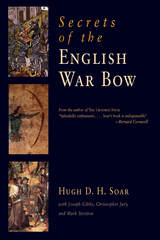
A Complete Recreation of the Deadliest Medieval Arm
Dominating medieval battlefields for more than two centuries but requiring long and arduous practice to command, the English war bow and its battle shaft are the symbols of the rise of British power in Europe. Despite being crafted for hundreds of years and wielded by generations of archers, no example of the war bow—the military version of the longbow—exists, outside of a single broken limb. Now for the first time, expert craftsmen use all available evidence including applied archaeology to unlock the secrets of the English war bow. Historian Hugh D. H. Soar is joined by Mark Stretton, master blacksmith, and Joseph Gibbs, bowyer, in order to demonstrate how a war bow and its associated arrow heads and shafts may have been constructed and used. In addition to showing the complete manufacture of a bow from tree selection to stringing and how specialized arrowheads were forged and attached to shafts, Secrets of the English War Bowprovides information on the actual performance of the war bow, including the bow's effectiveness against various materials and, for the first time, its use against moving targets, since bows were often drawn against mounted soldiers. Armed with this new information, Soar provides an analysis of both successes and failures of the war bow in several important battles. Illustrated in color and black and white, Secrets of the English War Bowprovides an invaluable service for those interested in medieval military history, archery, and technology.

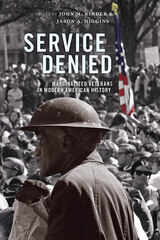
Wartime military service is held up as a marker of civic duty and patriotism, yet the rewards of veteran status have never been equally distributed. Certain groups of military veterans—women, people of color, LGBTQ people, and former service members with stigmatizing conditions, “bad paper” discharges, or criminal records—have been left out of official histories, excised from national consciousness, and denied state recognition and military benefits.
Chronicling the untold stories of marginalized veterans in the twentieth and twenty-first centuries, Service Denied uncovers the generational divides, cultural stigmas, and discriminatory policies that affected veterans during and after their military service. Together, the chapters in this collection recast veterans beyond the archetype, inspiring an innovative model for veterans studies that encourages an intersectional and interdisciplinary analysis of veterans history. In addition to contributions from the volume editors, this collection features scholarship by Barbara Gannon, Robert Jefferson, Evan P. Sullivan, Steven Rosales, Heather Marie Stur, Juan Coronado, Kara Dixon Vuic, John Worsencroft, and David Kieran.
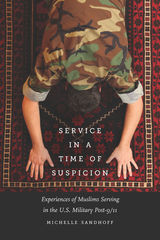
In Service in a Time of Suspicion, fifteen such service members talk about what it means to be Muslim, American, and a uniformed member of the armed services in the twenty-first century. These honest accounts remind us of our shared humanity.
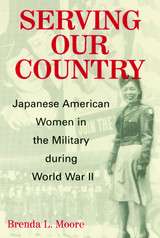
Following the 1941 attack on Pearl Harbor and America's declaration of war on Japan, the U.S. War Department allowed up to five hundred second-generation, or "Nisei," Japanese American women to enlist in the Women's Army Corps and, in smaller numbers, in the Army Medical Corps.
Through in-depth interviews with surviving Nisei women who served, Brenda L. Moore provides fascinating firsthand accounts of their experiences. Interested primarily in shedding light on the experiences of Nisei women during the war, the author argues for the relevance of these experiences to larger questions of American race relations and views on gender and their intersections, particularly in the country's highly charged wartime atmosphere. Uncovering a page in American history that has been obscured, Moore adds nuance to our understanding of the situation of Japanese Americans during the war.
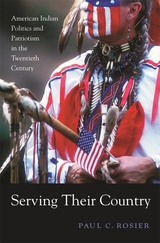
Over the twentieth century, American Indians fought for their right to be both American and Indian. In an illuminating book, Paul C. Rosier traces how Indians defined democracy, citizenship, and patriotism in both domestic and international contexts.
Battles over the place of Indians in the fabric of American life took place on reservations, in wartime service, in cold war rhetoric, and in the courtroom. The Society of American Indians, founded in 1911, asserted that America needed Indian cultural and spiritual values. In World War II, Indians fought for their ancestral homelands and for the United States. The domestic struggle of Indian nations to defend their cultures intersected with the international cold war stand against termination—the attempt by the federal government to end the reservation system. Native Americans seized on the ideals of freedom and self-determination to convince the government to preserve reservations as places of cultural strength. Red Power activists in the 1960s and 1970s drew on Third World independence movements to assert an ethnic nationalism that erupted in a series of protests—in Iroquois country, in the Pacific Northwest, during the occupation of Alcatraz Island, and at Wounded Knee.
Believing in an empire of liberty for all, Native Americans pressed the United States to honor its obligations at home and abroad. Like African Americans, twentieth-century Native Americans served as a visible symbol of an America searching for rights and justice. American history is incomplete without their story.
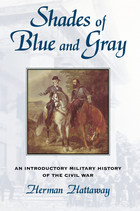
An introductory military history of the American Civil War, Shades of Blue and Gray places the 1861-1865 conflict within the broad context of evolving warfare. Emphasizing technology and its significant impact, Hattaway includes valuable material on land and sea mines, minesweepers, hand grenades, automatic weapons, the Confederate submarine, and balloons. The evolution of professionalism in the American military serves as an important connective theme throughout. Hattaway extrapolates from recent works by revisionists William Skelton and Roy Roberts to illustrate convincingly that the development of military professionalism is not entirely a post-Civil War phenomenon.
The author also incorporates into his work important new findings of recent scholars such as Albert Castel (on the Atlanta Campaign), Reid Mitchell (on soldiers' motivation), Mark Grimsley (on "hard war"), Brooks D. Simpson (on Ulysses S. Grant), and Lauren Cook Burgess (on women who served as soldiers, disguised as men). In addition, Hattaway comments on some of the best fiction and nonfiction available in his recommended reading lists, which will both enlighten and motivate readers.
Informative and clearly written, enhanced by graceful prose and colorful anecdotes, Shades of Blue and Gray will appeal to all general readers.
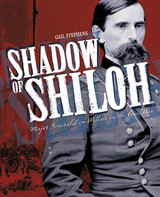
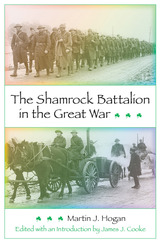
When Martin Hogan began training on a vacant lot to be a soldier, he had no idea that he was about to become part of one of the most famed fighting units of World War I. But soon he and other citizen soldiers from the Irish neighborhoods of New York City were locked in deadly combat with the German army.
Hogan’s book records his recollections of the 165th Infantry in World War I, a regiment in the famed Rainbow Division. Company K of the Third or Shamrock Battalion had a part in every fight, and those who survived had more wound stripes than did the soldiers of any other company in the American Expeditionary Forces. Few soldiers saw as much of the war in eighteen months as did young Martin Hogan, and in this stirring account he tells of his experiences with graphic power, humility, and humor.
Hogan depicts World War I at its most human level, with memories of combat in the trenches and on blood-soaked battlefields at St. Mihiel and in the Argonne Forest. His account tells us much about how unprepared for service the United States really was, with the National Guard woefully undersupplied and seriously undertrained. His experiences as a gassed, then wounded, soldier also show the reader a side of war that was far from glorious—in a time before penicillin, when the dangers of gangrene ran high—and his memoir conveys rare insight about conditions in American military hospitals where he found care.
This insider view of the frontline experience during the Great War, complete with well-known figures such as Chaplain Father Francis Duffy and Colonel “Wild Bill” Donovan, attests that the Rainbow Division “epitomized the best of the best spirit in the world—the American spirit.”
James Cooke’s new introduction to this edition places that renowned division in historical context. Now that other part-time American soldiers are facing new challenges abroad, Hogan’s account also attests that the National Guard, citizen soldiers who bore the brunt of much decisive fighting, measured up to the highest standards of professional fighting men.
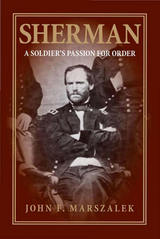
Sherman: A Soldier’s Passion for Order is the premier biography of William Tecumseh Sherman, the Civil War commander known for his “destructive war” policy against Confederates and as a consummate soldier. This updated edition of John F. Marszalek’s award-winning book presents the general as a complicated man who, fearing anarchy, searched for the order that he hoped would make his life a success.
Sherman was profoundly influenced by the death of his father and his subsequent relationship with the powerful Whig politician Thomas Ewing and his family. Although the Ewings treated Sherman as one of their own, the young Sherman was determined to make it on his own. He graduated from West Point and moved on to service at military posts throughout the South. This volume traces Sherman’s involvement in the Mexican War in the late 1840s, his years battling prospectors and deserting soldiers in gold-rush California, and his 1850 marriage to his foster sister, Ellen. Later he moved to Louisiana, and, after the state seceded, Sherman returned to the North to fight for the Union.
Sherman covers the general’s early Civil War assignments in Kentucky and Missouri and his battles against former Southern friends there, the battle at Shiloh, and his rise to become second only to Grant among the Union leadership. Sherman’s famed use of destructive war, controversial then and now, is examined in detail. The destruction of property, he believed, would convince the Confederates that surrender was their best option, and Sherman’s successful strategy became the stuff of legend.
This definitive biography, which includes forty-six illustrations, effectively refutes misconceptions surrounding the controversial Union general and presents Sherman the man, not the myth.
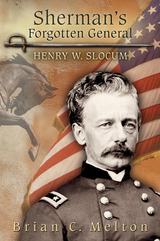
Henry Warner Slocum, a Union major general who was a corps and army commander in the Civil War, served from the first call for troops until he stood with William Tecumseh Sherman to receive Joseph E. Johnston’s surrender after Appomattox. He saw action at Bull Run, Chancellorsville, and Gettysburg, and by the end of the war he had taken command of the Army of Georgia, yet historians have largely overlooked this key commander.
Brian Melton has written the first scholarly account of this important general—the first full-length biography in nearly a century—who as one of Sherman’s most trusted commanders exercised significant influence during the Civil War. Although Slocum is remembered primarily for his lackluster performance at Gettysburg, Melton discloses that there is more to him than current history credits, offering a holistic account of his life to show that his career was much more significant than has been supposed.
Slocum took on the characteristics of the leaders he served, and Melton reveals how Slocum’s attitudes and tactics changed dramatically between commanders to explain why he proved to be of little help to George McClellan and almost a liability while serving under “Fighting Joe” Hooker and yet was an effective commander under Sherman. Slocum became Sherman’s “left arm” and adapted so thoroughly to his style of generalship that he anticipated the general’s intentions on two important occasions, and Melton contends that Slocum was a much more important contributor to the success of Sherman’s later campaigns than has been acknowledged, becoming at times more aggressive and driving than Sherman himself.
Melton ultimately considers Slocum’s fate as one of the forgotten generals of the Civil War—brought on largely by his joining the Democratic Party in 1865—and demonstrates why previous simplistic depictions of Slocum miss the mark. By providing the first detailed look at this important second-tier commander, Sherman’s Forgotten General illuminates the influences, events, and individuals of Slocum’s career to show that, while he may not have changed the course of the war, he played a conspicuous and important role in its successful execution that has long deserved to be recognized.
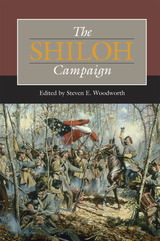
Some 100,000 soldiers fought in the April 1862 battle of Shiloh, and nearly 20,000 men were killed or wounded; more Americans died on that Tennessee battlefield than had died in all the nation’s previous wars combined. In the first book in his new series, Steven E. Woodworth has brought together a group of superb historians to reassess this significant battleandprovide in-depth analyses of key aspects of the campaign and its aftermath.
The eight talented contributors dissect the campaign’s fundamental events, many of which have not received adequate attention before now. John R. Lundberg examines the role of Albert Sidney Johnston, the prized Confederate commander who recovered impressively after a less-than-stellar performance at forts Henry and Donelson only to die at Shiloh; Alexander Mendoza analyzes the crucial, and perhaps decisive, struggle to defend the Union’s left; Timothy B. Smith investigates the persistent legend that the Hornet’s Nest was the spot of the hottest fighting at Shiloh; Steven E. Woodworth follows Lew Wallace’s controversial march to the battlefield and shows why Ulysses S. Grant never forgave him; Gary D. Joiner provides the deepest analysis available of action by the Union gunboats; Grady McWhineydescribes P. G. T. Beauregard’s decision to stop the first day’s attack and takes issue with his claim of victory; and Charles D. Grear shows the battle’s impact on Confederate soldiers, many of whom did not consider the battle a defeat for their side. In the final chapter, Brooks D. Simpson analyzes how command relationships—specifically the interactions among Grant, Henry Halleck, William T. Sherman, and Abraham Lincoln—affected the campaign and debunks commonly held beliefs about Grant’s reactions to Shiloh’s aftermath.
The Shiloh Campaign will enhance readers’ understanding of a pivotal battle that helped unlock the western theater to Union conquest. It is sure to inspire further study of and debate about one of the American Civil War’s momentous campaigns.
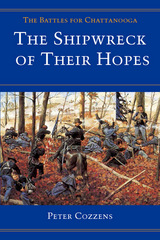
Civil War enthusiasts will welcome this concluding volume of Peter Cozzens's highly praised trilogy on the Civil War in the West.
The battle around Chattanooga in the late fall of 1863 were among the most decisive of the Civil War, opening the Deep South to the Union and setting the stage for the Atlanta campaign and the March to the Sea. After Chattanooga, the principal Confederate army in the West fought without spirit or hope of victory. Cozzens's comprehensive account details movements of individual regiments, even as it reveals the larger impact of the campaign on the outcome of the war.
In The Shipwreck of Their Hopes, Cozzens draws on his acclaimed storytelling skills and exhaustive research efforts to fully chronicle one of the South's most humiliating defeats. As in his earlier books, he brings to life the officers and enlisted men who fought the war.
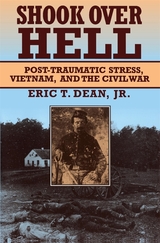
Vietnam still haunts the American conscience. Not only did nearly 58,000 Americans die there, but--by some estimates--1.5 million veterans returned with war-induced Post-Traumatic Stress Disorder (PTSD). This psychological syndrome, responsible for anxiety, depression, and a wide array of social pathologies, has never before been placed in historical context. Eric Dean does just that as he relates the psychological problems of veterans of the Vietnam War to the mental and readjustment problems experienced by veterans of the Civil War.
Employing a multidisciplinary approach that merges military, medical, and social history, Dean draws on individual case analyses and quantitative methods to trace the reactions of Civil War veterans to combat and death. He seeks to determine whether exuberant parades in the North and sectional adulation in the South helped to wash away memories of violence for the Civil War veteran. His extensive study reveals that Civil War veterans experienced severe persistent psychological problems such as depression, anxiety, and flashbacks with resulting behaviors such as suicide, alcoholism, and domestic violence. By comparing Civil War and Vietnam veterans, Dean demonstrates that Vietnam vets did not suffer exceptionally in the number and degree of their psychiatric illnesses. The politics and culture of the times, Dean argues, were responsible for the claims of singularity for the suffering Vietnam veterans as well as for the development of the modern concept of PTSD.
This remarkable and moving book uncovers a hidden chapter of Civil War history and gives new meaning to the Vietnam War.
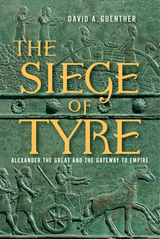
The Siege of Tyre: Alexander the Great and the Gateway to Empire by David A. Guenther is the first book-length treatment of this critical and fascinating campaign, featuring catapults, triremes, religious invocations, close combat, and marvels of engineering, including a massive manmade causeway from the mainland to the island. The siege is thoroughly analyzed from the standpoint of what is plausible given the nature of the technology of the time and what we now know of the geology and physical fortifications of ancient Tyre. The book begins with the background leading up to the siege: Alexander’s army, his invasion of Asia Minor, the sieges of Miletus and Halicarnassus, and the battles of the Granicus and Issus. It also describes the culture, people, cities, and economy of ancient Phoenicia to place the story of the siege in a broader context. Critical to the siege were the evolving technologies in the ancient Mediterranean world, including innovations in catapult design, military engineering, and naval architecture. Guenther also takes into account recent scientific discoveries about the geology of the ancient seabed around Tyre and its effect on the siege. Finally, the book points out possible gender-biased views on topics such as sacred temple prostitution among the ancient Phoenicians and the fate of women in besieged cities of the ancient world. An engrossing blend of ancient wonder and historical and technological analysis, The Siege of Tyre is the remarkable story of Alexander the Great’s “masterpiece.”
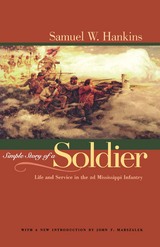
This fast-paced memoir was written in 1905 by 61-year-old Samuel W. Hankins while he was living in the Soldiers Home in Gulfport, Mississippi. It vividly details his years as a Confederate rifleman from the spring of 1861, when at a mere sixteen years of age he volunteered for the 2d Mississippi Infantry, through the end of the war in 1865, when he was just twenty years old and maimed for life.
The 2d Mississippi was part of the Army of Northern Virginia and as such saw action at Bull Run/Manassas, Seven Pines and the Peninsular Campaign, and Gettysburg. Besides being hospitalized with measles, suffering severely frostbitten feet, and being wounded by a minié ball at Railroad Cut, Hankins was captured by Federal forces and sent to a prisoner of war camp on David’s Island, New York. Later, he was transferred to a South Carolina hospital, returned home on furlough, joined a cavalry unit that fought at Atlanta. He was stationed in Selma, Alabama, when the war ended.
The strength of Hankins’s text lies in his straightforward narrative style virtually free of Lost Cause sentiment. Both Union and Confederate veterans could relate to his stories because so many of them had faced similar challenges during the war. Full of valuable information on a common soldier’s experience, the memoir still conjures the sights, sounds, and smells of warfare.

Even small states can have grand strategies. Singapore, despite its poor natural resource endowment, small population, and size, has often been described as punching above its weight in international affairs. Part of this stems from the way Singapore strategically integrates the different diplomatic, political, and defense-oriented tools at its disposal. To explore this, Singapore’s Grand Strategy offers a fresh and useful diplomatic, defense, and security history of Singapore, from its independence in 1965 through today’s period of strategic realignment.
Most previous studies of grand strategy have focused on super- or at least middle powers, but this book presents an important contribution to international relations and strategic studies by showing how the concept can help explain the strategic posture and achievements of small states as well. Moreover, he brings a historian's perspective to a subject usually tackled by political scientists. The result will be useful and important for scholars in these fields.
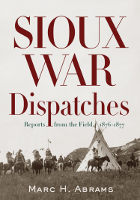
Rare, First-Hand Accounts from Newspaper Correspondents Describing the Course of America’s Largest Indian War, Compiled and Edited for the First Time in One Volume
“No one commands better the story of the Great Sioux War of 1876–1877 as presented in the nation’s newspapers than does Marc Abrams. Here is Abrams’s story of America’s greatest Indian war woven from those timely reports, augmented with insightful introductions and annotations. Abrams has produced a significant addition to the historiography of this endlessly fascinating struggle and its colorful personalities.” —Paul L. Hedren, author of After Custer: Loss and Transformation in Sioux Country
“Marc Abrams has provided an invaluable service to both scholars and lay readers in compiling this treasure trove of primary information. Like the correspondents he has come to know through his research, Marc has done the hard work; we need only read in comfort and benefit from his efforts.” —Douglas W. Ellison, author of Sole Survivor: An Examination of the Frank Finkel Narrative
“Marc Abrams’s book is an exciting and innovative approach that brings immediacy to the campaigns of Custer, Crook, and Miles, and teems with fascinating new detail. Sioux War Dispatches not only offers a gripping contemporary window into those times, it fills an important reference need as well.” —Jerome A. Greene, author of Stricken Field: The Little Bighorn Since 1876
Sioux War Dispatches: Reports from the Field, 1876-1877, tells the story of the Great Sioux War, including the battle of the Little Big Horn, primarily through the eyes of contemporary newspaper correspondents, both civilian and military. The volume begins with the Black Hills dilemma and the issue of the unceded territory (the disputed lands that were adjacent to the Great Sioux Reservation) and continues through to the spring of 1877 with the surrender of the legendary Sioux leader Crazy Horse. Along the way readers will learn about the Reynolds battle, the skirmish at Tongue River Heights, the battle of the Rosebud, the battle of the Little Big Horn, the skirmish at Warbonnet Creek, the fight at Slim Buttes, and more. In addition to numerous annotated excerpts from those who were there, are rare original dispatches, reprinted in full, that will take readers on a wild ride through several battles.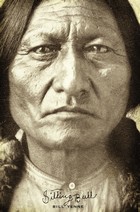
An Acclaimed Biography of the Greatest American Indian Leader
Sitting Bull's name is still the best known of any American Indian leader, but his life and legacy remain shrouded with misinformation and half-truths. Sitting Bull's life spanned the entire clash of cultures and ultimate destruction of the Plains Indian way of life. He was a powerful leader and a respected shaman, but neither fully captures the enigma of Sitting Bull. He was a good friend of Buffalo Bill and skillful negotiator with the American government, yet erroneously credited with both murdering Custer at the Little Big Horn and with being the chief instigator of the Ghost Dance movement. The reality of his life, as Bill Yenne reveals in his absorbing new portrait, Sitting Bull, is far more intricate and compelling. Tracing Sitting Bull's history from a headstrong youth and his first contact with encroaching settlers, through his ascension as the spiritual and military leader of the Lakota, friendship with a Swiss-American widow from New York, and death at the hands of the Indian police on the eve of the massacre at Wounded Knee, Yenne scoured rare contemporary records and consulted Sitting Bull's own "Hieroglyphic Autobiography" in the course of his research. While Sitting Bull was the leading figure of Plains Indian resistance his message, as Yenne explains, was of self-reliance, not violence. At the Battle of the Little Bighorn, Sitting Bull was not confronting Custer as popular myth would have it, but riding through the Lakota camp making sure the most defenseless of his tribe--the children--were safe. In Sitting Bull we find a man who, in the face of an uncertain future, helped ensure the survival of his people.
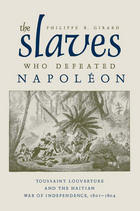
A deeply researched and definitive account of the climactic battle at the end of the Haitian Revolution
Among the many rebellions against European colonial empires, the Haitian Revolution against France is among the most dramatic and complex. Having begun in 1791 as France was in the throes of its own young revolution, the conflict reached its dramatic climax when Napoleon dispatched a heavily armed expeditionary force led by his brother-in-law Charles Leclerc to re-establish slavery and the sugar economy that had so enriched France. Philippe Girard’s Slaves Who Defeated Napoleon is a deeply researched and engrossing account of this invasion and its spectacular defeat.
For this ambitious account, Philippe Girard has studied not only primary records in Haiti itself but also rare documents from nineteen public and private archives and research libraries in French, U.S., British, and Spanish collections. His more inclusive approach provides a fuller, more accurate and detailed narrative. He reveals not only key military movements, but also less-known aspects like the activities of U.S. merchants, in-fighting within Napoleon’s government, and communication between both sides and other European powers. Girard fills the work with unforgettable stories of those who led or were caught up in the war, people like poorly armed Black soldiers who ambushed Bonaparte’s columns, French child drummers, Jewish bankers in Kingston, weapon smugglers from Quaker Philadelphia, Polish artillerists, and mixed-raced people struggling to preserve their freedom against both Black and white opponents.
Transcending pat ideological and racial categories, the book brings into focus an Atlantic society at the crossroads of African and European influences, where Haitian rebels fought France while embracing its ideals.
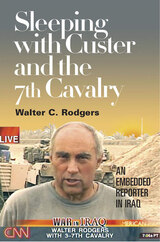
An essential document of the first American war of the new century
Under a full opalescent moon in the spring of 2003, CNN correspondent Walter C. Rodgers and three colleagues climbed into an unarmored Humvee loaded with satellite transmission equipment and fell into column formation with the MIAI Abrams battle tanks and Bradley fighting vehicles of Apache Troop, Third Squadron, of the storied 7th Cavalry and crossed the Line of Departure between Kuwait and Iraq. Sleeping with Custer and the 7th Cavalry: An Embedded Reporter in Iraq is Rodgers’s account of the fight from the Kuwaiti border to the Iraqi capital of Baghdad.
Rodgers was embedded with the “tip of the tip of the spear,” the armored reconnaissance unit tasked with clearing the way for the invasion of Iraq. For the next three weeks Rodgers—a seasoned combat correspondent who has covered armed conflicts in the West Bank, along the “Green Line” in Lebanon, and in Sarajevo, Azerbaijan, and Afghanistan—was a first-person witness to the opening campaign of the most significant war America has embarked upon since Vietnam.
Rodgers and his journalistic colleagues in Operation Iraqi Freedom became pioneers in the process of embedding, the placing of journalists who can transmit video reports in real time under combat conditions with no censoring authority to block their reporting. During this journey into war, Rodgers and his crew embraced the dangers, the numbing fatigue, and the moments of stark fear of the young armored cavalrymen they lived with twenty-four hours each day, an experience that created for them the lifelong bond that only soldiers serving together under fire share.
Rodgers also details his return visit to Iraq a year later, reflecting on the nature of war and sharing his personal feelings about a conflict that has claimed the lives of over fifteen hundred American men and women. The volume is illustrated with photographs taken during the invasion by Jeff Barwise, the CNN engineer who accompanied Rodgers.
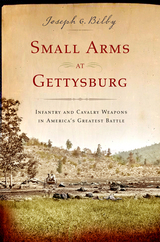
The Effect of Soldiers’ Weapons on the Turning Point of the Civil War
The three-day battle of Gettysburg has probably been the subject of more books and articles than any other comparable event. Surprisingly, until this work, no one has analyzed the firearms and other individual soldier’s weapons used at Gettysburg in any great detail. The battle was a watershed, with military weapons technologies representing the past, present, and future—sabers, smoothbores, rifles, and breechloaders—in action alongside each other, providing a unique opportunity to compare performance and use, as well as determining how particular weapons and their deployment affected the outcome and course of the battle.
Small Arms at Gettysburg: Infantry and Cavalry Weapons in America’s Greatest Battle covers all of the individual soldier’s weapons—muskets, rifle-muskets, carbines, repeaters, sharpshooter arms, revolvers, and swords—providing a detailed examination of their history and development, technology, capabilities, and use on the field at Gettysburg. Here we learn that the smoothbore musket, although beloved by some who carried it, sang its swan song, the rifle-musket began to come into its own, and the repeating rifle, although tactically mishandled, gave a glimpse of future promise. This is the story of the weapons and men who carried them into battle during three days in July 1863.
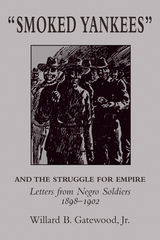
Called upon for the first time to render military service outside the States, Negro soldiers (called Smoked Yankees by the Spaniards) were eager to improve their status at home by fighting for the white man in the Spanish-American War. Their story is told through countless letters sent to black U.S. newspapers that lacked resources to field their own reporters. The collection constitutes a remarkably complete and otherwise undisclosed amount of the black man’s role in—and attitude toward—America’s struggle for empire.
In first-hand reports of battles in the Philippine Islands and Cuba, Negro soldiers wrote from the perspective of dispossessed citizens struggling to obtain a larger share of the rights and privileges of Americans.
These letters provide a fuller understanding of the exploits of black troops through their reports of military activities and accounts of foreign peoples and its cultures.
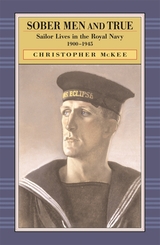
The image of the naval sailor is that of an enigmatic but compelling figure, a globe-trotting adventurer, swaggering and irresponsible in port but swift to flex the national muscle at sea and beyond. Appealing as this popular image may be, scant effort has been expended to reveal the truth behind the stereotype.
Thanks to Christopher McKee's groundbreaking work, it is now possible to hear from sailors themselves--in this case, those who served in Great Britain's Royal Navy during the first half of the twentieth century. McKee has scoured sailors' unpublished diaries, letters, memoirs, and oral interviews to uncover the lives and secret thoughts of British men of the lower deck. From working-class childhoods teetering on the edge of poverty to the hardships of finding civilian employment after leaving the navy; from sexual initiation in the brothels of Oran and Alexandria to the terror of battle, the former sailors speak with candor about all aspects of naval life: the harsh discipline and deep comradeship, the shipboard homoeroticism, the pleasures and temptations of world travel, and the responsibilities of marriage and family.
McKee has shaped the first authentic model of the naval enlisted experience, an account not crafted by officers or civilian reformers but deftly told in the sailors' own voices. The result is a poignant and complex portrait of lower-deck lives.
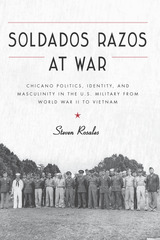
What were the catalysts that motivated Mexican American youth to enlist or readily accept their draft notices in World War II, Korea, or Vietnam? In Soldados Razos at War, historian and veteran Steven Rosales chronicles the experiences of Chicano servicemen who fought for the United States, explaining why these men served, how they served, and the impact of their service on their identity and political consciousness.
As a social space imbued with its own martial and masculine ethos, the U.S. military offers an ideal way to study the aspirations and behaviors that carried over into the civilian lives of these young men. A tradition of martial citizenship forms the core of the book. Using rich oral histories and archival research, Rosales investigates the military’s transformative potential with a particular focus on socioeconomic mobility, masculinity, and postwar political activism across three generations.
The national collective effort characteristic of World War II and Korea differed sharply from the highly divisive nature of American involvement in Vietnam. Thus, for Mexican Americans, military service produced a wide range of ideological reactions, with the ideals of each often in opposition to the others. Yet a critical thread connecting these diverse outcomes was a redefined sense of self and a willingness to engage in individual and collective action to secure first-class citizenship.
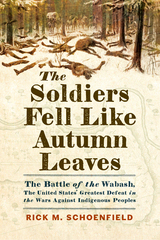
The Soldiers Fell Like Autumn Leaves: The Battle of the Wabash, the United States’ Greatest Defeat in the Wars Against Indigenous Peoples by Rick M. Schoenfield places this important war into its cultural, racial, economic, and political context. For the first time, the ecological impact is explored, for at stake in the clash between Woodland Native Americans and white, agrarian settlement, was the fate of a vast forest eco-system. The issue echoes today in the debate over climate change, deforestation, and indigenous control of forest habitats. Based on primary sources, some of which are consulted here for the first time, including a newly discovered muster roll and the recent archaeological study of the battlefield, the author provides the most accurate description of the battle while capturing the drama of what occurred. He also critically examines the information gathering,planning, and tacticsof both the Maumee Confederation and the United States, from the conception of the campaign through the battlefield decisions. By skillfully weaving together the disparate but related parts of the larger history of this battle,The Soldiers Fell Like Autumn Leaves allows the reader to better understand the motivations and long-term consequences of the war against Native peoples in the Americas.
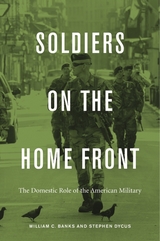
When crisis requires American troops to deploy on American soil, the country depends on a rich and evolving body of law to establish clear lines of authority, safeguard civil liberties, and protect its democratic institutions and traditions. Since the attacks of 9/11, the governing law has changed rapidly even as domestic threats—from terror attacks, extreme weather, and pandemics—mount. Soldiers on the Home Front is the first book to systematically analyze the domestic role of the military as it is shaped by law, surveying America’s history of judicial decisions, constitutional provisions, statutes, regulations, military orders, and martial law to ask what we must learn and do before the next crisis.
America’s military is uniquely able to save lives and restore order in situations that overwhelm civilian institutions. Yet the U.S. military has also been called in for more coercive duties at home: breaking strikes, quelling riots, and enforcing federal laws in the face of state resistance. It has spied on and overseen the imprisonment of American citizens during wars, Red scares, and other emergencies. And while the fears of the Republic’s founders that a strong army could undermine democracy have not been realized, history is replete with reasons for concern.
At a time when the military’s domestic footprint is expanding, Banks and Dycus offer a thorough analysis of the relevant law and history to challenge all the stakeholders—within and outside the military—to critically assess the past in order to establish best practices for the crises to come.
Nichol’s 61st Georgia fought in the renowned brigade commanded consecutively by generals Alexander R. Lawton, John B. Gordon, and Clement A. Evans.
Framed without any excess of sentimental hindsight, in addition to reporting on great battles and dramatic moments, Nichol’s told the story of two cousins killing each other in a quarrel about cooking duties and described maggot-infested corpses around Spotsylvania’s Bloody Angle.
Includes an annotated roster of the 61st supplies which details about Nichol’s fellow veterans, some of which is not available anywhere else.

On September 28, 1863, the Galveston Tri-Weekly News caught its readers' attention with an item headlined "A Yankee Note-Book." It was the first installment of a diary confiscated from U.S. Marine Henry O. Gusley, who had been captured at the Battle of Sabine Pass. Gusley's diary proved so popular with readers that they clamored for more, causing the newspaper to run each excerpt twice until the whole diary was published. For many in Gusley's Confederate readership, his diary provided a rare glimpse into the opinions and feelings of an ordinary Yankee—an enemy whom, they quickly discovered, it would be easy to regard as a friend.
This book contains the complete text of Henry Gusley's Civil War diary, expertly annotated and introduced by Edward Cotham. One of the few journals that have survived from U.S. Marines who served along the Gulf Coast, it records some of the most important naval campaigns of the Civil War, including the spectacular Union success at New Orleans and the embarrassing defeats at Galveston and Sabine Pass. It also offers an unmatched portrait of daily life aboard ship. Accompanying the diary entries are previously unpublished drawings by Daniel Nestell, a doctor who served in the same flotilla and eventually on the same ship as Gusley, which depict many of the locales and events that Gusley describes.
Together, Gusley's diary and Nestell's drawings are like picture postcards from the Civil War—vivid, literary, often moving dispatches from one of "Uncle Sam's nephews in the Gulf."
Originally published in a limited edition in 1866, this memoir of Will Tunnard’s experiences and observations of the Civil War in the West, where he served in the famed Third Louisiana Infantry, is one of only a handful of chronicles left by western Confederate soldiers. His first-person account of the battles of Wilson’s Creek, Pea Ridge, Iuka, and Corinth as well as the seige of Vicksburg, is a vivid history of these hard-fought campaigns which determined the outcome of the war in the Trans-Mississippi theater.
Using letters and diaries assembled from former comrades as well as his own daily journal, Tunnard tells the story of his regiment and its extraordinary odyssey from the Gulf of Mexico to the Ozark Plateau and from the Indian Territory to Mobile Bay. He offers an extensive and valuable account of capture and parole at Vicksburg and includes muster rolls which will interest genealogists as well as Civil War scholars and history enthusiasts. With a clear eye for detail and an engaging, objective style, Tunnard conveys the pathos of war and recounts the trials of camp life, social conditions, and the war’s affect on the civilian population.
Noted Civil War scholar William L. Shea supports the original text with background on the regiment and the time period, sketching a helpful chronology of events. In retelling this remarkable story of comradeship, hardship, endurance, courage, pride, and eventual defeat, Tunnard and Shea give modern readers a rare glimpse of the war in the West.
During the Civil War, many southerners expressed serious opposition to secession and openly entreated their fellow southerners to maintain support for the Union. A number of these unionists actively opposed the Confederacy while remaining within its borders; others fled their homes and the South, becoming exiles in northern cities and the border slave states. The southern unionist leaders used their oral and written communication skills to proclaim their opposition to the Confederacy, often producing pamphlets that circulated in the North, in the border states, and in the heart of the Confederacy itself. Jon L. Wakelyn unites the voices of these southern unionists in the first comprehensive collection of their written arguments—Southern Unionist Pamphlets and the Civil War.
Including eighteen pamphlets and a discussion of twenty-two others, this book provides a magnificent representation of the southern unionists and their concerns. Written between 1861 and 1865, the pamphlets were compiled by local and national political leaders, including three federal congressmen and future vice president and president Andrew Johnson, as well as concerned private citizens and members of the military and clergy. Except for Florida, South Carolina, and Georgia, all Confederate and border slave states are represented in this collection.
The topics discussed and the events described in the pamphlets cover a wide range of subjects. The authors discuss their motivation to remain loyal to the union, the actions of their friends and enemies, the perilous life of unionists behind military lines, their continued support for the federal government, and their hopes for a restored Union. Aware that their northern allies would read these pamphlets, the unionists also wrote to solicit northern aid, to renew efforts to defeat the Confederacy, and to gain sympathy for the plight of their people behind enemy lines.
A remarkable collection of primary source material, Southern Unionist Pamphlets and the Civil War provides the most detailed study of the internal resistance to the Confederacy available to date. Students, scholars, and general readers alike will find this volume an invaluable resource for Civil War studies.
Russian officials claim today that the USSR never possessed an offensive biological weapons program. In fact, the Soviet government spent billions of rubles and hard currency to fund a hugely expensive weapons program that added nothing to the country’s security. This history is the first attempt to understand the broad scope of the USSR’s offensive biological weapons research—its inception in the 1920s, its growth between 1970 and 1990, and its possible remnants in present-day Russia. We learn that the U.S. and U.K. governments never obtained clear evidence of the program’s closure from 1990 to the present day, raising the critical question whether the means for waging biological warfare could be resurrected in Russia in the future.
Based on interviews with important Soviet scientists and managers, papers from the Soviet Central Committee, and U.S. and U.K. declassified documents, this book peels back layers of lies, to reveal how and why Soviet leaders decided to develop biological weapons, the scientific resources they dedicated to this task, and the multitude of research institutes that applied themselves to its fulfillment. We learn that Biopreparat, an ostensibly civilian organization, was established to manage a top secret program, code-named Ferment, whose objective was to apply genetic engineering to develop strains of pathogenic agents that had never existed in nature. Leitenberg and Zilinskas consider the performance of the U.S. intelligence community in discovering and assessing these activities, and they examine in detail the crucial years 1985 to 1992, when Mikhail Gorbachev’s attempts to put an end to the program were thwarted as they were under Yeltsin.
The military achievements of the emperors Nikephoros Phokas, John Tzimiskes, and Basil II brought the Byzantine Empire to the height of its power by the early eleventh century. This volume presents new editions and translations of two military treatises—the Praecepta militaria of Nikephoros Phokas and the revised version included in the Taktika of Nikephoros Ouranos—outlining the tactical system used by Byzantine armies in campaigns against Muslim forces in Cilicia and Syria. Products of experienced soldiers, the texts offer a realistic view of Byzantine warfare and reveal the sophistication of Byzantine military science.
Eric McGeer places the treatises in military historical context; explores the factors that led the Byzantine army to fight as it did; and investigates morale, discipline, and leadership—all of which determined the difference between failure and success.
The military achievements of the emperors Nikephoros Phokas, John Tzimiskes, and Basil II brought the Byzantine Empire to the height of its power by the early eleventh century. Sowing the Dragon’s Teeth presents new editions and translations of two military treatises—the Praecepta militaria of Nikephoros Phokas and the revised version included in the Taktika of Nikephoros Ouranos—outlining the tactical system used by Byzantine armies in campaigns against Muslim forces in Cilicia and Syria. Products of experienced soldiers, the texts offer a realistic view of Byzantine warfare and reveal the sophistication of Byzantine military science.
Eric McGeer places the treatises in their military historical context; explores the factors that led the Byzantine army to fight as it did; and investigates morale, discipline, and leadership—all of which determined the difference between failure and success.

Setting the tone for the collection, NASA chief historian Roger D. Launius and Howard McCurdy maintain that the nation's presidency had become imperial by the mid-1970s and that supporters of the space program had grown to find relief in such a presidency, which they believed could help them obtain greater political support and funding. Subsequent chapters explore the roles and political leadership, vis-à-vis government policy, of presidents Eisenhower, Kennedy, Johnson, Nixon, Ford, Carter, and Reagan.
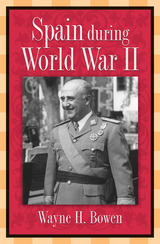
The story of Spain during World War II has largely been viewed as the story of dictator Francisco Franco’s foreign diplomacy in the aftermath of civil war. Wayne H. Bowen now goes behind the scenes of fascism to reveal less-studied dimensions of Spanish history. By examining the conflicts within the Franco regime and the daily lives of Spaniards, he has written the first book-length assessment of the regime’s formative years and the struggle of its citizens to survive.
Bowen argues that the emphasis of previous scholars on Spain’s foreign affairs is misplaced—that even the most pro-Axis elements of Franco’s regime were more concerned with domestic politics, the potential for civil unrest, and poverty than with events in Europe. Synthesizing a wide range of Spanish-language scholarship and recently declassified government documents, Bowen reveals how Franco’s government stumbled in the face of world war, inexperienced leaders, contradictory political ideology, and a divided populace. His book tells the dramatic story of a six-year argument among the general, the politicians, and the clerics on nothing less than what should be the nature of the new Spain, touching on issues as diverse as whether the monarchy should be restored and how women should dress.
Examining the effects of World War II years on key facets of Spanish life—Catholicism, the economy, women, leisure, culture, opposition to Franco, and domestic politics—Bowen explores a wide range of topics: the grinding poverty following the civil war, exacerbated by poor economic decisions; restrictions on employment for women versus the relative autonomy enjoyed by female members of the Falange; the efforts of the Church to recover from near decimation; and methods of repression practiced by the regime against leftists, separatists, and Freemasons. He also shows that the lives of most Spaniards remained apolitical and centered on work, family, and leisure marked by the popularity of American movies and the resurgence of loyalty to regional sports teams.
Unlike other studies that have focused exclusively on Spain’s foreign affairs during the Second World War, Bowen’s work stresses the importance of the home front not only in keeping Spain out of the war but also in keeping Franco in power. He shows that in spite of internal problems and external distractions, Franco’s government managed to achieve its goals of state survival and internal peace. As the only single-volume survey of this era available in English, Spain during World War II is a masterful synthesis that offers a much-needed alternative view of the Franco regime during crucial times as it provides a testament to the Spanish people’s will to survive.
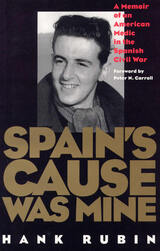
“No man ever entered earth more honorably than those who died in Spain.”—Ernest Hemingway
In 1937, Hank Rubin, a twenty-year-old Jewish pre-med student at UCLA, volunteered for service in the International Brigades combating fascists in the Spanish Civil War. In his illustrated memoir, Rubin reflects on those events, making no apologies for his youthful impulsiveness, bravado, and ideology, but recalling the heroics and sufferings he witnessed and experienced in Spain, as well as the disappointing treatment he received upon his return.
Using recently declassified documents from Spain and the United States, personal interviews, and unpublished and published Spanish, German, British, and U.S. records, Spaniards and Nazi Germany makes a significant contribution to the understanding of Hispano-German relations during the 1930s and 1940s. This study shows that Naziphiles within the Spanish Falange, Spain's fascist party, made a concerted effort to bring their nation into World War II, and that only the indecisiveness of dictator Francisco Franco and diplomatic mistakes by the Nazis prevented them from succeeding.
Bowen demonstrates that while Spain was neutral in World War II, its policies clearly favored the Axis, at least in the early stages of the war. Franco, who had emerged victorious from the Spanish Civil War in 1939 largely because of support from Adolf Hitler and Benito Mussolini, even carefully considered entering World War II on the side of Nazi Germany.
By the late 1930s, members of the Falange saw World War II as a revolutionary opportunity, a chance to lead Spain into a new age as a partner with Nazi Germany and Fascist Italy at the head of a New Europe of social justice and authoritarian regimes. By the end of 1939, a significant minority of pro- Nazi Spaniards were unhappy that Spain had not entered the war and remade itself to fit better into Hitler's New Order. Bowen argues that support for Nazi Germany in Spain and among Spanish communities throughout Europe was both wide and deep, and that this enthusiasm for the Third Reich and the New Order it promised to bring lasted until the end of the war. Despite statements of neutrality by the Spanish government, the Franco regime was well aware of this collaboration by Spanish citizens as late as 1944-1945 and did little to stop it. Had Hitler been more interested in bringing Spain into his empire, or exploiting the pro-Nazi sentiments of these thousands of Spaniards, he might have replaced Franco with someone more willing to support his interests even as late as 1943.
Spaniards and Nazi Germany presents many possibilities for what might have been a far different outcome of World War II in Europe. It shows that even without the full support of the Spanish or German governments, pro-Nazi Spaniards, even if they did not quite bring Spain into the war, added to the strength of the Third Reich by serving in its armies, working in its factories, and promoting its ideas to other nations.

A rare insider’s account of Burmese history, including the nation’s ongoing civil conflicts.
Burma's ongoing travails have been framed by the conflict between former State Counsellor Aung San Suu Kyi and successive military juntas. Win Htein has been closely involved in many of these skirmishes. Involved in the formation of the National League for Democracy (NLD) in 1988, he became a key NLD figure, member of parliament, and one of “The Lady’s” closest confidantes. His detailed insider’s account of the NLD’s twists and turns over decades of military repression and a few brief years of democratic resurgence is unmatched.
In many ways, Htein's life has been intertwined with his country's recent history. Born during the Japanese invasion of British Burma in 1941, he grew up in the tumultuous years of Burma's independence. A military cadet when General Ne Win seized power in 1962, he later took part in the fight against communist and separatist organizations. He reveals several unknown stories from his time inside the military, which ended in 1977 when, in the aftermath of a failed military coup, he began a new career in business. In 1988, he became involved in the pro-democracy movement and joined the personal staff of Suu Kyi. His arrest, torture, and imprisonment the following year after the movement’s suppression and Suu Kyi’s house arrest began decades of detention, release, and political struggle. Following the 2021 coup, once again, he is behind bars.
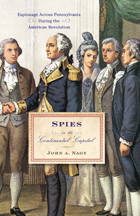
The Critical Role of British, French, and American Intelligence Operations in Colonial Pennsylvania
It did not take long after the Seven Years’ War—the French and Indian War in North America—for France to return spies to America in order to determine the likelihood of regaining the territory they lost to Britain. One of the key places of French espionage was the colony of Pennsylvania since its frontier had been an important crossroads of French influence in North America. The French recognized then that there was a real possibility that the colonies would seek their independence from Britain. Against this backdrop, award-winning historian John A. Nagy begins his investigation of espionage in colonial Pennsylvania.
Philadelphia played a key role in the history of spying during the American Revolution because it was the main location for the Continental Congress, was occupied by the British Command, and then returned to Continental control. Philadelphia became a center of spies for the British and Americans—as well as double agents. George Washington was a firm believer in reliable military intelligence; after evacuating New York City, he neglected to have a spy network in place: when the British took over Philadelphia, he did not make the same mistake, and Washington was able to keep abreast of British troop strengths and intentions. Likewise, the British used the large Loyalist community around Philadelphia to assess the abilities of their Continental foes, as well as the resolve of Congress. In addition to describing techniques used by spies and specific events, such as the Major André episode, Nagy has scoured rare primary source documents to provide new and compelling information about some of the most notable agents of the war, such as Lydia Darragh, a celebrated American spy.
An important contribution to Revolutionary War history, Spies in the Continental Capital: Espionage Across Pennsylvania During the American Revolution demonstrates that intelligence operations on both sides emanating from Pennsylvania were vast, well-designed, and critical to understanding the course and outcome of the war.
Students and enthusiasts of American history are familiar with the Revolutionary War spies Nathan Hale and Benedict Arnold, but few studies have closely examined the wider intelligence efforts that enabled the colonies to gain their independence. Spies, Patriots, and Traitors provides readers with a fascinating, well-documented, and highly readable account of American intelligence activities during the era of the Revolutionary War, from 1765 to 1783, while describing the intelligence sources and methods used and how our Founding Fathers learned and practiced their intelligence role.
The author, a retired CIA officer, provides insights into these events from an intelligence professional’s perspective, highlighting the tradecraft of intelligence collection, counterintelligence, and covert actions and relating how many of the principles of the era’s intelligence practice are still relevant today. Kenneth A. Daigler reveals the intelligence activities of famous personalities such as Samuel Adams, George Washington, Benjamin Franklin, Nathan Hale, John Jay, and Benedict Arnold, as well as many less well-known figures. He examines the important role of intelligence in key theaters of military operations, such as Massachusetts, New York, New Jersey, Pennsylvania, and in General Nathanael Greene’s campaign in South Carolina; the role of African Americans in the era’s intelligence activities; undertakings of networks such as the Culper Ring; and intelligence efforts and paramilitary actions conducted abroad.
Spies, Patriots, and Traitors adds a new dimension to our understanding of the American Revolution. The book’s scrutiny of the tradecraft and management of Revolutionary War intelligence activities will be of interest to students, scholars, intelligence professionals, and anyone who wants to learn more about this fascinating era of American history.

Students and enthusiasts of American history are familiar with the Revolutionary War spies Nathan Hale and Benedict Arnold, but few studies have closely examined the wider intelligence efforts that enabled the colonies to gain their independence. Spies, Patriots, and Traitors provides readers with a fascinating, well-documented, and highly readable account of American intelligence activities during the era of the Revolutionary War, from 1765 to 1783, while describing the intelligence sources and methods used and how our Founding Fathers learned and practiced their intelligence role.
The author, a retired CIA officer, provides insights into these events from an intelligence professional’s perspective, highlighting the tradecraft of intelligence collection, counterintelligence, and covert actions and relating how many of the principles of the era’s intelligence practice are still relevant today. Kenneth A. Daigler reveals the intelligence activities of famous personalities such as Samuel Adams, George Washington, Benjamin Franklin, Nathan Hale, John Jay, and Benedict Arnold, as well as many less well-known figures. He examines the important role of intelligence in key theaters of military operations, such as Massachusetts, New York, New Jersey, Pennsylvania, and in General Nathanael Greene’s campaign in South Carolina; the role of African Americans in the era’s intelligence activities; undertakings of networks such as the Culper Ring; and intelligence efforts and paramilitary actions conducted abroad.
Spies, Patriots, and Traitors adds a new dimension to our understanding of the American Revolution. The book’s scrutiny of the tradecraft and management of Revolutionary War intelligence activities will be of interest to students, scholars, intelligence professionals, and anyone who wants to learn more about this fascinating era of American history.
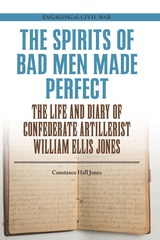
In 1865 Jones returned to his prewar printing trade in Richmond, and his lasting reputation stems from his namesake publishing company’s role in the creation and dissemination of much of the Lost Cause ideology. Unlike the pro-Confederate books and pamphlets Jones published—primary among them the Southern Historical Society Papers—his diary shows the mindset of an unenthusiastic soldier. In a model of contextualization, Constance Hall Jones shows how her ancestor came to embrace an uncritical veneration of the army’s leadership and to promulgate a mythology created by veterans and their descendants who refused to face the amorality of their cause.
Jones brackets the soldier’s diary with rich, biographical detail, profiling his friends and relatives and providing insight into his childhood and post-war years. In doing so, she offers one of the first serious investigations into the experience of a Welsh immigrant family loyal to the Confederacy and makes a significant contribution to our understanding of Civil War–era Richmond and the nineteenth-century publishing industry. Invitingly written, The Spirits of Bad Men Made Perfect is an engaging life-and-times story that will appeal to historians and general readers alike.
In spring of 1953, newly elected President Eisenhower sat down with his staff to discuss the state of American strategy in the cold war. America, he insisted, needed a new approach to an urgent situation. From this meeting emerged Eisenhower’s teams of “bright young fellows,” charged with developing competing policies, each of which would come to shape global politics. In Spirits of the Cold War, Ned O’Gorman argues that the early Cold War was a crucible not only for contesting political strategies, but also for competing conceptions of America and its place in the world. Drawing on extensive archival research and wide reading in intellectual and rhetorical histories, this comprehensive account shows cold warriors debating “worldviews” in addition to more strictly instrumental tactical aims. Spirits of the Cold War is a rigorous scholarly account of the strategic debate of the early Cold War—a cultural diagnostic of American security discourse and an examination of its origins.

ss 'America' for the United States Lines. The ship was sold to the Greek Chandris Lines in 1964 and served until 1977 very succesfully on the route Western-Europe-Australia-New Zealand. Later the route became a full round-the-world-service. After her Australian period the liner sailed under the names of 'America' (for the third time), 'Italis', 'Noga', 'Alferdoss' and finally 'American Star'. In this volume of Liners the history of the great liner from when she was purchased by the Greek interest in 1964 until her sad wracking in January 1994.
Featuring interviews from seventeen veteran submariners, Standing Watch: American Submarine Veterans Remember the Cold War Era offers the perspective of the submariners themselves—lending them a voice and paying homage to their service. Jonathan Li-Chung Leung provides an original glimpse into a world of unique challenges and characters, a life isolated and submerged, and a duty defined by the juxtaposition of monotonous routine and unparalleled excitement.
These personal accounts of life below the surface offer readers a front-row seat to close encounters with Soviet submarines and the naval blockade during the Cuban Missile Crisis, as well as an intimate understanding of daily life onboard the vessels, the culture of military discipline, and the religious-like fervor exercised in honoring traditions big and small. By applying first-hand perspectives to a larger thematic overview, this book uses authentic narratives to deliver a lively and colorful picture of the Silent Service.
Set against the backdrop of sobering geo-political disputes and their own role as the nation’s defenders against a seemingly ambiguous super-enemy, these veterans focus on their responsibilities and reflect on careers built on the simple axioms of pride and service. This invigorating and unalloyed account is an unprecedented addition to the existing literature on naval and military history.

Selected by Civil War Interactive as One of the Top Civil War Books of All Time
On April 12, 1862—one year to the day after Confederate guns opened on Fort Sumter and started the Civil War—a tall, mysterious smuggler and self-appointed Union spy named James J. Andrews and nineteen infantry volunteers infiltrated north Georgia and stole a steam engine called the General. Racing northward at speeds approaching sixty miles an hour, cutting telegraph lines and destroying track along the way, Andrews planned to open East Tennessee to the Union army, cutting off men and matériel from the Confederate forces in Virginia. If they succeeded, Andrews and his raiders could change the course of the war. But the General's young conductor, William A. Fuller, chased the stolen train first on foot, then by handcar, and finally aboard another engine, the Texas. He pursued the General until, running out of wood and water, Andrews and his men abandoned the doomed locomotive, ending the adventure that would soon be famous as The Great Locomotive Chase. But the ordeal of the soldiers involved was just beginning. In the days that followed, the "engine thieves" were hunted down and captured. Eight were tried and executed as spies, including Andrews. Eight others made a daring escape to freedom, including two assisted by a network of slaves and Union sympathizers. For their actions, before a personal audience with President Abraham Lincoln, six of the raiders became the first men in American history to be awarded the Medal of Honor—the nation's highest decoration for gallantry.
Americans north and south, both at the time and ever since, have been astounded and fascinated by this daring raid. But until now, there has not been a complete history of the entire episode and the fates of all those involved. Based on eyewitness accounts, as well as correspondence, diaries, military records, newspaper reports, deposition testimony and other primary sources, Stealing the General: The Great Locomotive Chase and the First Medal of Honor by Russell S. Bonds is a blend of meticulous research and compelling narrative that is now considered to be the definitive history of "the boldest adventure of the war."
Born to a prominent Philadelphia family in 1779, Stephen Decatur at age twenty-five became the youngest man ever to serve as a captain in the U.S. Navy. His intrepid heroism, leadership, and devotion to duty made him a perfect symbol of the aspirations of the growing nation. Leading men to victory in Tripoli, the War of 1812, and the Algerian war of 1815, and coining the phrase “Our country, right or wrong,” Decatur created an enduring legend of bravery, celebrated in poetry, song, paintings, and the naming of dozens of towns—from Georgia to Alabama to Illinois.
After the War of 1812, Decatur moved to Washington to help direct naval policy. His close friendships with James Madison, John Quincy Adams, and other political leaders soon made him a rising star in national politics. He and his wife Susan made their elegant home on Lafayette Square near the White House a center of Washington society. The capital and the entire nation were shocked in 1820 when Decatur died at the age of forty-one in a duel with a rival navy captain.
In this carefully researched and well-written biography, historian Robert Allison tells the story of Decatur's eventful life at a time when the young republic was developing its own identity—when the American people were deciding what kind of nation they would become. Although he died prematurely, Decatur played a significant role in the shaping of that national identity.
From Spears and Blowpipe Darts to the Ultimate Human-Powered Projectile
The arrow, essentially a specialized spear, is among the most ancient human inventions and can be found in cultures throughout the world. The need to launch a projectile farther and with greater accuracy than is possible with the human arm gave rise to a variety of solutions. Spearthrowers which extend the length of the user’s arm and therefore transfer greater power to the projectile were developed far back in prehistory, and both the American Indian atlatl and the Australian woomera are examples of this technology. Blowpipes, too, are recorded in various cultures and represent another ancient technology. It was soon discovered that a stringed bow could launch a small spearlike projectile we now know as the arrow, and this combination became the dominant method for shooting projectiles for tens of thousands of years. A wonderfully simple device, the arrow and bow revolutionized both hunting and warfare, not only because of the speed, force, and accuracy that could be achieved, but by the fact that the arrow makes almost no sound as it flies toward its target, providing an essential element of surprise.
In Straight and True: A Select History of the Arrow, Hugh D. H. Soar describes the transition from hand-thrown spear to bow-launched arrow and then follows the arrow’s developments in cultures around the world and across time. The book describes arrows found in Neolithic sites; those used by North and South American Indians—including a detailed discussion of poison-tipped arrows; arrows used in China, Japan, and Mongolia; and finally the arrow in Europe, where it was successfully paired with the longbow during the Middle Ages. After discussing the development of the arrow for sport and recreation, the author completes his survey with the changes in technology introduced during the twentieth century though the use of the alloy of aluminum with other lightweight metals as well as synthetic materials to construct parts of the arrow. Relying on his considerable knowledge accumulated through decades of research, the author provides the reader with an appreciation for a humble device that, coupled with the bow, changed the history of the world.

An eye-opening reconsideration of the Cold War arms control movement, showing how scientists who presented themselves as independent-minded opponents of the arms race in fact functioned as agents of the military-industrial complex that profited from it.
Do scientists speak truth to power? During the Cold War, a group of elite American strategists and science advisors claimed to do precisely that. Styling themselves as figures of rationality and restraint, they insisted that mutual assured destruction was the natural logic of the atomic age: as long as nuclear deterrence was credible, no one would ever shoot first. This doctrine, known as “strategic stability,” became the foundation of the arms control movement, earning its promoters widespread admiration as independent thinkers and steadfast peacemakers. But in this crucial counterhistory, Benjamin Wilson shows that we have misunderstood them and their efforts. Arms controllers, he reveals, worked not to restrain the nuclear arms race but to marginalize more radical approaches to disarmament.
As Wilson makes clear, strategic stability was never the objective condition the analysts presented it as. It was a flexible, contested metaphor based on ideas from physics, economics, and cybernetics, capable of justifying a wide range of policies. Yet the advisors insisted on one upshot above all: constant military research and development and the continuous upgrading of America’s strategic arsenal. That these policies benefited the military-industrial complex is no surprise, since many arms control thinkers were creatures of the Pentagon and corporate defense contractors. Some even spoke out against missile development in public while backing lavish funding behind closed doors.
Strange Stability powerfully corrects decades of mythmaking surrounding arms control. At the same time, Wilson offers a sobering reflection on the dream of technocratic restraint. The well-placed insider who resists powerful institutions is an enticing character, but more fictional than real.

Ancient expertise on water and warfare.
Frontinus, Sextus Iulius, ca. AD 35–103, was a capable Roman civil officer and military commander. Praetor of the city in 70 and consul in 73 or 74, 98 and 100, he was, about the year 76, sent to Britain as governor. He quelled the Silures of Wales, and began to build a road through their territory; his place was taken by Agricola in 78. In 97 he was given the highly esteemed office of Manager of Aqueducts at Rome. He is known to have been an augur, being succeeded by his friend Pliny the Younger.
The two sides of Frontinus’ public career are reflected in his two surviving works. Stratagems, written after 84, gives examples of military stratagems from Greek and Roman history, for the instruction of Roman officers, in three books; the fourth book is concerned largely with military discipline. The Aqueducts of Rome, written in 97–98, gives some historical details and a description of the aqueducts for the water supply of the city, with laws relating to them. Frontinus aimed at being useful and writes in a rather popular style which is both simple and clear.
Decisions about war have always been made by humans, but now intelligent machines are on the cusp of changing things – with dramatic consequences for international affairs. This book explores the evolutionary origins of human strategy, and makes a provocative argument that Artificial Intelligence will radically transform the nature of war by changing the psychological basis of decision-making about violence.
Strategy, Evolution, and War is a cautionary preview of how Artificial Intelligence (AI) will revolutionize strategy more than any development in the last three thousand years of military history. Kenneth Payne describes strategy as an evolved package of conscious and unconscious behaviors with roots in our primate ancestry. Our minds were shaped by the need to think about warfare—a constant threat for early humans. As a result, we developed a sophisticated and strategic intelligence.
The implications of AI are profound because they depart radically from the biological basis of human intelligence. Rather than being just another tool of war, AI will dramatically speed up decision making and use very different cognitive processes, including when deciding to launch an attack, or escalate violence. AI will change the essence of strategy, the organization of armed forces, and the international order.
This book is a fascinating examination of the psychology of strategy-making from prehistoric times, through the ancient world, and into the modern age.

Chronicles the history of battlefield air attack from 1911, when the airplane was first used in war, to the end of World War II.
The tatmadaw’s anti-communist propaganda during the 1950s was a key element in state ideology under the Ne Win regime, and the direct participation of tatmadaw officers in the Burma Socialist Programme Party and government ministries at the national and local level transformed the political party system and civilian bureaucracy. Personal relationships — between Ne Win and the tatmadaw officer corps, and within the military — were central to the growing influence of the military, and to the outcome of the political crisis and subsequent military coup d’état in 1988.
Nakanishi’s discussion of these processes reveals many heretofore-unknown facts about this “dark age” in the country’s political history, and highlights its institutional legacy for the post-1988 military regime and the reformist government that succeeded it. His thought-provoking conclusions are significant for Southeast Asia specialists and for students of politics generally, and his insights will be useful for anyone seeking to engage with Myanmar as it comes to terms with an outside world it once kept at arm’s length.
Established as a homeland for India’s Muslims in 1947, Pakistan has had a tumultuous history. Beset by assassinations, coups, ethnic strife, and the breakaway of Bangladesh in 1971, the country has found itself too often contending with religious extremism and military authoritarianism. Now, in a probing biography of her native land amid the throes of global change, Ayesha Jalal provides an insider’s assessment of how this nuclear-armed Muslim nation evolved as it did and explains why its dilemmas weigh so heavily on prospects for peace in the region.
“[An] important book…Ayesha Jalal has been one of the first and most reliable [Pakistani] political historians [on Pakistan]…The Struggle for Pakistan [is] her most accessible work to date…She is especially telling when she points to the lack of serious academic or political debate in Pakistan about the role of the military.”
—Ahmed Rashid, New York Review of Books
“[Jalal] shows that Pakistan never went off the rails; it was, moreover, never a democracy in any meaningful sense. For its entire history, a military caste and its supporters in the ruling class have formed an ‘establishment’ that defined their narrow interests as the nation’s.”
—Isaac Chotiner, Wall Street Journal
Using American, British, and Spanish documents, many previously unknown, Frank Owsley’s study establishes the Creek War and the struggle to control the Gulf borderlands as integral parts of the War of 1812. The war between the United States and a large part of the Creek nation is usually studied as local or regional history. These documentary sources, however, show the larger picture. They show Spain to have been a major influence in the Creek War and indicate the extent to which the British were aiding the Indians and using them to redirect American troops. On the other hand, Andrew Jackson, in charge of the American forces on the Gulf Coast, emerged from the conflict as a first-rate military commander. His victories on the Gulf gave the West a leader and aided in shifting political power from the eastern seaboard to the South and West.
Owsley concludes that the victories in the Gulf region were of sufficient magnitude to justify the claim that the War of 1812 was not a draw but a decisive American victory and that had there been a general of Jackson's caliber on the northern frontier, the United States might have had a clear-cut victory there.
As a result of the war, the United States held its claim on Louisiana, annexed the Mobile district, forced Spain out of Florida, and broke the power of the southern Indians, thus opening vast lands for settlement from the new nation on the eastern seaboard.
"The most comprehensive work ever published in any language on the history, the nature, the causes, and the cure of war. . . . A Study of War is a liberal education in the social disciplines."—Frederick L. Schuman
"A major contribution to the realistic study of international relations."—Garrett Mattingly, New York Times
Traditional assessments of wartime strategy focus on the relationship between the military and civilians, but Bakich argues that we must take into account the information flow patterns among top policy makers and all national security organizations. By examining the fate of American military and diplomatic strategy in four limited wars, Bakich demonstrates how not only the availability and quality of information, but also the ways in which information is gathered, managed, analyzed, and used, shape a state’s ability to wield power effectively in dynamic and complex international systems.
Utilizing a range of primary and secondary source materials, Success and Failure in Limited War makes a timely case for the power of information in war, with crucial implications for international relations theory and statecraft.
In Such Anxious Hours, Jo Ann Daly Carr places this material in historical context, detailing what was happening simultaneously in the nation, state, and local communities. Civil War history enthusiasts will appreciate these enlightening perspectives that demonstrate the variety of experiences in the Midwest during the bloody conflict.
Finalist for the 2021 Army Historical Foundation Distinguished Writing Awards in Unit Histories
Americans Face the Horror of a Modern European War for the First Time
When America entered World War I in April 1917, state National Guard units had never planned to mobilize for this kind of war, and the men who made up the hometown companies of each regiment never imagined that they would be asked to fight in what was then the most savage war in human history—they were “innocents” being thrown into a horrendous European conflagration. Made up of companies from ten Ohio towns, the 166th Infantry Regiment became part of the famous 42nd Division, known as the “Rainbow Division.” They were the third American division to arrive in France, where they fought courageously in the trenches at Lunéville and Baccarat before being a key part of the American effort in the Second Battle of the Marne and the Saint Mihiel and Meuse-Argonne offensives. Despite their initial lack of training in modern warfare and weapons, the 166th Infantry compiled an impressive combat record. However, that record came at a terrible cost, with the regiment suffering over two thousand casualties in just nine months of fighting. While they battled the Germans, these hometown Guardsmen lived in trenches and foxholes for weeks at a time, while subsisting on canned beef and coffee amid near constant rain, deep mud, rats, and body lice that made their lives miserable. Because of poor planning and leadership from higher headquarters, they were often asked to achieve impossible objectives amid withering enemy machine-gun fire without proper logistics or artillery support. Yet, despite these challenges, they would persevere, overcome, and emerge victorious.
Using regimental histories and the letters and diaries of the soldiers who fought in France, Suddenly Soldiers: The 166th Infantry Regiment in World War I by author and historian Robert Thompson tells the compelling story of the young men—“citizen soldiers”—who have always borne the cost of America’s freedom with quiet courage.
Suffering Made Real is the first comprehensive history of the ABCC's research on how radiation affected the survivors of the atomic bomb. Arguing that Cold War politics and cultural values fundamentally shaped the work of the ABCC, M. Susan Lindee tells the compelling story of a project that raised disturbing questions about the ethical implications of using human subjects in scientific research.
How did the politics of the emerging Cold War affect the scientists' biomedical research and findings? How did the ABCC document and publicly present the effects of radiation? Why did the ABCC refuse to provide medical treatment to the survivors? Through a detailed examination of ABCC policies, archival materials, the minutes of committee meetings, newspaper accounts, and interviews with ABCC scientists, Lindee explores how political and cultural interests were reflected in the day-to-day operations of this controversial research program.
Set against a period of conflicting views of nuclear weapons and nuclear power, Suffering Made Real follows the course of a politically charged research program and reveals in detail how politics and cultural values can shape the conduct, results, and uses of science.
"A fascinating history of a remarkable aircraft."—Edward Jablonski
"An eloquent tribute." —Publishers Weekly
"Superb. . . . an excellent history." —General John T. Chain, Jr. USAF
Among the most sophisticated aircraft flown during World War II, the Boeing B-29 Superfortress was designed to replace the B-17 as the primary long-range bomber of the U.S. Army Air Forces. With its distinctive glazed nose and long, thin wings that provided both speed at high altitude and stability at takeoff and landing, the Superfortress was the first operational bomber with a pressurized crew cabin and featured advanced radar and avionics. Armed with remote-controlled machine gun turrets and a 20,000 pound bomb load, it was the first USAAF bomber capable of mastering the vast distances of the Pacific Theater of World War II. The prototype flew in September 1942 but a series of post-production modifications delayed the bomber's first mission until April 1944. Superfortresses began attacking Japan in daylight with conventional ordnance from high altitude, but their mission was redirected in March 1945, with massive low-level formations dropping incendiary bombs! at night on Japanese cities. The ensuing firestorms, followed by the complete destruction of Hiroshima and Nagasaki by atomic bombs dropped from two specially modified "silverplate" B-29s, forced Japan to cease fighting.
Written by the man who led the B-29 into combat, Superfortress: The Boeing B-29 and American Airpower in World War II is an important document of one of the most turbulent times in world history. General Curtis LeMay recalls the early debate about whether or not the United States needed a long-range bomber, how the B-29 was created and produced despite the enormous logistical difficulties of the design, and the decision to conduct fire-bombings against Japan and ultimately drop the atomic bomb. Highly praised when it was first published, this new edition is complete with photographs, a new introduction, and statistical tables.
The book details the items recovered archaeologically, including ale and soda bottles, cartridges, packing crates, and a horseshoe and ceramic doll. It also addresses the army’s knowledge of this area and how the supply depot fit into the broader military campaign. This book connects archaeology and history to explore how the American military planned, maneuvered, and operated on the northern plains from the end of the Civil War through 1876.

READERS
Browse our collection.
PUBLISHERS
See BiblioVault's publisher services.
STUDENT SERVICES
Files for college accessibility offices.
RECENTLY PUBLISHED





UChicago Accessibility Resources
home | accessibility | search | about | contact us
BiblioVault ® 2001 - 2026
The University of Chicago Press