
 A SCHOLARLY BOOK REPOSITORY
1379 start with P start with P
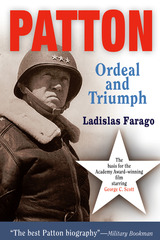
"The best Patton biography."—Military Bookman
He is America's most famous general. He represents toughness, focus, determination, and the ideal of achievement in the face of overwhelming odds. He was the most feared and respected adversary to his enemies and an object of envy, admiration, and sometimes, scorn to his professional peers. An early proponent of tank warfare, George S. Patton moved from being a foresighted lieutenant in the First World War to commanding the Third Army in the next, leading armored divisions in the Allied offensive that broke the back of Nazi Germany. Patton was an enigmatic figure. His image among his troops and much of the press achieved legendary status through his bold and colorful comments and combat leadership, yet these same qualities nearly jeopardized his career and forced him out of the battle on several occasions. Victory was impossible without Patton, and returning to the field, his army was responsible for one of the most crushing advances in the history of warfare.
In Ladislas Farago's masterpiece, Patton: Ordeal and Triumph, the complete story of this fascinating personality is revealed. Born into an aristocratic California family, Patton rose in military rank quickly and was tapped to lead the Allied landings in North Africa in 1942. Under Patton's direction, American troops cut their teeth against Rommel's Afrikakorps, advanced further and more quickly than British General Montgomery's army in the conquest of Sicily, and ultimately continued their exploits by punching into Germany and checking the Russian westward advance at the end of World War II. A sweeping, absorbing biography and critically hailed, Patton: Ordeal and Triumph provides unique insights into Patton's life and leadership style and is military history at its finest.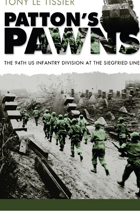
The 94th US Infantry Division was an organization formed late in the Second World War, made up largely of draft-deferred university students as enlisted men and an officer corps pulled together from various domestic postings with unfortunate consequences for mutual trust and respect.
Initially used as part of the force blockading the Brittany ports after D-Day, in December of 1944, the division was incorporated into General Patton’s Third Army south of the Moselle-Saar Triangle, the base of which was a portion of the Siegfried Line known as the Orscholz Switch. Its first combat experience came in battalion-sized attacks during that terrible winter while the Battle of the Bulge raged to the north, and the Division suffered heavy casualties, many due to the ferocity of the winter weather. Patton, with characteristic zeal, excoriated the division’s officers and senior NCOs for the rate of non-combat casualties. Thereafter, the division was ordered forward on an all-out assault to break through the Siegfried Line. After horrific fighting against entrenched defenders, with ice turning to mud as spring approached, on February 19, 1945, the 94th broke through to open the roads to Trier and the Rhine.
This book is the most comprehensive study to date of the fierce fighting between the 94th U.S. Infantry Division and their German counterparts during that spring of 1945. It sheds new light on the achievements of the outnumbered division in penetrating Germany’s Westwall. With characteristic verve and detail, Tony Le Tissier narrates the action and illuminates the tribulations and sacrifices of American soldiers who won their laurels at great cost.
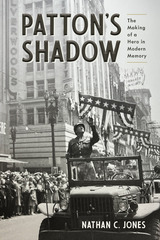
General George S. Patton’s legendary image was carefully crafted during World War II and continues to shape our understanding of American history and culture today. Historian Nathan C. Jones explores the creation of the Patton legend and its enduring legacy in Patton’s Shadow.
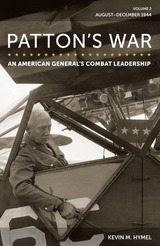
Finalist for the 2023 Gilder Lehrman Military History Prize
This second of three volumes of Patton’s War picks up where the first one left off, examining General George S. Patton’s leadership of the U.S. Third Army. The book follows Patton’s contributions to both the Normandy and Brittany campaigns—the closing of the Falaise Pocket in Normandy, and racing to the port cities in Brittany. It ends with Patton and his corps rescuing the besieged town of Bastogne in the Battle of the Bulge.
As he did in the preceding volume, Hymel relies not only on Patton’s diaries and letters, but countless veteran interviews, surveys, and memoirs. He also provides a unique insight missed by previous Patton scholars. Instead of using Patton’s transcribed diaries, which were heavily edited and embellished, he consults Patton’s original, hand-written diaries to uncover previously unknown information about the general.
This second volume of Hymel’s groundbreaking work shows Patton at the height of his generalship, successfully leading his army without the mistakes and caustic behavior that almost got him sent home earlier—even if we also see a Patton still guided at times by racism and antisemitism.
As with his previous volume, Hymel relies on Patton’s original diaries (not the transcribed, embellished versions historians have relied on for many years) and personal letters to tell the general’s story. Hymel also mined various archives to explain Patton’s encounters with soldiers, government officials, civilians, and reporters to expand on his narrative.
Throughout this three-volume work, Patton emerges not as a larger-than-life myth, but as a human being, one held back by the personal prejudices and antisemitism that ultimately proved to be his demise. Despite these personal failings, Patton was, above all, as Hymel reveals, a commander bent on winning, or, as the general himself might have put it, getting the enemy to dance to his tune.


Concentrating upon the composer's first three US concert tours and his thirteen years at Yale, Luther Noss brings to life a observant, energetic, stubborn, and wry personality. Hindemith's journals offer detailed commentary on his experiences at Tanglewood while Noss draws on archives to describe the composer's groundbreaking Collegium concerts, classes, controversial plans to reorganize the School of Music, and other activities. Noss also delves into professional activity that included a huge number of commissions, writing four theory textbooks, an expansion of his Charles Eliot Norton Lectures, and numerous world premieres and other events.
Paul Powell emerged from the hill country of southern Illinois to serve in state government from 1935 until his death in 1970. His political tenure included three terms as Speaker of the Illinois House, four terms as minority leader, and two terms as secretary of state. The sponsor of hundreds of bills, he worked tirelessly for his constituents in southern Illinois. He also worked tirelessly to promote his own interests.
In this first political biography of Powell, Robert E. Hartley follows the money. He tells how this man of humble origins and meager means amassed a world-class political and financial base. Part of that story is the disclosure of a personal fortune that boggled minds, including the unbelievable yarn of the $800,000 cash found in the hotel room following Powell's death.
Powell never earned a state salary of more than $30,000 per year, yet in the last year of his life, his federal income tax return showed an income of more than $200,000. At his death his estate totaled $3.2 million, and, when settled in 1978, was worth $4.6 million, including nearly $1 million in racetrack stock.
Following Powell's story, Hartley takes us deep into the Illinois political world of the 1940s, 1950s, and 1960s, a time when politicians were on an "honor system" regarding their financial holdings. This was before disclosure of political contributions, before computer records, and before public meetings laws.
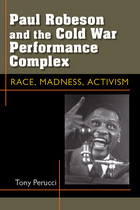
Actor and singer Paul Robeson's performances in Othello, Show Boat, and The Emperor Jones made him famous, but his midcentury appearances in support of causes ranging from labor and civil rights to antilynching and American warmongering made him notorious. When Robeson announced at the 1949 Paris Peace Conference that it was "unthinkable" for blacks to go to war against the Soviet Union, the mainstream American press declared him insane.
Notions of Communism, blackness, and insanity were interchangeably deployed during the Cold War to discount activism such as Robeson's, just a part of an array of social and cultural practices that author Tony Perucci calls the Cold War performance complex. Focusing on two key Robeson performances---the concerts in Peekskill, New York, in 1949 and his appearance before the House Committee on Un-American Activities in 1956---Perucci demonstrates how these performances and the government's response to them are central to understanding the history of Cold War culture in the United States. His book provides a transformative new perspective on how the struggle over the politics of performance in the 1950s was also a domestic struggle over freedom and equality. The book closely examines both of these performance events as well as artifacts from Cold War culture---including congressional documents, FBI files, foreign policy papers, the popular literature on mental illness, and government propaganda films---to study the operation of power and activism in American Cold War culture.
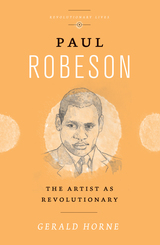
“A fine, taut analysis of the great African American athlete, singer, actor, and political activist.”
—Choice, Highly Recommended
Paul Robeson should be remembered today as the forerunner of Malcolm X, Dr. Martin Luther King, Jr. and Muhammad Ali. He sacrificed his fame and fortune a performer and athlete in order to fight for the rights of African Americans during the time of Jim Crow and U.S. Apartheid.
A world-famous singer and actor, a trained lawyer, an early star of American professional football and a polyglot who spoke over a dozen languages: these could be the crowning achievements of a life well-lived. Yet for Paul Robeson the higher calling of social justice led him to abandon both the NFL and Hollywood and become one of the most important political activists of his generation, a crusader for freedom and equality who battled both Jim Crow and US Senator Joseph McCarthy during the communist witch hunt of the 1950s.
In Paul Robeson: The Artist as Revolutionary, Gerald Horne discovers within Robeson's remarkable and revolutionary life the story of the twentieth century's great political struggles: against racism, against colonialism, against poverty—and for international socialism. Chapters include:
*”The Best Known American in the World"
*Rising Revolutionary
*From Moscow to Madrid
*"Black Stalin"?
*Robeson: Primary Victim of the "Blacklist"
*Triumph—and Tragedy
*Death of a Revolutionary
In the Introduction, Horne writes: “Paul Robeson—activist, artist, athlete—experienced a dramatic rise and fall, perhaps unparalleled in U.S. history. From mingling with the elite of London society and Hollywood in the 1930s, by the time he died in 1976, he was a virtual recluse in a plain abode in a working-class neighborhood of Philadelphia. What helps to explicate this tragic art of his life is a fateful decision he made when fascism was rising: he threw in his lot with those battling for socialism and decide to sacrifice his thriving artistic career on behalf of the struggle against Jim Crow—or U.S. apartheid.”
This critical and searching biography provides an opportunity for readers to comprehend the triumphs and tragedies of the revolutionary progressive movement of which Paul Robeson was not just a part, but perhaps its most resonant symbol.
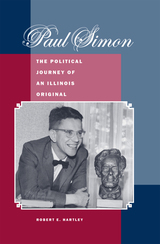
With Paul Simon: The Political Journey of an Illinois Original, author Robert E. Hartley presents the first thorough, objective volume on the journalistic and political career of one of Illinois’s most respected public figures. Hartley’s detailed account offers a fully rounded portrait of a man whose ideals and tenacity not only spurred reform on both state and national levels during his celebrated forty-year career but also established the lasting legacy of a political legend.
Simon first became a public figure at the age of nineteen, when he assumed the post of editor and publisher of a weekly newspaper in Troy, Illinois. From there, he used his paper to launch a fierce crusade against the crime and corruption plaguing Madison County. This battle sparked his entry into politics, helping to land him a seat in the state legislature in 1954. While serving, he campaigned tirelessly according to his principles, earning him the mass voter approval that would usher him into the seat of lieutenant governor in 1968—the first person elected to that position who did not share party affiliation with the governor.
As lieutenant governor, Simon initiated many changes to the position, remaking it to better serve the citizens of the state of Illinois. The cornerstone of his reform plan was an ombudsman program designed to allow the people of the state to voice problems they had with government and state agencies. The program, extremely popular with the public and the press, solved problems and helped to make Simon a household name throughout Illinois. Although he faced challenges along the way, including racial upheaval in Cairo and the student and police riots on the Carbondale campus of Southern Illinois University, Simon’s outspoken honesty and strong support of his constituents earned him the utmost esteem and popularity.
While his 1972 bid for governor of Illinois ultimately failed, this did not deter Simon from his dedication to social progress. In 1974 he began his remarkable twenty-two-year career in the U.S. House of Representatives and Senate, where he earned the admiration of the country for his political integrity. Despite the praise and support Simon had earned during his time in Washington, he was unable to win the Democratic presidential nomination in 1988 and returned to the Senate, winning a second term in 1990. Simon committed time and energy to the myriad issues of interest to him, especially in the field of education, with one of his biggest successes coming with the passage of the National Literacy Act, which he sponsored. He continued to foster his ties to journalism throughout his lengthy political career, authoring numerous books, articles, and columns, all of which he used to relentlessly promote open government and social programs.
This vivid account of the public life of Paul Simon reveals a man whose personal honor and dedication were unshakeable throughout nearly half a century in the political arena. Robert E. Hartley provides a candid perspective on Simon’s accomplishments and victories, as well as his mistakes and losses, revealing new insights into the life of this dynamic and widely respected public figure.
---Arianna Huffington, columnist and editor of HuffingtonPost.com
"This book captures the vibrant spirit of my friend Paul Wellstone---the fierce commitment to justice that defined his life, and that shapes his enduring legacy."
---U.S. Senator Russ Feingold
"Paul Wellstone was a great leader because he fused progressive idealism with a stubbornly pragmatic politics. Bill Lofy's book captures that dual commitment in his story of Wellstone's life, and also shows us the extraordinary human appeal that Wellstone emanated in his relationships with people in all walks of life. This book is an engaging read that also tells us a lot about the political practice to which we should aspire."
---Frances Fox Piven, author of The War at Home
"This vividly written book captures the life and personal qualities of the late Senator Paul Wellstone. In so doing it provides an illuminating gloss on Max Weber's seminal exposition of the political vocation. It is a jewel of a book."
-Fred Greenstein, Princeton University
Bill Lofy's fast-paced and readable biography tells the inspirational story of one of the most compelling figures in the history of American politics---Senator Paul Wellstone.
Yet Lofy's book is more than just the chronicle of Wellstone's life and political career; it's also an indispensable guide to what ails political life today. Readers politically inclined or not will find in its pages a handbook to the uncertain and often treacherous business of politics and a stirring example for living a courageous and honest life---whether as public servant or private individual.
In this exhaustively researched book, Georgie Boge and Margie Boge analyze the issues and controversies surrounding the preservation of Civil War battlefield sites, and offer a pragmatic development program designed to accommodate the needs of both historic preservation and economic growth. Not only do they provide a framework for developing actual preservation strategies, they show how important historical, cultural, and natural resources can be preserved with economic benefit to the community.
After exploring the special importance of battlefield sites to the nation, the Boges discuss existing policies for preservation. Through extensive case studies, they demonstrate the inadequacies of current mechanisms, and present a detailed policy program that could effectively protect the remaining land, and also help save other historically or culturally significant sites.

Judith M. Heimann entered the diplomatic life in 1958 to join her husband, John, in Jakarta, Indonesia, at his American Embassy post. This, her first time out of the United States, would set her on a path across the continents as she mastered the fine points of diplomatic culture. She did so first as a spouse, then as a diplomat herself, thus becoming part of one of the Foreign Service’s first tandem couples.
Heimann’s lively recollections of her life in Africa, Asia, and Europe show us that when it comes to reconciling our government’s requirements with the other government’s wants, shuttle diplomacy, Skype, and email cannot match on-the-ground interaction. The ability to gauge and finesse gesture, tone of voice, and unspoken assumptions became her stock-in-trade as she navigated, time and again, remarkably delicate situations.
This insightful and witty memoir gives us a behind-the-scenes look at a rarely explored experience: that of one of the very first married female diplomats, who played an unsung but significant role in some of the important international events of the past fifty years. To those who know something of today’s world of diplomacy, Paying Calls in Shangri-La will be an enlightening tour through the way it used to be—and for aspiring Foreign Service officers and students, it will be an inspiration.
Published in association with ADST-DACOR Diplomats and Diplomacy Series

Two young women, dormitory mates, embark on their education at a big state university. Five years later, one is earning a good salary at a prestigious accounting firm. With no loans to repay, she lives in a fashionable apartment with her fiancé. The other woman, saddled with burdensome debt and a low GPA, is still struggling to finish her degree in tourism. In an era of skyrocketing tuition and mounting concern over whether college is "worth it," Paying for the Party is an indispensable contribution to the dialogue assessing the state of American higher education. A powerful exposé of unmet obligations and misplaced priorities, it explains in vivid detail why so many leave college with so little to show for it.
Drawing on findings from a five-year interview study, Elizabeth Armstrong and Laura Hamilton bring us to the campus of "MU," a flagship Midwestern public university, where we follow a group of women drawn into a culture of status seeking and sororities. Mapping different pathways available to MU students, the authors demonstrate that the most well-resourced and seductive route is a "party pathway" anchored in the Greek system and facilitated by the administration. This pathway exerts influence over the academic and social experiences of all students, and while it benefits the affluent and well-connected, Armstrong and Hamilton make clear how it seriously disadvantages the majority.
Eye-opening and provocative, Paying for the Party reveals how outcomes can differ so dramatically for those whom universities enroll.

Not necessarily, says Sara Goldrick-Rab, and with Paying the Price, she shows in damning detail exactly why. Quite simply, college is far too expensive for many people today, and the confusing mix of federal, state, institutional, and private financial aid leaves countless students without the resources they need to pay for it.
Drawing on an unprecedented study of 3,000 young adults who entered public colleges and universities in Wisconsin in 2008 with the support of federal aid and Pell Grants, Goldrick-Rab reveals the devastating effect of these shortfalls. Half the students in the study left college without a degree, while less than 20 percent finished within five years. The cause of their problems, time and again, was lack of money. Unable to afford tuition, books, and living expenses, they worked too many hours at outside jobs, dropped classes, took time off to save money, and even went without adequate food or housing. In many heartbreaking cases, they simply left school—not with a degree, but with crippling debt. Goldrick-Rab combines that shocking data with devastating stories of six individual students, whose struggles make clear the horrifying human and financial costs of our convoluted financial aid policies.
America can fix this problem. In the final section of the book, Goldrick-Rab offers a range of possible solutions, from technical improvements to the financial aid application process, to a bold, public sector–focused “first degree free” program. What’s not an option, this powerful book shows, is doing nothing, and continuing to crush the college dreams of a generation of young people.

On November 16, 1989, on the campus of El Salvador's University of Central America, six Jesuits and two women were murdered by members of the Salvadoran army, an army funded and trained by the United States. One of the murdered Jesuits was Ignacio Ellacuría, the university's Rector and a key, although controversial, figure in Salvadoran public life. From an opening account of this terrible crime, Paying the Price asks, Why were they killed and what have their deaths meant? Answers come through Teresa Whitfield's detailed examination of Ellacuría's life and work. His story is told in juxtaposition with the crucial role played by the unraveling investigation of the Jesuits' murders within El Salvador's peace process.
A complex and nuanced book, Paying the Price offers a history of the Church in El Salvador in recent decades, an analysis of Ellacuría's philosophy and theology, an introduction to liberation theology, and an account of the critical importance of the University of Central America. In the end, Whitfield's comprehensive picture of conditions in El Salvador suggest that the Jesuits' murders were almost inevitable. A crime that proved a turning point in El Salvador's civil war, the murders expressed the deep tragedy of the Salvadoran people beyond suffering the heartless cruelty, violence, and deceitfulness of a corrupt military and their patrons in the U.S. government.
Whitfield draws on her extensive research of Jesuit archives and private papers, Ellacuría's diaries, documents declassified by the U.S. government, and 200 interviews conducted with sources ranging from Jesuits to Salvadoran military officers, U.S. officials and congressmen to human rights campaigners.

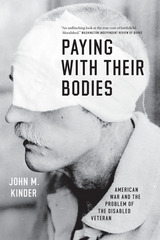
America has grappled with the questions posed by injured veterans since its founding, and with particular force since the early twentieth century: What are the nation’s obligations to those who fight in its name? And when does war’s legacy of disability outweigh the nation’s interests at home and abroad? In Paying with Their Bodies, John M. Kinder traces the complicated, intertwined histories of war and disability in modern America. Focusing in particular on the decades surrounding World War I, he argues that disabled veterans have long been at the center of two competing visions of American war: one that highlights the relative safety of US military intervention overseas; the other indelibly associating American war with injury, mutilation, and suffering. Kinder brings disabled veterans to the center of the American war story and shows that when we do so, the history of American war over the last century begins to look very different. War can no longer be seen as a discrete experience, easily left behind; rather, its human legacies are felt for decades.
The first book to examine the history of American warfare through the lens of its troubled legacy of injury and disability, Paying with Their Bodies will force us to think anew about war and its painful costs.
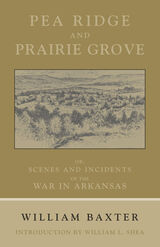
With the goal of sketching “at least some of the bright lights and dark shadows of the war;” William Baxter authored his regional classic, Pea Ridge and Prairie Grove, in 1864, before the actual end of the Civil War.
Primarily focusing on the civilians of the region, Baxter vividly describes their precarious and vulnerable positions during the advances and retreats of armies as Confederate and Federal forces marched across their homeland. In his account, Baxter describes skirmishes and cavalry charges outside his front door, the “firing” of his town’s buildings during a Confederate retreat, clashes between secessionist and Unionist neighbors, the feeding of hungry soldiers and the forceful appropriation of his remaining food supply, and the sickening sight of the wounded emerging from the Prairie Grove battlefield.
Since its original printing, this firsthand account has only been reprinted once, in 1957, and both editions are considered collectors’ items today. Of interest to Civil War scholars and general readers alike, Baxter’s compelling social history is rendered even more comprehensive by William Shea’s introduction. Pea Ridge and Prairie Grove is a valuable personal account of the Civil War in the Trans-Mississippi West which enables us to better comprehend the conflict as a whole and its devastating effect on the general populace of the war-torn portions of the country.
Addams's unyielding pacifism during the Great War drew criticism from politicians and patriots who deemed her the "most dangerous woman in America." Even those who had embraced her ideals of social reform condemned her outspoken opposition to U.S. entry into World War I or were ambivalent about her peace platforms. Turning away from the details of the war itself, Addams relies on memory and introspection in this autobiographical portrayal of efforts to secure peace during the Great War. "I found myself so increasingly reluctant to interpret the motives of other people that at length I confined all analysis of motives to my own," she writes. Using the narrative technique she described in The Long Road of Women's Memory, an extended musing on the roles of memory and myth in women's lives, Addams also recalls attacks by the press and defends her political ideals.
Katherine Joslin's introduction provides additional historical context to Addams's involvement with the Woman's Peace Party, the Women's International League for Peace and Freedom, and her work on Herbert Hoover's campaign to provide relief and food to women and children in war-torn enemy countries.

This intensively researched volume covers a previously neglected aspect of American history: the foreign policy perspective of the peace progressives, a bloc of dissenters in the U.S. Senate, between 1913 and 1935. The Peace Progressives and American Foreign Relations is the first full-length work to focus on these senators during the peak of their collective influence. Robert David Johnson shows that in formulating an anti-imperialist policy, the peace progressives advanced the left-wing alternative to the Wilsonian agenda.
The experience of World War I, and in particular Wilson’s postwar peace settlement, unified the group behind the idea that the United States should play an active world role as the champion of weaker states. Senators Asle Gronna of North Dakota, Robert La Follette and John Blaine of Wisconsin, and William Borah of Idaho, among others, argued that this anti-imperialist vision would reconcile American ideals not only with the country’s foreign policy obligations but also with American economic interests. In applying this ideology to both inter-American and European affairs, the peace progressives emerged as the most powerful opposition to the business-oriented internationalism of the decade’s Republican administrations, while formulating one of the most comprehensive critiques of American foreign policy ever to emerge from Congress.

Exposes how appeals to civility, harmony, and nonaggression can unwittingly underpin exclusionary assumptions about race, gender, and class
Offering an innovative critique of peace rhetoric throughout US history, The Peace Script: Framing Violence in US Anti-War Dissent reexamines the language of dissent with lessons for our era defined by digital activism and fierce political debates. Dominic J. Manthey explores the peace arguments of various movements, including the Copperhead Movement during the Civil War, the Anti-Imperialist League’s stance against US colonialism, Henry Ford's Peace Ship expedition during World War I, the Mothers’ Movement during World War II, and the Vietnam Veterans against the War. Each chapter reveals how these movements, while advocating for peace, often upheld or encouraged racial, gender, and class inequalities.
Manthey navigates the complex terrain of grassroots activism by blending rhetorical criticism and historical insight to tell readers about the “peace script” that has echoed across America’s many wars. Through archival materials and case studies, The Peace Script reveals how anti-war movements craft compelling narratives that dramatize society through heroes, antagonists, and transformative ideals.
Redefining the struggle for peace as not only a fight against warfare but also a battle over space, identity, and the right to live with dignity, The Peace Script is essential for scholars of history, rhetoric, and social justice. Manthey provides a crucial perspective on the intersection of race, memory and power, offering urgent insights into how these legacies continue to shape society today.

With A Peaceful Conquest, Cara Lea Burnidge presents the most detailed analysis yet of how Wilson’s religious beliefs affected his vision of American foreign policy, with repercussions that lasted into the Cold War and beyond. Framing Wilson’s intellectual development in relationship to the national religious landscape, and paying greater attention to the role of religion than in previous scholarship, Burnidge shows how Wilson’s blend of Southern evangelicalism and social Christianity became a central part of how America saw itself in the world, influencing seemingly secular policy decisions in subtle, lasting ways. Ultimately, Burnidge makes a case for Wilson’s religiosity as one of the key drivers of the emergence of the public conception of America’s unique, indispensable role in international relations.
As the presidential election cycle once again raises questions of America’s place in the world, A Peaceful Conquest offers a fascinating excavation of its little-known roots.
Although Americans claim to revere the Constitution, relatively few understand its workings. Its real importance for the average citizen is as an enduring reminder of the moral vision that shaped the nation's founding. Yet scholars have paid little attention to the broader appeal that constitutional idealism has always made to the American imagination through publications and films. Maxwell Bloomfield draws upon such neglected sources to illustrate the way in which media coverage contributes to major constitutional change.
Successive generations have sought to reaffirm a sense of national identity and purpose by appealing to constitutional norms, defined on an official level by law and government. Public support, however, may depend more on messages delivered by the popular media. Muckraking novels, such as Upton Sinclair's The Jungle (1906), debated federal economic regulation. Woman suffrage organizations produced films to counteract the harmful gender stereotypes of early comedies. Arguments over the enforcement of black civil rights in the Civil Rights Cases and Plessy v. Ferguson took on new meaning when dramatized in popular novels.
From the founding to the present, Americans have been taught that even radical changes may be achieved through orderly constitutional procedures. How both elite and marginalized groups in American society reaffirmed and communicated this faith in the first three decades of the twentieth century is the central theme of this book.
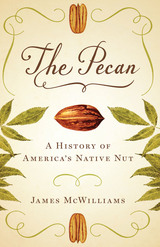
What would Thanksgiving be without pecan pie? New Orleans without pecan pralines? Southern cooks would have to hang up their aprons without America’s native nut, whose popularity has spread far beyond the tree’s natural home. But as familiar as the pecan is, most people don’t know the fascinating story of how native pecan trees fed Americans for thousands of years until the nut was “improved” a little more than a century ago—and why that rapid domestication actually threatens the pecan’s long-term future.
In The Pecan, acclaimed writer and historian James McWilliams explores the history of America’s most important commercial nut. He describes how essential the pecan was for Native Americans—by some calculations, an average pecan harvest had the food value of nearly 150,000 bison. McWilliams explains that, because of its natural edibility, abundance, and ease of harvesting, the pecan was left in its natural state longer than any other commercial fruit or nut crop in America. Yet once the process of “improvement” began, it took less than a century for the pecan to be almost totally domesticated. Today, more than 300 million pounds of pecans are produced every year in the United States—and as much as half of that total might be exported to China, which has fallen in love with America’s native nut. McWilliams also warns that, as ubiquitous as the pecan has become, it is vulnerable to a “perfect storm” of economic threats and ecological disasters that could wipe it out within a generation. This lively history suggests why the pecan deserves to be recognized as a true American heirloom.
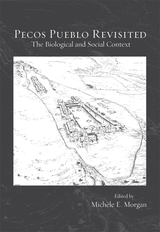
Alfred V. Kidder’s excavations at Pecos Pueblo in New Mexico between 1914 and 1929 set a new standard for archaeological fieldwork and interpretation. Among his other innovations, Kidder recognized that skeletal remains were a valuable source of information, and today the Pecos sample is used in comparative studies of fossil hominins and recent populations alike.
In the 1990s, while documenting this historic collection in accordance with the Native American Graves Protection and Repatriation Act before the remains were returned to the Pueblo of Jemez and reinterred at Pecos Pueblo, Michèle E. Morgan and colleagues undertook a painstaking review of the field data to create a vastly improved database. The Peabody Museum, where the remains had been housed since the 1920s, also invited a team of experts to collaboratively study some of the materials.
In Pecos Pueblo Revisited, these scholars review some of the most significant findings from Pecos Pueblo in the context of current Southwestern archaeological and osteological perspectives and provide new interpretations of the behavior and biology of the inhabitants of the pueblo. The volume also presents improved data sets in extensive appendices that make the primary data available for future analysis. The volume answers many existing questions about the population of Pecos and other Rio Grande sites and will stimulate future analysis of this important collection.
A Peculiar Imbalance is the little-known history of the black experience in Minnesota in the mid-1800s, a time of dramatic change in the region. William D. Green explains how, as white progressive politicians pushed for statehood, black men who had been integrated members of the community, owning businesses and maintaining good relationships with their neighbors, found themselves denied the right to vote or to run for office in those same communities.
As Minnesota was transformed from a wilderness territory to a state, the concepts of race and ethnicity and the distinctions among them made by Anglo-Americans grew more rigid and arbitrary. A black man might enjoy economic success and a middle-class lifestyle but was not considered a citizen under the law. In contrast, an Irish Catholic man was able to vote—as could a mixed-blood Indian—but might find himself struggling to build a business because of the ethnic and religious prejudices of the Anglo-American community. A Peculiar Imbalance examines these disparities, reflecting on the political, social, and legal experiences of black men from 1837 to 1869, the year of black suffrage.

The U.S. death penalty is a peculiar institution, and a uniquely American one. Despite its comprehensive abolition elsewhere in the Western world, capital punishment continues in dozens of American states– a fact that is frequently discussed but rarely understood. The same puzzlement surrounds the peculiar form that American capital punishment now takes, with its uneven application, its seemingly endless delays, and the uncertainty of its ever being carried out in individual cases, none of which seem conducive to effective crime control or criminal justice. In a brilliantly provocative study, David Garland explains this tenacity and shows how death penalty practice has come to bear the distinctive hallmarks of America’s political institutions and cultural conflicts.
America’s radical federalism and local democracy, as well as its legacy of violence and racism, account for our divergence from the rest of the West. Whereas the elites of other nations were able to impose nationwide abolition from above despite public objections, American elites are unable– and unwilling– to end a punishment that has the support of local majorities and a storied place in popular culture.
In the course of hundreds of decisions, federal courts sought to rationalize and civilize an institution that too often resembled a lynching, producing layers of legal process but also delays and reversals. Yet the Supreme Court insists that the issue is to be decided by local political actors and public opinion. So the death penalty continues to respond to popular will, enhancing the power of criminal justice professionals, providing drama for the media, and bringing pleasure to a public audience who consumes its chilling tales.
Garland brings a new clarity to our understanding of this peculiar institution– and a new challenge to supporters and opponents alike.
A Peculiar Paradise: A History of Blacks in Oregon 1788–1940 remains the most comprehensive chronology of Black life in Oregon more than forty years after its original publication in 1980. The book has long been a resource for those seeking information on the legal and social barriers faced by people of African descent in Oregon. Elizabeth McLagan’s work reveals how in spite of those barriers, Black individuals and families made Oregon their home, and helped create the state’s modern Black communities. Long out of print, the book is available again through this co-publication with Oregon Black Pioneers, Oregon’s statewide African American historical society. The revised second edition includes additional details for students and scholars, an expanded reading list, a new selection of historic images, and a new foreword by Gwen Carr and an afterword by Elizabeth McLagan.
A Peculiar People explores the origin and growth of the Old Order Amish in Iowa, their religious practices, economic organization, family life, the formation of new communities, and the vital issue of education. Included also are appendixes giving the 1967 “Act Relating to Compulsory School Attendance and Educational Standards”; a sample “Church Organization Financial Agreement,” demonstrating the group’s unusual but advantageous mutual financial system; and the 1632 Dortrecht Confession of Faith, whose eighteen articles cover all the basic religious tenets of the Old Order Amish.
Thomas Morain’s new essay describes external and internal issues for the Iowa Amish from the 1970s to today. The growth of utopian Amish communities across the nation, changes in occupation (although The Amish Directory still lists buggy shop operators, wheelwrights, and one lone horse dentist), the current state of education and health care, and the conscious balance between modern and traditional ways are reflected in an essay that describes how the Old Order dedication to Gelassenheit—the yielding of self to the interests of the larger community—has served its members well into the twenty-first century.
Sensationalized accounts of white rural communities’ aberrant sexualities, racial intermingling, gender transgressions, and anomalous bodies and minds, which proliferated from the turn of the century, created a national view of the perversity of white rural poverty for the American public. Cartwright contends that these accounts, extracted and estranged from their own ambivalent forum of community gossip, must be read in kind: through a racialized, materialist queercrip optic of the deeply familiar and mundane. Taking in popular science, documentary photography, news media, documentaries, and horror films, Peculiar Places orients itself at the intersections of disability studies, queer studies, and gender studies to illuminate a racialized landscape both profoundly ordinary and familiar.

The pressures Asian Americans feel to be socially and economically exceptional include an unspoken mandate to always be healthy. Nowhere is this more evident than in the expectation for Asian Americans to enter the field of medicine, principally as providers of care rather than those who require care. Pedagogies of Woundedness explores what happens when those considered model minorities critically engage with illness and medicine whether as patients or physicians.
James Kyung-Jin Lee considers how popular culture often positions Asian Americans as medical authorities and what that racial characterization means. Addressing the recent trend of writing about sickness, disability, and death, Lee shows how this investment in Asian American health via the model minority is itself a response to older racial forms that characterize Asian American bodies as diseased. Moreover, he pays attention to what happens when academics get sick and how illness becomes both methodology and an archive for scholars.
Pedagogies of Woundedness also explores the limits of biomedical “care,” the rise of physician chaplaincy, and the impact of COVID. Throughout his book and these case studies, Lee shows the social, ethical, and political consequences of these common (mis)conceptions that often define Asian Americans in regard to health and illness.
Pedagogues and Protesters recounts the year in daily journal entries by Stephen Peabody, a member of the class of 1769. The best surviving account of colonial college life, Peabody's journal documents relationships among students, faculty members, and administrators, as well as the author's relationships with other segments of Massachusetts society. To a full transcription of the entries, Conrad Edick Wright adds detailed annotation and an introduction that focuses on the journal's revealing account of daily life at America's oldest college.
Published in association with Massachusetts Historical Society
Pedagogy of Democracy re-interprets the U.S. occupation of Japan from 1945 to 1952 as a problematic instance of Cold War feminist mobilization rather than a successful democratization of Japanese women as previously argued. By combining three fields of research—occupation, Cold War, and postcolonial feminist studies—and examining occupation records and other archival sources, Koikari argues that postwar gender reform was one of the Cold War containment strategies that undermined rather than promoted women’s political and economic rights.
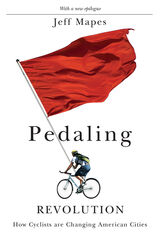
In a world of increasing traffic congestion, a grassroots movement is carving out a niche for bicycles on city streets. Pedaling Revolution explores the growing bike culture that is changing the look and feel of cities, suburbs, and small towns across North America.
From traffic-dodging bike messengers to tattooed teenagers on battered bikes, from riders in spandex to well-dressed executives, ordinary citizens are becoming transportation revolutionaries. Jeff Mapes traces the growth of bicycle advocacy and explores the environmental, safety, and health aspects of bicycling. He rides with bicycle advocates who are taming the streets of New York City, joins the street circus that is Critical Mass in San Francisco, and gets inspired by the every-day folk pedaling in Amsterdam, the nirvana of American bike activists. Chapters focused on big cities, college towns, and America’s most successful bike city, Portland, show how cyclists, with the encouragement of local officials, are claiming a share of the valuable streetscape.
“A growing number of Americans, mounted on their bicycles like some new kind of urban cowboy, are mixing it up with swift, two-ton motor vehicles as they create a new society on the streets. They’re finding physical fitness, low-cost transportation, environmental purity—and, still all too often, Wild West risks of sudden death or injury.” —from the introduction
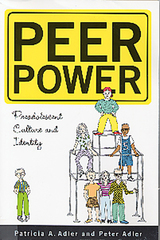
The Adlers explore some of the patterns that develop in this social space, noting both the differences in boys' and girls' gendered cultures and the overlap in many social dynamics, afterschool activities, role behaviour, romantic inclinations and social stratification. For example, children's participation in adult-organized afterschool activities - a now-prominent feature of many American children's social experience - has profound implications for their socialization and development, moving them away from the negotiated, spontaneous character of play into the formal systems of adult norms and values at ever-younger ages. When they retreat from adults, however, they still display distinctive peer group dynamics, forging strong ingroup/outgroup differentiation, loyalty and identification. Peer culture thus contains informal social mechanisms through which children create their social order, determine their place and identity, and develop positive and negative feelings about themselves. Studying children's peer culture is thus valuable as it reveals not only how this subculture parallels the adult world but also how it differs from it.

Kurt Jensen’s magisterial volume, extensively researched and filled with trenchant observations, brings to life this charming, flawed, and fascinating man—and demonstrates how the wellspring of his art contained the seeds of his own destruction. Drawing upon Mamoulian’s unfinished memoir and voluminous diaries, as well as interviews with the director’s surviving collaborators, Jensen delivers fresh and informative insider stories from seminal productions. Meanwhile, he explores Mamoulian’s aesthetic principles and strategies as manifested in lighting, choreography, and sound design. A tour de force, Peerless offers readers a multifaceted, in-depth look at an idiosyncratic genius.

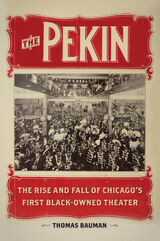
A missing chapter in African American theatrical history, Bauman's saga presents how Motts used his entrepreneurial acumen to create a successful black-owned enterprise. Concentrating on institutional history, Bauman explores the Pekin's philosophy of hiring only African American staff, its embrace of multi-racial upper class audiences, and its ready assumption of roles as diverse as community center, social club, and fundraising instrument.
The Pekin's prestige and profitability faltered after Motts' death in 1911 as his heirs lacked his savvy, and African American elites turned away from pure entertainment in favor of spiritual uplift. But, as Bauman shows, the theater had already opened the door to a new dynamic of both intra- and inter-racial theater-going and showed the ways a success, like the Pekin, had a positive economic and social impact on the surrounding community.

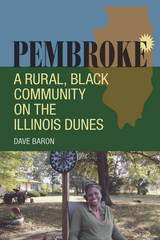
With a population of about two thousand, Pembroke Township, one of the largest rural, black communities north of the Mason-Dixon Line, sits in an isolated corner of Kankakee County, Illinois, sixty-five miles south of Chicago. It is also one of the poorest places in the nation. Many black farmers from the South came to this area during the Great Migration; finding Chicago to be overcrowded and inhospitable, they were able to buy land in the township at low prices. The poor soil made it nearly impossible to establish profitable farms, however, and economic prosperity has eluded the region ever since. Pembroke: A Rural, Black Community on the Illinois Dunes chronicles the history of this inimitable township and shows the author’s personal transformation through his experiences with Pembroke and its people. A native of nearby Kankakee, author Dave Baron first traveled to Pembroke on a church service trip at age fifteen and saw real poverty firsthand, but he also discovered a community possessing grace and purpose.
Baron begins each chapter with a personal narrative from his initial trip to Pembroke. He covers the early history of the area, explaining how the unique black oak savanna ecosystem was created and describing early residents, including Potawatomi tribes and white fur traders. He introduces readers to Pap and Mary Tetter, Pembroke’s first black residents, who—according to local lore—assisted fugitives on the Underground Railroad; details the town’s wild years, when taverns offered liquor, drugs, and prostitution; discusses the many churches of Pembroke and the nearby high school where, in spite of sometimes strained relations, Pembroke’s black students have learned alongside white students of a neighboring community since well before Brown v. Board of Education; outlines efforts by conservation groups to preserve Pembroke’s rare black oak savannas; and analyzes obstacles to and failed attempts at economic development in Pembroke, as well as recent efforts, including organic farms and a sustainable living movement, which may yet bring some prosperity.
Based on research, interviews with residents, and the author’s own experiences during many return trips to Pembroke, this book—part social, cultural, legal, environmental, and political history and part memoir—profiles a number of the colorful, longtime residents and considers what has enabled Pembroke to survive despite a lack of economic opportunities. Although Pembroke has a reputation for violence and vice, Baron reveals a township with a rich and varied history and a vibrant culture.
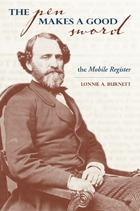
One editor. One era. A pen that cut through history.
This book is a biography of Alabama native John Forsyth Jr. and documents his career as a southern newspaper editor during the antebellum, Civil War, and Reconstruction periods. From 1837 to 1877 Forsyth wrote about many of the most important events of the 19th century. He used his various positions as an editor, Civil War field correspondent, and Reconstruction critic at the MobileRegister to advocate on behalf of both the South and the Democratic Party.
In addition, Forsyth played an active role in the events taking place around him through his political career, as United States Minister to Mexico, state legislator, Confederate Peace Commissioner to the Lincoln administration, staff officer to Braxton Bragg, and twice mayor of the city of Mobile.
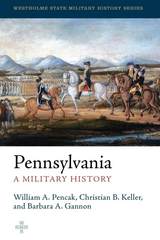
Westholme State Military History Series
Each state in the United States of America has a unique military history. The volumes in this series seek to provide a portrait of the richness of each state’s military experience, primarily defined by its borders, as well as the important contributions the state has made to the nation’s military history. Written by historians for the general reader, the volumes trace the history of conflict from the original native populations to today. The volumes are well illustrated and include specially commissioned maps, extensive bibliographies, lists of national and state historical sites, and a detailed index.
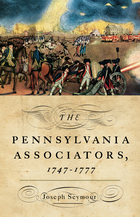
The First Complete History of the Military Force of Colonial Pennsylvania, a Volunteer Body Created as a Practical Response to the Ideal of Pacifism
Known at various times as the Military Association of Pennsylvania, the Pennsylvania Association, or simply Associators, this long-neglected organization represented a new constituency in Pennsylvania politics and by extension, a new American response to arbitrary rule. Organized on December 7, 1747, at Philadelphia, the Military Association, an all-volunteer military establishment pledged to the defense of Pennsylvania, served as the de facto armed force for Pennsylvania, a colony whose leadership, a loose coalition of Quaker and German pacifists, land barons, and merchants, foreswore military preparedness on religious and ideological grounds. For the Associators, including their most noted supporter, Benjamin Franklin, a defenseless colony was no longer practical. During the War of Austrian Succession and again in the Seven Years’ War, Associators organized defense efforts in defiance of the Pennsylvania colonial leadership. Associators also helped defend American Indian refugees against the infamous Paxton Boys in 1764. By 1775, Associators found themselves as the colony’s only legitimate military leadership and, by capitalizing on electoral gains in the lead up to the American Revolution, Associators assumed offices vacated by former officials. During the critical battles of 1776, the Associators in their distinctive round hats and brown coats proved a decisive asset to the Continental Army.
In The Pennsylvania Associators, 1747–1777, historian Joseph Seymour has painstakingly researched primary source materials in order to write the first comprehensive history of this influential organization. Seymour demonstrates that while the Pennsylvania Associators contributed to success in the campaigns in which they fought, particularly the battles of Trenton and Princeton, a more fascinating and important investigation are the concerns that motivated these men. Associators considered military service in defense of their religious and civil liberties as a natural right. For three decades, Associators demonstrated that belief in and out of uniform. In a colony founded on religious exceptionalism, Associators saw themselves as faithful soldiers and active agents against leadership by entitlement, a principle guiding our government today.

A former journalist for the Philadelphia Inquirer Magazine, and author of the bestseller Kids for Cash, Ecenbarger has collected a dozen of his fascinating articles showcasing the Keystone State in Pennsylvania Stories—Well Told. He provides a history of the pencil, and considers why the first day of Pennsylvania’s deer hunting season—the world’s largest participatory sporting event—is an unofficial state holiday, closing schools and state offices. Ecenbarger also profiles George “Boom Boom” Zambelli, the internationally renowned pyrotechnic king, and goes driving with Pennsylvania native John Updike in rural Berks County, PA.
Other fascinating tales unfold in Pennsylvania Stories, from an inspiring tale of Governor Bob Casey’s double organ transplant, to darker essays on the electric chair and the Ku Klux Klan, to a mile-by-mile appreciation of the Pennsylvania Turnpike.
In these weird and wonderful stories, Ecenbarger highlights just what makes Pennsylvania both eccentric and great. His book is a delightfully intriguing read for natives and curious outsiders alike.

“In the fifties, sleek Mixmasters were replacing rusty eggbeaters, and new pressure-cookers blew their tops in kitchens all over town. There were kids everywhere, and new ‘ranch-style’ houses filled vacant lots. . . . Turquoise Studebakers and dusty-rose Chevy BelAirs with flamboyant fins and lots of chrome replaced dark pre-war cars. Cameras took color snapshots instead of black-and-white. We wore red canvas tennis shoes and lemon yellow shorts, and bright blue popsicles melted down our chins.” —from the Introduction
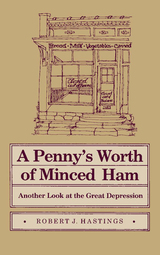
Hastings experienced the rural and small town side of an event that touched all who weathered it—the economic crash of 1929 and its 10-year aftermath.
The author grew up in Marion, Illinois, entering the first grade in 1930, the start of the Great Depression. This book, which recalls memorable episodes in the life of that boy, is a sequel to the popular ANickel’s Worth of Skim Milk.
What Hastings experienced as a child was typical of depression-era life. Those who were young then can relive lost youth in Hastings’ books. And there were moments worth reliving: Hastings tells of “laughter and love and tears in the midst of hunger and cold and deprivation.” Those too young to have experienced the economic devastation can see those hard days through the eyes of a trained storyteller reporting from the point of view of a child.

Challenging the accepted view of defined contribution plans, such as the 401k, as merely convenient tax-deferred savings plans, Ippolito argues that these plans can help firms select and pay their best workers without expending monitoring resources. Building on his proposals for managing private pension plans, Ippolito concludes with a blueprint for fixing the social security system that would promote incentives to work and save while at the same time improving the system's financial condition.
The picture that emerges of the "typical" plan and its significant variations is crucial to all those with a financial stake in pensions. The reader can compare pension vesting, retirement, and benefit provisions by plan type, plan size, industry, union status, and many more characteristics. With this information, workers can evaluate just how generous their employer is; job applicants can compare fringe benefits of prospective employers; personnel directors can judge their competitive edge.
The financial community will find especially interesting the analysis of the unfunded liabilities of private, state, and local pension funds. The investment decisions of private and public pension funds and their return performances are described as well.
Government officials and social scientists will find the analysis of pension coverage, the receipt of pension income by the elderly, cost-of-living adjustments, and disability insurance of special importance in evaluating the proper degree of public intervention in the area of old age income support.
Pensions in the American Economy is comprehensive and easy to use. Every reader, from small-business owners and civil servants to pension fund specialists, will find in it essential information about this increasingly important part of labor compensation and retirement finances.

This book presents a careful analysis of pension data collected by the Health and Retirement Study, a unique survey of people over the age of fifty conducted by the University of Michigan for the National Institute on Aging. The authors studied pensions as they evolve over individuals’ work lives and into retirement: how pension coverage and plans change over a lifetime, how many pensions workers have by the time they retire and what these pensions are worth, what pensions contribute to individual retirement incomes, and how trends and policy changes affect retirement plans.
The book focuses on the major features of pensions, including plan type and participation, ages of eligibility for retirement, values of different pension types, how pension values are influenced by retirement age, how plans are settled when a worker leaves a firm, how well people understand their pensions, the importance of pensions in retirement saving and as a share of household wealth, and the vulnerability of the retirement age population to the current financial crisis.
This book provides readers with an invaluable look at the crucial but ever-changing role of pensions in supporting retirees.
Steven F. Venti and David A. Wise offer a careful analysis of who contributes to IRAs and why. Benjamin M. Friedman and Mark Warshawsky look at the reasons more retirement saving is not used to purchase annuities. Personal saving through pension contribution is discussed by B. Douglas Bernheim and John B. Shoven in the context of recent government and corporate pension funding changes. Michael J. Boskin and John B. Shoven analyze indicators of the economic well-being of the elderly, addressing the problem of why a large fraction of the elderly remain poor despite a general improvement in the economic status of the group as a whole. The relative merits of defined contribution versus defined benefit plans, with emphasis on the risk aspects of the two types of plans for the individual, are examined by Zvi Bodie, Alan J. Marcus, and Robert C. Merton. In the final paper, pension plans and worker turnover are the focus of the discussion by Edward P. Lazear and Robert L. Moore, who propose pension option value rather than the commonly used accrued pension wealth as a measure of pension value.
Previous books on private pensions have largely neglected behavioral implications of the features of pension plans. The papers in this volume, developed from material presented at a recent National Bureau of Economic Research conference, address two aspects of the relation between varieties of labor coverage and participation in the labor force. First, age at retirement may be correlated with kind of pension coverage. The papers, in fact, provide strong evidence that individual decisions about when to retire are directly influenced by pension options. Second, pension plans usually impose a high cost on workers who change jobs, which suggests that pension coverage reduces instances of job change. Pensions, Labor, and Individual Choice quantifies these correlations and proposes a conceptual framework within which to view them.
In The Pensive Citadel, Victor Brombert looks back on a lifetime of learning within a university world greatly altered since he entered Yale on the GI Bill in the 1940s. Yet for all that has changed, much of Brombert’s long experience as a reader and teacher is richly familiar: the rewards of rereading, the joy of learning from students, and most of all the insight to be found in engaging works of literature. The essays gathered here range from meditations on laughter and jealousy to new appreciations of Brombert’s lifelong companions Shakespeare, Montaigne, Voltaire, and Stendhal.
A veteran of D-day and the Battle of the Bulge who witnessed history’s worst nightmares firsthand, Brombert nevertheless approaches literature with a lightness of spirit, making the case for intellectual mobility and openness to change. The Pensive Citadel is a celebration of a life lived in literary study, and of what can be learned from attending to the works that form one’s cultural heritage.
A pioneering study of the Cold War military-industrial complex shows how defense leaders reorganized the US armed forces in the image of commercial enterprise.
The strategic landscape of the Cold War generated political support for a permanent US military force of unprecedented scale. Faced with the problem of managing this behemoth, leaders of the defense bureaucracy looked to private industry for inspiration: since the military now resembled a huge industrial conglomerate, they reasoned, it should be run like a business. A. J. Murphy explores the profound consequences of translating military structures of command, logistics, and warfare into capitalist terms.
In the realm of budgeting and finance, defense reformers refashioned the supply process as a buy-and-sell transaction between units, requiring officers to express their need for equipment and labor in dollar terms. Bureaucrats embraced Taylorist work measurement to supervise everything from clerical filing to the production of massive weapons systems. The services even engaged management consultants to establish officer-training academies modeled on the Harvard Business School.
After the Vietnam War, many military leaders pushed back, questioning “managerialism” and calling for a return to traditional concepts of command. Civilian critics also chimed in, protesting the callousness of the business-minded secretary of defense, Robert McNamara, who famously measured success and failure in body counts. By this time, however, the language and values of management had thoroughly infiltrated the military’s institutional structure and daily operations. As Pentagon Capitalism makes clear, the reorganization of the defense bureaucracy along the lines of a for-profit firm durably altered the experience of military work and facilitated the lasting privatization of US national security.

Edith Blumhofer uses the Assemblies of God, the largest classical Pentecostal denomination in the world, as a lens through which to view the changing nature of Anglo Pentecostalism in the United States. She illustrates how the original mission to proclaim the end resulted in the development of Bible schools, the rise of the charismatic movement, and the popularity of such figures as Aimee Semple McPherson, Charles Fox Parham, and David Du Plessis. Blumhofer also examines the sect's use of radio and television and the creation of a parallel Christian culture
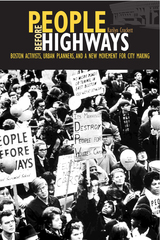
In 1948, inspired by changes to federal law, Massachusetts government officials started hatching a plan to build multiple highways circling and cutting through the heart of Boston, making steady progress through the 1950s. But when officials began to hold public hearings in 1960, as it became clear what this plan would entail—including a disproportionate impact on poor communities of color—the people pushed back. Activists, many with experience in the civil rights and antiwar protests, began to organize.
Linking archival research, ethnographic fieldwork, and oral history, Karilyn Crockett in People before Highways offers ground-level analysis of the social, political, and environmental significance of a local anti-highway protest and its lasting national implications. The story of how an unlikely multiracial coalition of urban and suburban residents, planners, and activists emerged to stop an interstate highway is one full of suspenseful twists and surprises, including for the actors themselves. And yet, the victory and its aftermath are undeniable: federally funded mass transit expansion, a linear central city park, and a highway-less urban corridor that serves as a daily reminder of the power and efficacy of citizen-led city making.
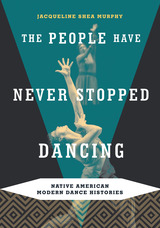
During the past thirty years, Native American dance has emerged as a visible force on concert stages throughout North America. In this first major study of contemporary Native American dance, Jacqueline Shea Murphy shows how these performances are at once diverse and connected by common influences.
Demonstrating the complex relationship between Native and modern dance choreography, Shea Murphy delves first into U.S. and Canadian federal policies toward Native performance from the late nineteenth through the early twentieth centuries, revealing the ways in which government sought to curtail authentic ceremonial dancing while actually encouraging staged spectacles, such as those in Buffalo Bill’s Wild West shows. She then engages the innovative work of Ted Shawn, Lester Horton, and Martha Graham, highlighting the influence of Native American dance on modern dance in the twentieth century. Shea Murphy moves on to discuss contemporary concert dance initiatives, including Canada’s Aboriginal Dance Program and the American Indian Dance Theatre.
Illustrating how Native dance enacts, rather than represents, cultural connections to land, ancestors, and animals, as well as spiritual and political concerns, Shea Murphy challenges stereotypes about American Indian dance and offers new ways of recognizing the agency of bodies on stage.
Jacqueline Shea Murphy is associate professor of dance studies at the University of California, Riverside, and coeditor of Bodies of the Text: Dance as Theory, Literature as Dance.
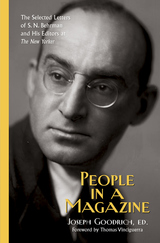
Playwright, biographer, screenwriter, and critic S. N. Behrman (1893–1973) characterized the years he spent writing for The New Yorker as a time defined by “feverish contact with great theatre stars, rich people and social people at posh hotels, at parties, in mansions and great estates.” While he hobnobbed with the likes of Mary McCarthy, Elia Kazan, and Greta Garbo and was one of Broadway's leading luminaries, Behrman would later admit that the friendships he built with the magazine's legendary editors Harold Ross, William Shawn, and Katharine S. White were the “one unalloyed felicity” of his life.
People in a Magazine collects Behrman's correspondence with his editors along with telegrams, interoffice memos, and editorial notes drawn from the magazine's archives—offering an unparalleled view of mid-twentieth-century literary life and the formative years of The New Yorker, from the time of Behrman's first contributions to the magazine in 1929 until his death.

America has long been famous as a land of plenty, but we seldom realize how much the American people are a people of plenty—a people whose distinctive character has been shaped by economic abundance. In this important book, David M. Potter breaks new ground both in the study of this phenomenon and in his approach to the question of national character. He brings a fresh historical perspective to bear on the vital work done in this field by anthropologists, social psychologists, and psychoanalysts.
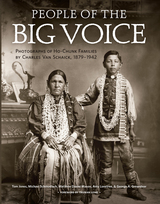
People of the Big Voice tells the visual history of Ho-Chunk families at the turn of the twentieth century and beyond as depicted through the lens of Black River Falls, Wisconsin studio photographer, Charles Van Schaick. The family relationships between those who “sat for the photographer” are clearly visible in these images—sisters, friends, families, young couples—who appear and reappear to fill in a chronicle spanning from 1879 to 1942. Also included are candid shots of Ho-Chunk on the streets of Black River Falls, outside family dwellings, and at powwows. As author and Ho-Chunk tribal member Amy Lonetree writes, “A significant number of the images were taken just a few short years after the darkest, most devastating period for the Ho-Chunk. Invasion, diseases, warfare, forced assimilation, loss of land, and repeated forced removals from our beloved homelands left the Ho-Chunk people in a fight for their culture and their lives.”
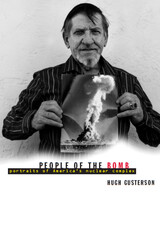
How the American military-industrial complex has invaded our consciousness to create consent for its programs
“We have had the bomb on our minds since 1945. It was first our weaponry and then our diplomacy, and now it’s our economy. How can we suppose that something so monstrously powerful would not, after forty years, compose our identity?” —E. L. Doctorow
This book tells the story of how—like it or not, know it or not—we have become “the people of the bomb.” Integrating fifteen years of field research at weapons laboratories across the United States with discussion of popular movies, political speeches, media coverage of war, and the arcane literature of defense intellectuals, Hugh Gusterson shows how the military-industrial complex has built consent for its programs and, in the process, taken the public “nuclear.”People of the Bomb mixes empathic and vivid portraits of individual weapons scientists with hard-hitting scrutiny of defense intellectuals’s inability to foresee the end of the Cold War, government rhetoric on missile defense, official double standards about nuclear proliferation, and pork barrel politics in the nuclear weapons complex. Overall, the book assembles a disturbing picture of the ways in which the military-industrial complex has transformed our public culture and personal psychology in the half century since we entered the nuclear age.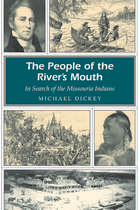
The Missouria people were the first American Indians encountered by European explorers venturing up the Pekitanoui River—the waterway we know as the Missouri. This Indian nation called itself the Nyut^achi, which translates to “People of the River Mouth,” and had been a dominant force in the Louisiana Territory of the pre-colonial era. When first described by the Europeans in 1673, they numbered in the thousands. But by 1804, when William Clark referred to them as “once the most powerful nation on the Missouri River,” fewer than 400 Missouria remained. The state and Missouri River are namesakes of these historic Indians, but little of the tribe’s history is known today. Michael Dickey tells the story of these indigenous Americans in The People of the River’s Mouth.
Accessible to general readers, this book recovers the lost history of an important people. The People of the River’s Mouth sheds light on an overlooked aspect of Missouri’s past and pieces together the history of these influential Native Americans in an engaging, readable volume.
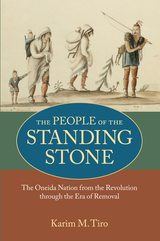
The Oneidas' physical, political, and emotional division persists to this day. Even for those who stayed put, their world changed more in cultural, ecological, and demographic terms than at any time before or since. Oneidas of the post-Revolutionary decades were reluctant pioneers, undertaking more of the adaptations to colonized life than any other generation. Amid such wrenching change, maintaining continuity was itself a creative challenge. The story of that extraordinary endurance lies at the heart of this book.
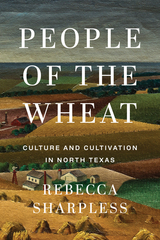
How wheat growing, milling, and baking shaped the people and culture of North Texas.
In the national imaginary, America’s amber fields of grain lie in the country’s center, but for more than a century, they also grew across one pocket of the South: North Texas. From the 1840s to the 1970s, the state's agriculture, dominated in lore by cotton in the east and livestock in the open range, was heavily invested in the cultivation, processing, sale, and consumption of wheat. Recalling a forgotten history, Rebecca Sharpless shows how the rhythms of the wheat harvest—and the evolution of the milling, distribution, and baking industries—governed daily life in what is now known as the Dallas–Fort Worth Metroplex.
In the 1840s, Anglo settlers discovered that grain flourished in North Texas and quickly built an economy that included wheat in fields, mills, and kitchens. After the Civil War, hand labor gave way to mechanization, greatly increasing production. Commercial bakeries churned out novel confections, and big cities were built on the bounty of the countryside. In the second half of the twentieth century, as production moved northward, industrial milling and baking declined, but home baking boomed, flour advertising supported regional music, and wheat fortunes financed the region’s cultural life. Sharpless covers 150 years of wheat’s very human history and shows how the labor that cultivated it, the sustenance it provided, and the prosperity it generated left an indelible mark on the people and institutions of Texas.

--Fred Ross, Cesar Chavez, Dolores Huerta, and the Community Service Organization and National Farm Workers Association
--Nicholas von Hoffman and the Woodlawn Organization
--Tom Gaudette and the Northwest Community Organization
--Ed Chambers, Richard Harmon, and the Industrial Areas Foundation
--Shel Trapp, Gale Cincotta, and National People's Action
--Heather Booth, Midwest Academy, and Citizen Action
--Wade Rathke and ACORN
Weaving classic texts with interviews and their own context-setting commentaries, the editors of People Power provide the first comprehensive history of Alinsky-based organizing in the tumultuous period from 1955 to 1980, when the key organizing groups in the United States took form. Many of these selections--previously available only on untranscribed audiotapes or in difficult-to-read mimeograph or Xerox formats--appear in print here for the first time.
These selections have been drawn from systematic philosophies; from opinions expressed in law and judicial decisions; from speeches or pamphlets struck off in the heat of controversy; from political and diplomatic correspondence. They are grouped to focus attention on the perennial issues of liberty, equality, and security in about a dozen significant periods of American history. Volume I, Part 1, begins with a consideration of truth and liberty in the seventeenth century, continues with a study of the issues of the American Revolution, and concludes with a study of the Confederation and the Constitution.
The organization of the readings puts the issues in the context of four fundamental relationships: the citizen and the economy (and, within the economy, the interrelations of major interest groups); the federal union and the states; the United States and the world. The best available texts have been used. Introductions and explanatory notes relate the readings to one another, suggest the circumstances in which they were written, and provide biographical information about the authors.
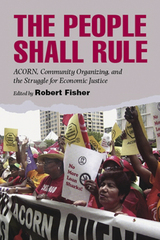
The twelve chapters in this volume present the perspectives of insiders like founder Wade Rathke and leading outside practitioners and academics. The result is a thorough detailing of ACORN's founding and its changing strategies, including vivid accounts and analyses of its campaigns on the living wage, voter turnout, predatory lending, redlining, school reform, and community redevelopment, as well as a critical perspective on ACORN's place in the community organizing landscape.

Reasonable people disagree about the reach of the federal government, but there is near-universal consensus that it should protect us from such dangers as bacteria-infested food, harmful drugs, toxic pollution, crumbling bridges, and unsafe toys. And yet, the agencies that shoulder these responsibilities are in shambles; if they continue to decline, lives will be lost and natural resources will be squandered. In this timely book, Rena Steinzor and Sidney Shapiro take a hard look at the tangled web of problems that have led to this dire state of affairs.
It turns out that the agencies are not primarily to blame and that regulatory failure actually stems from a host of overlooked causes. Steinzor and Shapiro discover that unrelenting funding cuts, a breakdown of the legislative process, an increase in the number of political appointees, a concurrent loss of experienced personnel, chaotic White House oversight, and ceaseless political attacks on the bureaucracy all have contributed to the broken system. But while the news is troubling, the authors also propose a host of reforms, including a new model for measuring the success of the agencies and a revitalization of the civil service. The People’s Agents and the Battle to Protect the American Public is an urgent and compelling appeal to renew America’s best traditions of public service.

In the United States, almost 90 percent of state judges have to run in popular elections to remain on the bench. In the past decade, this peculiarly American institution has produced vicious multi-million-dollar political election campaigns and high-profile allegations of judicial bias and misconduct. The People’s Courts traces the history of judicial elections and Americans’ quest for an independent judiciary—one that would ensure fairness for all before the law—from the colonial era to the present.
In the aftermath of economic disaster, nineteenth-century reformers embraced popular elections as a way to make politically appointed judges less susceptible to partisan patronage and more independent of the legislative and executive branches of government. This effort to reinforce the separation of powers and limit government succeeded in many ways, but it created new threats to judicial independence and provoked further calls for reform. Merit selection emerged as the most promising means of reducing partisan and financial influence from judicial selection. It too, however, proved vulnerable to pressure from party politics and special interest groups. Yet, as Shugerman concludes, it still has more potential for protecting judicial independence than either political appointment or popular election.
The People’s Courts shows how Americans have been deeply committed to judicial independence, but that commitment has also been manipulated by special interests. By understanding our history of judicial selection, we can better protect and preserve the independence of judges from political and partisan influence.

Devoted conservationist, environmentalist, and explorer Robert Marshall (1901-1939) was chief of the Division of Recreation and Lands, U.S. Forest Service, when he died at age thirty-eight. Throughout his short but intense life, Marshall helped catalyze the preservation of millions of wilderness acres in all parts of the U.S., inspired countless wilderness advocates, and was a pioneer in the modern environmental movement: he and seven fellow conservationists founded the Wilderness Society in 1935. First published in 1933, The People's Forests made a passionate case for the public ownership and management of the nation's forests in the face of generations of devastating practices; its republication now is especially timely.
Marshall describes the major values of forests as sources of raw materials, as essential resources for the conservation of soil and water, and as a “precious environment for recreation” and for “the happiness of millions of human beings.” He considers the pros and cons of private and public ownership, deciding that public ownership and large-scale public acquisition are vital in order to save the nation's forests, and sets out ways to intelligently plan for and manage public ownership.
The last words of this book capture Marshall's philosophy perfectly: “The time has come when we must discard the unsocial view that our woods are the lumbermen's and substitute the broader ideal that every acre of woodland in the country is rightly a part of the people's forests.”

'Hands-down the best book yet on the Green New Deal' - Jason Hickel
The idea of a Green New Deal was launched into popular consciousness by US Congressperson Alexandria Ocasio-Cortez in 2018. It has become a watchword in the current era of global climate crisis. But what - and for whom - is the Green New Deal?
In this concise and urgent book, Max Ajl provides an overview of the various mainstream Green New Deals. Critically engaging with their proponents, ideological underpinnings and limitations, he goes on to sketch out a radical alternative: a 'People's Green New Deal' committed to decommodification, working-class power, anti-imperialism and agro-ecology.
Ajl diagnoses the roots of the current socio-ecological crisis as emerging from a world-system dominated by the logics of capitalism and imperialism. Resolving this crisis, he argues, requires nothing less than an infrastructural and agricultural transformation in the Global North, and the industrial convergence between North and South. As the climate crisis deepens and the literature on the subject grows, A People's Green New Deal contributes a distinctive perspective to the debate.
Silicon Valley gets all the credit for digital creativity, but this account of the pre-PC world, when computing meant more than using mature consumer technology, challenges that triumphalism.
The invention of the personal computer liberated users from corporate mainframes and brought computing into homes. But throughout the 1960s and 1970s a diverse group of teachers and students working together on academic computing systems conducted many of the activities we now recognize as personal and social computing. Their networks were centered in New Hampshire, Minnesota, and Illinois, but they connected far-flung users. Joy Rankin draws on detailed records to explore how users exchanged messages, programmed music and poems, fostered communities, and developed computer games like The Oregon Trail. These unsung pioneers helped shape our digital world, just as much as the inventors, garage hobbyists, and eccentric billionaires of Palo Alto.
By imagining computing as an interactive commons, the early denizens of the digital realm seeded today’s debate about whether the internet should be a public utility and laid the groundwork for the concept of net neutrality. Rankin offers a radical precedent for a more democratic digital culture, and new models for the next generation of activists, educators, coders, and makers.
Clemens sheds new light on how farmers, workers, and women invented strategies to circumvent the parties. Voters learned to monitor legislative processes, to hold their representatives accountable at the polls, and to institutionalize their ongoing participation in shaping policy. Closely analyzing the organizational politics in three states—California, Washington, and Wisconsin—she demonstrates how the political opportunity structure of federalism allowed regional innovations to exert leverage on national political institutions.
An authoritative statement on the changes in American politics during the Progressive Era, this book will interest political scientists, sociologists, and American historians.

In this book about families--those of the various native peoples of southern New England and those of the English settlers and their descendants--Gloria Main compares the ways in which the two cultures went about solving common human problems. Using original sources--diaries, inventories, wills, court records--as well as the findings of demographers, ethnologists, and cultural anthropologists, she compares the family life of the English colonists with the lives of comparable groups remaining in England and of native Americans. She looks at social organization, patterns of work, gender relations, sexual practices, childbearing and childrearing, demographic changes, and ways of dealing with sickness and death.
Main finds that the transplanted English family system produced descendants who were unusually healthy for the times and spectacularly fecund. Large families and steady population growth led to the creation of new towns and the enlargement of old ones with inevitably adverse consequences for the native Americans in the area. Main follows the two cultures into the eighteenth century and makes clear how the promise of perpetual accessions of new land eventually extended Puritan family culture across much of the North American continent.

Beneath the glitzy surface of the resorts and the seemingly cookie-cutter suburban sprawl of Las Vegas lies a vibrant and diverse ethnic life. People of varied origins make up the population of nearly two million and yet, until now, little mention of the city has been made in studies and discussion of ethnicity or immigration. The Peoples of Las Vegas: One City, Many Faces fills this void by presenting the work of seventeen scholars of history, political science, sociology, anthropology, law, urban studies, cultural studies, literature, social work, and ethnic studies to provide profiles of thirteen of the city’s many ethnic groups. The book’s introduction and opening chapters explore the historical and demographic context of these groups, as well as analyze the economic and social conditions that make Las Vegas so attractive to recent immigrants. Each group is the subject of the subsequent chapters, outlining migration motivations and processes, economic pursuits, cultural institutions and means of transmitting culture, involvement in the broader community, ties to homelands, and recent demographic trends.
Diverse in their languages and customs, the Native American peoples of the Great Lakes region—the Miamis, Ho-Chunks, Potawatomis, Ojibwas, and many others—shared a tumultuous history. In the colonial era their rich homeland became a target of imperial ambition and an invasion zone for European diseases, technologies, beliefs, and colonists. Yet in the face of these challenges, their nations’ strong bonds of trade, intermarriage, and association grew and extended throughout their watery domain, and strategic relationships and choices allowed them to survive in an era of war, epidemic, and invasion.
In Peoples of the Inland Sea, David Andrew Nichols offers a fresh and boundary-crossing history of the Lakes peoples over nearly three centuries of rapid change, from pre-Columbian times through the era of Andrew Jackson’s Removal program. As the people themselves persisted, so did their customs, religions, and control over their destinies, even in the Removal era. In Nichols’s hands, Native, French, American, and English sources combine to tell this important story in a way as imaginative as it is bold. Accessible and creative, Peoples of the Inland Sea is destined to become a classroom staple and a classic in Native American history.
READERS
Browse our collection.
PUBLISHERS
See BiblioVault's publisher services.
STUDENT SERVICES
Files for college accessibility offices.
RECENTLY PUBLISHED





UChicago Accessibility Resources
home | accessibility | search | about | contact us
BiblioVault ® 2001 - 2025
The University of Chicago Press