
 A SCHOLARLY BOOK REPOSITORY
206 start with P start with P
In Pacific Possessions: The Pursuit of Authenticity in Nineteenth-Century Oceanian Travel Accounts, Chris J. Thomas expands the literary canon on Polynesia and Melanesia beyond the giants, such as Herman Melville and Jack London, to include travel narratives by British and American visitors. These accounts were widely read and reviewed when they first appeared but have largely been ignored by scholars. For the first time, Thomas defines these writings as a significant literary genre.
Recovering these works allows us to reconceive of nineteenth-century Oceania as a vibrant hub of cultural interchange. Pacific Possessions recaptures the polyphony of voices that enlivened this space through the writing of these travelers, while also paying attention to their Oceanian interlocutors. Each chapter centers on a Pacific cultural marker, what Thomas refers to as each writer’s “possession”: the Tongan tattoo, the Hawaiian hula, the Fijian cannibal fork, and Robert Louis Stevenson’s cache of South Seas photographs.
Thomas analyzes how westerners formed narratives around these objects and what those objects meant within nineteenth-century Oceanian cultures. He argues that the accounts served to shape a version of Oceanian authenticity that persists today. The profiled traveler-writers had complex experiences, at times promoting exoticized exaggerations of so-called authentic Polynesian and Melanesian cultures and at other times genuinely engaging in cultural exchange. However, their views were ultimately compromised by a western lens. In Thomas’s words, “the authenticity is at once celebrated and written over.”
These are questions that have bedeviled scientists, doctors, and ethicists for decades, and in Pain, Pleasure, and the Greater Good, Cathy Gere presents the gripping story of how we have addressed them over time. Today, we are horrified at the idea that a medical experiment could be performed on someone without consent. But, as Gere shows, that represents a relatively recent shift: for more than two centuries, from the birth of utilitarianism in the eighteenth century, the doctrine of the greater good held sway. If a researcher believed his work would benefit humanity, then inflicting pain, or even death, on unwitting or captive subjects was considered ethically acceptable. It was only in the wake of World War II, and the revelations of Nazi medical atrocities, that public and medical opinion began to change, culminating in the National Research Act of 1974, which mandated informed consent. Showing that utilitarianism is based in the idea that humans are motivated only by pain and pleasure, Gere cautions that that greater good thinking is on the upswing again today and that the lesson of history is in imminent danger of being lost.
Rooted in the experiences of real people, and with major consequences for how we think about ourselves and our rights, Pain, Pleasure, and the Greater Good is a dazzling, ambitious history.
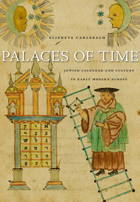
From one of the leading historians of the Jewish past comes a stunning look into a previously unexamined dimension of Jewish life and culture: the calendar. In the late sixteenth century, Pope Gregory XIII instituted a momentous reform of Western timekeeping, and with it a period of great instability. Jews, like all minority cultures in Europe, had to realign their time-keeping to accord with the new Christian calendar.
Elisheva Carlebach shows that the calendar is a complex and living system, constantly modified as new preoccupations emerge and old priorities fade. Calendars serve to structure time and activities and thus become mirrors of experience. Through this seemingly mundane and all-but-overlooked document, we can reimagine the quotidian world of early modern Jewry, of market days and sacred days, of times to avoid Christian gatherings and times to secure communal treasures. In calendars, we see one of the central paradoxes of Jewish existence: the need to encompass the culture of the other while retaining one’s own unique culture. Carlebach reveals that Jews have always lived in multiple time scales, and demonstrates how their accounting for time, as much as any cultural monument, has shaped Jewish life.
After exploring Judaica collections around the world, Carlebach brings to light these textually rich and beautifully designed repositories of Jewish life. With color illustrations throughout, this is an evocative illumination of how early modern Jewish men and women marked the rhythms and realities of time and filled it with anxieties and achievements.
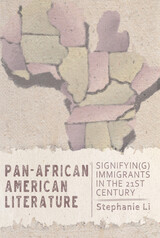
The twenty-first century is witnessing a dynamic broadening of how blackness signifies both in the U.S. and abroad. Literary writers of the new African diaspora are at the forefront of exploring these exciting approaches to what black subjectivity means. Pan-African American Literature is dedicated to charting the contours of literature by African born or identified authors centered around life in the United States. The texts examined here deliberately signify on the African American literary canon to encompass new experiences of immigration, assimilation and identification that challenge how blackness has been previously conceived. Though race often alienates and frustrates immigrants who are accustomed to living in all-black environments, Stephanie Li holds that it can also be a powerful form of community and political mobilization.
Winner of the Norman B. Tomlinson, Jr. Prize
“The best large-scale synthesis in any language of what we currently know and understand about this multidimensional, cataclysmic conflict.”
—Richard J. Evans, Times Literary Supplement
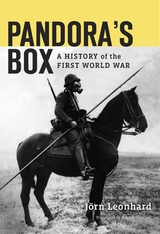
In this monumental history of the First World War, Germany’s leading historian of the period offers a dramatic account of its origins, course, and consequences. Jörn Leonhard treats the clash of arms with a sure feel for grand strategy. He captures the slow attrition, the race for ever more destructive technologies, and the grim experiences of frontline soldiers. But the war was more than a military conflict and he also gives us the perspectives of leaders, intellectuals, artists, and ordinary men and women around the world as they grappled with the urgency of the moment and the rise of unprecedented political and social pressures. With an unrivaled combination of depth and global reach, Pandora’s Box reveals how profoundly the war shaped the world to come.
“[An] epic and magnificent work—unquestionably, for me, the best single-volume history of the war I have ever read…It is the most formidable attempt to make the war to end all wars comprehensible as a whole.”
—Simon Heffer, The Spectator
“[A] great book on the Great War…Leonhard succeeds in being comprehensive without falling prey to the temptation of being encyclopedic. He writes fluently and judiciously.”
—Adam Tooze, Die Zeit
“Extremely readable, lucidly structured, focused, and dynamic…Leonhard’s analysis is enlivened by a sharp eye for concrete situations and an ear for the voices that best convey the meaning of change for the people and societies undergoing it.”
—Christopher Clark, author of The Sleepwalkers
Paper Electronic Literature attests that digital literature's old media elements have much to teach us about the cultural and physical conditions in which we compute; the creativity that new media artists have shown in their dealings with old media; and the distinctively electronic issues that confront digital artists. Moving between avant-garde works and popular ones, fiction writing and poetry generation, Richard Hughes Gibson reveals the diverse ways in which paper has served as a component within electronic literature, particularly in facilitating interactive experiences for users. This important study develops a new critical paradigm for appreciating the multifaceted material innovation that has long marked digital literature.
Published by Bucknell University Press. Distributed worldwide by Rutgers University Press.
The Papist Represented reincorporates the history of the English Catholic community into the field of eighteenth-century literary studies. It examines the intersections of literary, religious, and cultural history as they pertain to the slow acceptance by both Protestants and Catholics of the latter group’s permanent minority status. By focusing on the Catholic community’s perspectives and activities, it deepens and complicates our understanding of the cultural processes that contributed to the significant progress of the Catholic emancipation movement over the course of the century. At the same time, it reveals that this community’s anxieties and desires (and the anxieties and desires it provoked in Protestants) fuel some of the most popular and experimental literary works of the century, in forms and modes including closet drama, elegy, the novel, and the Gothic. By returning the Catholic community to eighteenth-century literary history, The Papist Represented challenges the assumption that eighteenth-century literature was a fundamentally Protestant enterprise.
Published by University of Delaware Press. Distributed worldwide by Rutgers University Press.
China’s bold program of reforms launched in the late 1970s—the move to a market economy and the opening to the outside world—ended the political chaos and economic stagnation of the Cultural Revolution and sparked China’s unprecedented economic boom. Yet, while the reforms made possible a rising standard of living for the majority of China’s population, they came at the cost of a weakening central government, increasing inequalities, and fragmenting society.
The essays of Barry Naughton, Joseph Fewsmith, Paul H. B. Godwin, Murray Scot Tanner, Lianjiang Li and Kevin J. O’Brien, Tianjian Shi, Martin King Whyte, Thomas P. Bernstein, Dorothy J. Solinger, David S. G. Goodman, Kristen Parris, Merle Goldman, Elizabeth J. Perry, and Richard Baum and Alexei Shevchenko analyze the contradictory impact of China’s economic reforms on its political system and social structure. They explore the changing patterns of the relationship between state and society that may have more profound significance for China than all the revolutionary movements that have convulsed it through most of the twentieth century.
At dawn on March 18, 1871, Parisian women stepped between cannons and French soldiers, using their bodies to block the army from taking the artillery from their working-class neighborhood. When ordered to fire, the troops refused and instead turned and arrested their leaders. Thus began the Paris Commune, France’s revolutionary civil war that rocked the nineteenth century and shaped the twentieth.
Considered a golden moment of hope and potential by the left, and a black hour of terrifying power inversions by the right, the Commune occupies a critical position in understanding modern history and politics. A 72-day conflict that ended with the ferocious slaughter of Parisians, the Commune represents for some the final insurgent burst of the French Revolution’s long wake, for others the first “successful” socialist uprising, and for yet others an archetype for egalitarian socio-economic, feminist, and political change. Militants have referenced and incorporated its ideas into insurrections across the globe, throughout the twentieth and into the twenty-first centuries, keeping alive the revolution’s now-iconic goals and images. Innumerable scholars in countless languages have examined aspects of the 1871 uprising, taking perspectives ranging from glorifying to damning this world-shaking event.
The Commune stands as a critical and pivotal moment in nineteenth-century history, as the linchpin between revolutionary pasts and futures, and as the crucible allowing glimpses of alternate possibilities. Upending hierarchies of class, religion, and gender, the Commune emerged as a touchstone for the subsequent century-and-a-half of revolutionary and radical social movements.
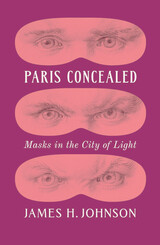
A comprehensive history of masks in France from the seventeenth to the nineteenth century.
Masks can conceal, disguise, or protect. They can guard status, inspire delight, or spread fear. They can also betray trust through insincerity, deceit, and hypocrisy. In Paris Concealed, historian James H. Johnson offers a sweeping history of masks both visible and unseen from the time of Louis XIV to the late nineteenth century, exploring the complex roles that masking and unmasking have played in the fashioning of our social selves.
Drawing from memoirs, novels, plays, and paintings, Paris Concealed explores the many domains in which masks have been decisive. Beginning in the court of Versailles, Johnson charts the genesis of courtly politesse and its widespread condemnation by Enlightenment philosophers and political thinkers. He describes strategies deployed in the era of the French Revolution for unmasking traitors and later efforts to penetrate criminal disguises through telltale marks on the body. He portrays the disruptive power of masks in public balls and carnivals and, with the coming of modernity, evokes their unsettling presence within the unconscious.
Compellingly written and beautifully illustrated, Paris Concealed lays bare the mask’s transformations, from marking one’s position in a static society to inspiring imagined identities in meritocracies to impeding the elusive search for one’s true self. To tell the history of masks, Johnson shows, is to tell the history of modern selfhood.
An innovative history of the fashion industry, focusing on the connections between Paris and New York, art and finance, and design and manufacturing.
Fashion is one of the most dynamic industries in the world, with an annual retail value of $3 trillion and globally recognized icons like Coco Chanel, Christian Dior, and Yves Saint Laurent. How did this industry generate such economic and symbolic capital?
Focusing on the roles of entrepreneurs, designers, and institutions in fashion’s two most important twentieth-century centers, Paris to New York tells the history of the industry as a negotiation between art and commerce. In the late nineteenth century, Paris-based firms set the tone for a global fashion culture nurtured by artistic visionaries. In the burgeoning New York industry, however, the focus was on mass production. American buyers, trend scouts, and designers crossed the Atlantic to attend couture openings, where they were inspired by, and often accused of counterfeiting, designs made in Paris. For their part, Paris couturiers traveled to New York to understand what American consumers wanted and to make deals with local manufacturers for whom they designed exclusive garments and accessories. The cooperation and competition between the two continents transformed the fashion industry in the early and mid-twentieth century, producing a hybrid of art and commodity.
Véronique Pouillard shows how the Paris–New York connection gave way in the 1960s to a network of widely distributed design and manufacturing centers. Since then, fashion has diversified. Tastes are no longer set by elites alone, but come from the street and from countercultures, and the business of fashion has transformed into a global enterprise.
Many historians have attempted to understand the violent religious conflicts of the seventeenth century from viewpoints dominated by concepts of class, gender, and demography. But few studies have explored the cultural process whereby religious symbolism created social cohesion and political allegiance. This book examines religious conflict in the parish communities of early modern England using an interdisciplinary approach that includes all these perspectives.
Daniel Beaver studies the urban parish of Tewkesbury and six rural parishes in its hinterland over a period of one hundred years, drawing on local ecclesiastical court records, sermons, parish records, corporate minutes and charity books, and probate documents. He discusses the centrality of religious symbols and ceremonies in the ordering of local societies, particularly in local conceptions of place, personal identity, and the life cycle. Four phases in the transformation of parish communities emerge and are examined in this book.
This exploration of the interrelationship of religion, politics, and society, and the transformation of local communities in civil war, has a value beyond the particular history of early modern England, contributing to a broader understanding of religious revivals, fundamentalisms, and the persistent link between religion, nationalism, and ethnic identity in the modern world.
In 1961 South Korea was mired in poverty. By 1979 it had a powerful industrial economy and a vibrant civil society in the making, which would lead to a democratic breakthrough eight years later. The transformation took place during the years of Park Chung Hee's presidency. Park seized power in a coup in 1961 and ruled as a virtual dictator until his assassination in October 1979. He is credited with modernizing South Korea, but at a huge political and social cost.
South Korea's political landscape under Park defies easy categorization. The state was predatory yet technocratic, reform-minded yet quick to crack down on dissidents in the name of political order. The nation was balanced uneasily between opposition forces calling for democratic reforms and the Park government's obsession with economic growth. The chaebol (a powerful conglomerate of multinationals based in South Korea) received massive government support to pioneer new growth industries, even as a nationwide campaign of economic shock therapy-interest hikes, devaluation, and wage cuts-met strong public resistance and caused considerable hardship.
This landmark volume examines South Korea's era of development as a study in the complex politics of modernization. Drawing on an extraordinary range of sources in both English and Korean, these essays recover and contextualize many of the ambiguities in South Korea's trajectory from poverty to a sustainable high rate of economic growth.

In 1624 James I invited Parliament to discuss issues of war and peace, setting a precedent which would make yet another inroad into the ancient prerogatives of the crown. The so-called “Happy Parliament” dismayed the peace-loving King by supporting Prince Charles and the Duke of Buckingham in their demands for war with Spain.
Robert Ruigh presents an absorbing and authoritative analytic narrative of the proceedings between Parliament and the crown and their far-reaching constitutional and political consequences. His use of fifteen parliamentary diaries and other contemporary manuscripts has resulted in a balanced account which avoids the tendency to vilify the Stuarts and glorify the Commons, and which provides an integrated and perceptive picture of the Parliament. He presents an analysis of patronage in relation to the composition of the Commons and a reevaluation of historical generalizations about the senility and ineffectuality of King James during his declining years, the seizure of power by the Duke and the Prince and their management of Parliament, the precedent of free speech in foreign affairs, and the effect of Parliament on contemporary politics.
The essays in this pathbreaking collection consider the significance of varied early American fragmentary genres and practices—from diaries and poetry, to almanacs and commonplace books, to sermons and lists, to Indigenous ruins and other material shards and fragments—often overlooked by critics in a scholarly privileging of the “whole.” Contributors from literary studies, book history, and visual culture discuss a host of canonical and non-canonical figures, from Edward Taylor and Washington Irving to Mary Rowlandson and Sarah Kemble Knight, offering insight into the many intellectual, ideological, and material variations of “form” that populated the early American cultural landscape. As these essays reveal, the casting of the fragmentary as aesthetically eccentric or incomplete was a way of reckoning with concerns about the related fragmentation of nation, society, and self. For a contemporary audience, they offer new ways to think about the inevitable gaps and absences in our cultural and historical archive.

“Vendler sparkles.”
—Irvin Ehrenpreis, New York Review of Books
America’s foremost critic savors the poetry that made—and remade—our twentieth-century canon.
The American poet Randall Jarrell once defined the ideal critic as “an extremely good reader—one who has learned to show to others what he saw in what he read.” By this measure, Helen Vendler is the best of her generation. Never doctrinaire or merely academic, she is an evangelist for poetic truth, guiding readers along the tracks of her own authoritative readings to disclose the interplay of form, feeling, and perception that defines each poet’s idiosyncratic vision of the world.
A compilation of essays and reviews written for the New York Times Book Review and other outlets, Part of Nature, Part of Us is a dazzling retrospective of the authors who defined midcentury American poetry. The work collected here, originally published in the late 1960s and 1970s, marks the first time that canonical modern poets like T. S. Eliot, Marianne Moore, and Sylvia Plath could be judged from a critical distance. Reviewing more recent poets—including Robert Lowell, Elizabeth Bishop, and Adrienne Rich—Vendler also gives readers a chance to share in the “freshness of [her] first impressions.” Throughout, she is unforgiving but never unfair. She exults those who, like Lowell, show an essential fidelity to perception, who “say what happened” without stumbling into a mass of clichés. But she is unsparing with those who come to distrust their own emotions and retreat into clinical facticity, like the later Moore.
Unflinching, engrossing, and frequently poetic in its own right, Part of Nature, Part of Us confirms Vendler’s unmatched ability to pinpoint great poets’ value as thinkers, as artists, and, finally, as humans.
“Vendler sparkles.”
—Irvin Ehrenpreis, New York Review of Books
America’s foremost critic savors the poetry that made—and remade—our twentieth-century canon.
The American poet Randall Jarrell once defined the ideal critic as “an extremely good reader—one who has learned to show to others what he saw in what he read.” By this measure, Helen Vendler is the best of her generation. Never doctrinaire or merely academic, she is an evangelist for poetic truth, guiding readers along the tracks of her own authoritative readings to disclose the interplay of form, feeling, and perception that defines each poet’s idiosyncratic vision of the world.
A compilation of essays and reviews written for the New York Times Book Review and other outlets, Part of Nature, Part of Us is a dazzling retrospective of the authors who defined midcentury American poetry. The work collected here, originally published in the late 1960s and 1970s, marks the first time that canonical modern poets like T. S. Eliot, Marianne Moore, and Sylvia Plath could be judged from a critical distance. Reviewing more recent poets—including Robert Lowell, Elizabeth Bishop, and Adrienne Rich—Vendler also gives readers a chance to share in the “freshness of [her] first impressions.” Throughout, she is unforgiving but never unfair. She exults those who, like Lowell, show an essential fidelity to perception, who “say what happened” without stumbling into a mass of clichés. But she is unsparing with those who come to distrust their own emotions and retreat into clinical facticity, like the later Moore.
Unflinching, engrossing, and frequently poetic in its own right, Part of Nature, Part of Us confirms Vendler’s unmatched ability to pinpoint great poets’ value as thinkers, as artists, and, finally, as humans.
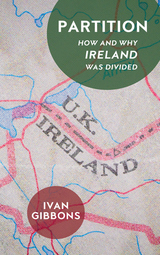
The Partition of Ireland in 1921, which established Northern Ireland and saw it incorporated into the United Kingdom, sparked immediate civil war and a century of unrest. Today, the Partition remains the single most contentious issue in Irish politics, but its origins—how and why the British divided the island—remain obscured by decades of ensuing struggle.
Cutting through the partisan divide, Partition takes readers back to the first days of the twentieth century to uncover the concerns at the heart of the original conflict. Drawing on extensive primary research, Ivan Gibbons reveals how the idea to divide Ireland came about and gained popular support as well as why its implementation proved so controversial and left a century of troubles in its wake.
With admirable lucidity and scrupulous attention to detail, Silas Wu recreates the conflict and intrigue that marked the struggle for succession to the throne of China during the reign of Emperor K’ang-hsi. This crisis, as Wu portrays it, stemmed from irreconcilable familial commitments and imperial responsibilities. K’ang-hsi, frequently compared to his contemporaries Louis XIV and Peter the Great, is depicted here as a psychologically complex individual with bewildering inconsistencies in his behavior. His fears and doubts persistently confounded his ministers, impeding the effectiveness of his rule. Yin-jeng, his talented and promising son, had been hand-picked to succeed from infancy, but steadily degenerated into cruelty, immorality, and madness, becoming totally unfit to be the heir to the throne of the Chinese empire.
The story is told against the complex background of the K’ang-hsi era with specific delineations of the chief personalities concerned. This multifaceted approach enables Wu to link political events of the time to the conflicting desires and passions of father and son. His careful investigation of the cultural concept of filial piety and its profound influence on K’ang-hsi enables him to unravel the latter’s paradoxical behavior, both private and public. Even the subtle effects of contemporary social changes on the court at Peking come to light through Wu’s comprehensive analysis.
Wu has utilized nearly every document available on the subject including letters, diaries, intelligence reports, and K’ang-hsi’s secret correspondence with court officials. The result is an unusual book that unites history and psychology.
"This may well be the most illuminating study ever devoted to the question of appeal exerted not only by Communism but also by the Nazi and other fascist varieties of totalitarianism in this century."—Hilton Kramer, New Criterion
"A subtle, nuanced but gripping study of the most pervasive and destructive illusion in the 20th century." —Kirkus Reviews, starred review
"The Passing of an Illusion . . . is both a profound work of intellectual history that takes its place alongside other great studies of the leftist heresy . . . and a relentless diagnosis of the self-subversive risks that are inherent in democratic regimes. "—Roger Kaplan, Washington Times
" A remarkable book. . . . Stimulating and challenging. . . . A man widely read in several languages, Furet clearly knew his way around 20th-century Europe, even unto the dark alleys that figure on no existing map. "—Mark Falcoff, Commentary
"A history of ideas, this work is not for the faint of heart, yet those who challenge it will discover a signal contribution to the literature of Communism."—Booklist
"Imperious and stunningly confident, grand in conception and expansive in manner, packed with fascinating detail and often incisive judgements."—John Dunn, Times Higher Education Supplement
"The Passing of an Illusion is brilliant, and one would be hard pressed to find better writing of history than the first chapter, which traces the roots of modern political thinking back to the nineteenth century."—J. Arch Getty, Atlantic Monthly
"A brilliant and important book. . . . The publication of the American edition makes accessible to the general reader the most thought-provoking historical assessment of communism in Europe to appear since its collapse."—Jeffrey Herf, Wall Street Journal
François Furet (1927-1997), educator and author, was a Chevalier of the Legion of Honor and was elected, in 1997, to become one of the "Forty Immortals" of the Académie Française, the highest intellectual honor in France. His many books include Interpreting the French Revolution, Marx and the French Revolution, and Revolutionary France. Deborah Furet, his widow, collaborated with him on many projects.

In his lifetime, French philosopher Jacques Maritain (1882–1973) achieved a reputation as both a leading Catholic intellectual and as an outspoken critic of antisemitism. Here historian Richard Francis Crane traces the development of Maritain’s opposition toward antisemitism and analyzes the Catholic appreciation of Judaism that animated his stance. Crane probes the writings and teachings of Maritain—from before, during, and after the Holocaust—and illuminates how his ideas altered Christian perceptions of Jews and Judaism during his lifetime and continue to do so today.

A Scholar's Quest for Home and Identity
Experience the remarkable story of a Romanian-born, Hungarian-speaking Jewish professor. From Vienna to Columbia and Harvard, he navigates a life marked by rootlessness, seeking comfort and purpose. His journey unfolds against the backdrop of five decades, two continents, and significant political and cultural changes.
As we follow his pursuit of a home, we gain insight into the critical developments of post-1945 Europe and America. Markovits's emigration experiences, first from Romania to Vienna and later from Vienna to New York, shed light on the challenges he faced.
His journey offers a panoramic view of the forces shaping the latter half of the 20th century. Despite America's flaws, he finds it a beacon of academic excellence, intellectual openness, cultural diversity, and religious tolerance—qualities that Europe lacked.
Explore the complexities of identity, culture, and the universal search for belonging in this captivating narrative.
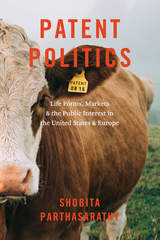
To demonstrate this, Parthasarathy takes readers through a particularly fierce and prolonged set of controversies over patents on life forms linked to important advances in biology and agriculture and potentially life-saving medicines. Comparing battles over patents on animals, human embryonic stem cells, human genes, and plants in the United States and Europe, she shows how political culture, ideology, and history shape patent system politics. Clashes over whose voices and which values matter in the patent system, as well as what counts as knowledge and whose expertise is important, look quite different in these two places. And through these debates, the United States and Europe are developing very different approaches to patent and innovation governance. Not just the first comprehensive look at the controversies swirling around biotechnology patents, Patent Politics is also the first in-depth analysis of the political underpinnings and implications of modern patent systems, and provides a timely analysis of how we can reform these systems around the world to maximize the public interest.

“In this rigorous and beautifully researched volume, Milanich considers the tension between social and biological definitions of fatherhood, and shows how much we still have to learn about what constitutes a father.”
—Andrew Solomon, author of Far from the Tree: Parents, Children, and the Search for Identity
For most of human history, the notion that paternity was uncertain appeared to be an immutable law of nature. The unknown father provided entertaining plotlines from Shakespeare to the Victorian novelists and lay at the heart of inheritance and child support disputes. But in the 1920s new scientific advances promised to solve the mystery of paternity once and for all. The stakes were high: fatherhood has always been a public relationship as well as a private one. It confers not only patrimony and legitimacy but also a name, nationality, and identity.
The new science of paternity, with methods such as blood typing, fingerprinting, and facial analysis, would bring clarity to the conundrum of fatherhood—or so it appeared. Suddenly, it would be possible to establish family relationships, expose adulterous affairs, locate errant fathers, unravel baby mix-ups, and discover one’s true race and ethnicity. Tracing the scientific quest for the father up to the present, with the advent of seemingly foolproof DNA analysis, Nara Milanich shows that the effort to establish biological truth has not ended the quest for the father. Rather, scientific certainty has revealed the fundamentally social, cultural, and political nature of paternity. As Paternity shows, in the age of modern genetics the answer to the question “Who’s your father?” remains as complicated as ever.

The search for a “patient zero”—popularly understood to be the first person infected in an epidemic—has been key to media coverage of major infectious disease outbreaks for more than three decades. Yet the term itself did not exist before the emergence of the HIV/AIDS epidemic in the 1980s. How did this idea so swiftly come to exert such a strong grip on the scientific, media, and popular consciousness? In Patient Zero, Richard A. McKay interprets a wealth of archival sources and interviews to demonstrate how this seemingly new concept drew upon centuries-old ideas—and fears—about contagion and social disorder.
McKay presents a carefully documented and sensitively written account of the life of Gaétan Dugas, a gay man whose skin cancer diagnosis in 1980 took on very different meanings as the HIV/AIDS epidemic developed—and who received widespread posthumous infamy when he was incorrectly identified as patient zero of the North American outbreak. McKay shows how investigators from the US Centers for Disease Control inadvertently created the term amid their early research into the emerging health crisis; how an ambitious journalist dramatically amplified the idea in his determination to reframe national debates about AIDS; and how many individuals grappled with the notion of patient zero—adopting, challenging and redirecting its powerful meanings—as they tried to make sense of and respond to the first fifteen years of an unfolding epidemic. With important insights for our interconnected age, Patient Zero untangles the complex process by which individuals and groups create meaning and allocate blame when faced with new disease threats. What McKay gives us here is myth-smashing revisionist history at its best.
Paul Lafargue, disciple and son-in-law of Karl Marx, was among the most important persons giving organized political expression to Marxism in France. He helped found both the first French collectivist party and the first French Marxist party. He was the first Marxist to sit in the French legislature and for three decades served as the chief theoretician and propagandist for Marxism in France. With his wife, Laura, he translated the Communist Manifesto and other works, introducing and applying Marxist thought in France.
Demonstrating an almost seamless web between intellectual and family history, Leslie Derfler relates ideas and family identity in this account of the first forty years of Paul Lafargue’s life. Lafargue, like his famous father-in-law, called for ideological purity and demanded total hostility to anarchists and reformists. He insisted on economic determinism, the primacy of the concept of the class struggle, and the theory of surplus value. But he made his own contributions as well, particularly in his insistence on rejecting the domination of bourgeois values. Lafargue’s most famous pamphlet, The Right To Be Lazy, showed the advantages that labor could derive by rejecting the bourgeois work ethic. An intellectual of power, he pioneered in the application of Marxist methods of analysis to questions of anthropology, aesthetics, and literary criticism.
Born in Cuba of mixed racial descent, Lafargue joined in demonstrations as a medical student in Paris in the 1860s and was forced into exile. Resuming his studies in London, he became a fixture in the Marx household until he married Laura Marx and moved to Paris. There he worked to expand the influence of the International Workingmen’s Association, but fled to Spain following the general repression after the fall of the Paris Commune. He continued his efforts on behalf of Marxism in Spain and then for ten years in London before returning to France, where he helped to found the new Marxist Parti Ouvrier Français, in 1882.

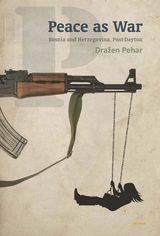
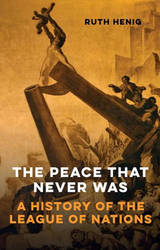

Antiquarian, lawyer, and cat lover Nicolas Fabri de Peiresc (1580–1637) was a “prince” of the Republic of Letters and the most gifted French intellectual in the generation between Montaigne and Descartes. From Peiresc’s study in Aix-en-Provence, his insatiable curiosity poured forth in thousands of letters that traveled the Mediterranean, seeking knowledge of matters mundane and exotic. Mining the remarkable 70,000-page archive of this Provençal humanist and polymath, Peter N. Miller recovers a lost Mediterranean world of the early seventeenth century that was dominated by the sea: the ceaseless activity of merchants, customs officials, and ships’ captains at the center of Europe’s sprawling maritime networks. Peiresc’s Mediterranean World reconstructs the web of connections that linked the bustling port city of Marseille to destinations throughout the Western Mediterranean, North Africa, the Levant, and beyond.
“Peter Miller’s reanimation of Peiresc, the master of the Mediterranean, is the best kind of case study. It not only makes us appreciate the range and richness of one man’s experience and the originality of his thought, but also suggests that he had many colleagues in his deepest and most imaginative inquiries. Most important, it gives us hope that their archives too will be opened up by scholars skillful and imaginative enough to make them speak to us.”
—Anthony Grafton, New York Review of Books
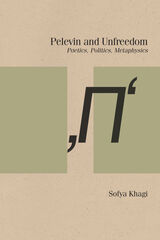
Sofya Khagi’s Pelevin and Unfreedom: Poetics, Politics, Metaphysics is the first book-length English-language study of Victor Pelevin, one of the most significant and popular Russian authors of the post-Soviet era. The text explores Pelevin’s sustained Dostoevskian reflections on the philosophical question of freedom and his complex oeuvre and worldview, shaped by the idea that contemporary social conditions pervert that very notion.
Khagi shows that Pelevin uses provocative and imaginative prose to model different systems of unfreedom, vividly illustrating how the present world deploys hyper-commodification and technological manipulation to promote human degradation and social deadlock. Rather than rehearse Cold War–era platitudes about totalitarianism, Pelevin holds up a mirror to show how social control (now covert, yet far more efficient) masquerades as freedom and how eagerly we accept, even welcome, control under the techno-consumer system. He reflects on how commonplace discursive markers of freedom (like the free market) are in fact misleading and disempowering. Under this comfortably self-occluding bondage, the subject loses all power of self-determination, free will, and ethical judgment. In his work, Pelevin highlights the unprecedented subversion of human society by the techno-consumer machine. Yet, Khagi argues, however circumscribed and ironically qualified, he holds onto the emancipatory potential of ethics and even an emancipatory humanism.
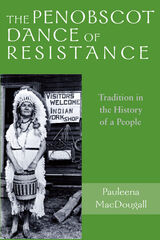
Although historians predicted the demise of the Penobscot Indians early in the nineteenth century, the tribe is thriving at the opening of the twenty-first century. Having by the early 1800s been rendered all but invisible to the dominant culture, the Penobscots, by selectively adapting to changing circumstances, won back land and visibility. The vital importance of employing elements of cultural resistance as a survival mechanism has, until now, been underestimated. In a larger context, Dance of Resistance demonstrates how an examination of the history of one Indian nation provides a window on the complex interaction of cultural systems in America.
MacDougall demonstrates that Penobscot legend, linguistics, dance, and oral tradition became foundations of resistance against assimilation into the dominant culture. She thoughtfully and accessibly reconstructs from published, archival, and oral sources the tribe's metaphorical and triumphant Dance of Resistance—founded on spiritual power, reverence for homeland, and commitment to self-determination—from colonial times to the present. A decade of political activism culminated in the precedent-setting 1980 Maine Indian Land Claims settlement. Today the Penobscots run small industries, manage their natural resources, and provide health services, K through 8 education, and social services to the poor and elderly of their community.
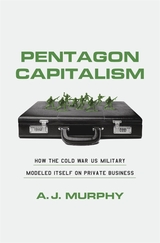
A pioneering study of the Cold War military-industrial complex shows how defense leaders reorganized the US armed forces in the image of commercial enterprise.
The strategic landscape of the Cold War generated political support for a permanent US military force of unprecedented scale. Faced with the problem of managing this behemoth, leaders of the defense bureaucracy looked to private industry for inspiration: since the military now resembled a huge industrial conglomerate, they reasoned, it should be run like a business. A. J. Murphy explores the profound consequences of translating military structures of command, logistics, and warfare into capitalist terms.
In the realm of budgeting and finance, defense reformers refashioned the supply process as a buy-and-sell transaction between units, requiring officers to express their need for equipment and labor in dollar terms. Bureaucrats embraced Taylorist work measurement to supervise everything from clerical filing to the production of massive weapons systems. The services even engaged management consultants to establish officer-training academies modeled on the Harvard Business School.
After the Vietnam War, many military leaders pushed back, questioning “managerialism” and calling for a return to traditional concepts of command. Civilian critics also chimed in, protesting the callousness of the business-minded secretary of defense, Robert McNamara, who famously measured success and failure in body counts. By this time, however, the language and values of management had thoroughly infiltrated the military’s institutional structure and daily operations. As Pentagon Capitalism makes clear, the reorganization of the defense bureaucracy along the lines of a for-profit firm durably altered the experience of military work and facilitated the lasting privatization of US national security.

This distinctive collection features writings from Grant Pick’s long, distinguished career in literary journalism. Pick had a uniquely open eye and ear for people who were in difficult situations, doing extraordinary things, or both. Most of his stories focus on interesting but overlooked Chicagoans, like the struggling owner of a laundrymat on the west side or the successful doctor who, as he faced his own death from cancer, strove to enlighten his colleagues in the field of medicine. As only a lifetime Chicagoan could, he described in tender detail the worlds in which people lived or worked, providing a look not just at one city’s citizens but at humanity as a whole.
Pick’s widow and son curate this showcase of some of his most well-remembered work, such as “The Rag Man of Lincoln Park” and “Brother Bill.” In these and all of his other works, Pick wrote from the front lines, speaking to people whom others might encounter everyday but never really see. He faithfully characterized his subjects, never denying them dignity or value and never judging them. In the mirror he held up to his city, Chicago could see the shared humanity of all its citizens.

A New York Times Book Review Editors’ Choice
“Everyone worried about the state of contemporary politics should read this book.”
—Anne-Marie Slaughter
“A trenchant survey from 1989, with its democratic euphoria, to the current map of autocratic striving.”
—David Remnick, New Yorker
The world is in turmoil. From Russia and Turkey across Europe to the United States, authoritarian populists have seized power as two core components of liberal democracy—individual rights and the popular will—are increasingly at war. As the role of money in politics has soared, a system of “rights without democracy” has taken hold. Populists who rail against this say they want to return power to the people. But in practice they create something just as bad: a system of “democracy without rights.” Yascha Mounk offers a clear and trenchant analysis of what ails our democracy and what it will take to get it back on track.
“Democracy is going through its worst crisis since the 1930s… But what exactly is the nature of this crisis? And what is driving it? The People vs. Democracy stands out in a crowded field for the quality of its answers to these questions.”
—The Economist
“Brilliant… As this superb book makes clear, we need both the liberal framework and the democracy, and bringing them back together is the greatest challenge of our time.”
—Los Angeles Times
“Extraordinary…provides a clear, concise, persuasive, and insightful account of the conditions that made liberal democracy work—and how the breakdown in those conditions is the source of the current crisis of democracy around the world.”
—The Guardian

At the Berlin Auto Show in 1938, Adolf Hitler presented the prototype for a small, oddly shaped, inexpensive family car that all good Aryans could enjoy. Decades later, that automobile—the Volkswagen Beetle—was one of the most beloved in the world. Bernhard Rieger examines culture and technology, politics and economics, and industrial design and advertising genius to reveal how a car commissioned by Hitler and designed by Ferdinand Porsche became an exceptional global commodity on a par with Coca-Cola.
Beyond its quality and low cost, the Beetle’s success hinged on its uncanny ability to capture the imaginations of people across nations and cultures. In West Germany, it came to stand for the postwar “economic miracle” and helped propel Europe into the age of mass motorization. In the United States, it was embraced in the suburbs, and then prized by the hippie counterculture as an antidote to suburban conformity. As its popularity waned in the First World, the Beetle crawled across Mexico and Latin America, where it symbolized a sturdy toughness necessary to thrive amid economic instability.
Drawing from a wealth of sources in multiple languages, The People’s Car presents an international cast of characters—executives and engineers, journalists and advertisers, assembly line workers and car collectors, and everyday drivers—who made the Beetle into a global icon. The Beetle’s improbable story as a failed prestige project of the Third Reich which became a world-renowned brand illuminates the multiple origins, creative adaptations, and persisting inequalities that characterized twentieth-century globalization.
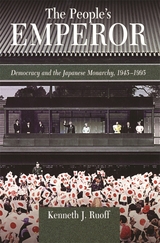
Few institutions are as well suited as the monarchy to provide a window on postwar Japan. The monarchy, which is also a family, has been significant both as a political and as a cultural institution.
This comprehensive study analyzes numerous issues, including the role of individual emperors in shaping the institution, the manner in which the emperor’s constitutional position as symbol has been interpreted, the emperor’s intersection with politics through ministerial briefings, memories of Hirohito’s wartime role, nationalistic movements in support of Foundation Day and the reign-name system, and the remaking of the once sacrosanct throne into a “monarchy of the masses” embedded in the postwar culture of democracy. The author stresses the monarchy’s “postwarness,” rather than its traditionality.
The fight of an oppressed nation for its sovereignty has often dovetailed with that of a militant working class for social justice.
At every home game of FC Barcelona, at 17 minutes and 14 seconds of play, the 100,000-capacity Camp Nou stadium is filled by the roar of “IN-DE-PEN-DÈN-CI-A!” Time stops for a second. History lives in the present...
Catalonia's national consciousness has deep roots. There are countries twice the size with histories half as interesting. A People's History of Catalonia tells that history, from below, in all its richness and complexity. The region's struggle for independence has, for centuries, been violently resisted, the Catalan language suppressed and its leaders jailed.
From the peasant revolts of the 15th century and the siege of Barcelona in 1714, to defeat in the Spanish Civil War, and the slow re-emergence of the workers' movement and anti-Francoist resistance in the years that followed, Michael Eaude tells a compelling story whose ending has yet to be written.
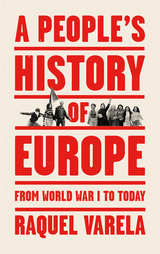
From the Russian Revolution, through May '68 and the Prague Spring, to the present day, we hear from feminists, trade unionists, conscientious objectors and activists and learn of immigration struggles, anti-colonial conflicts and labour movements. Cutting against the grain of mainstream histories, this is a history of Europe told from below.
Containing new and fascinating insights, Raquel Varela paints a different picture of the European story; one where ordinary Europeans are active agents of their own history.
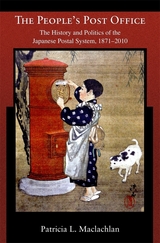
In 2001, Prime Minister Koizumi Jun’ichirō launched a crusade to privatize Japan’s postal services. The plan was hailed as a necessary structural reform, but many bemoaned the loss of traditional institutions and the conservative values they represented. Few expected the plan to succeed, given the staunch opposition of diverse parties, but four years later it appeared that Koizumi had transformed not only the post office but also the very institutional and ideological foundations of Japanese finance and politics. By all accounts, it was one of the most astonishing political achievements in postwar Japanese history.
Patricia L. Maclachlan analyzes the interplay among the institutions, interest groups, and leaders involved in the system’s evolution from the early Meiji period until 2010. Exploring the postal system’s remarkable range of economic, social, and cultural functions and its institutional relationship to the Japanese state, this study shows how the post office came to play a leading role in the country’s political development. It also looks into the future to assess the resilience of Koizumi’s reforms and consider the significance of lingering opposition to the privatization of one of Japan’s most enduring social and political sanctuaries.
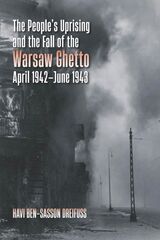
The People’s Uprising and the Fall of the Warsaw Ghetto, April 1942–June 1943 sheds light on the lives, choices, and experiences of the tens of thousands of Jews who were not part of the underground armed resistance but nonetheless supported the famed Warsaw Ghetto Uprising. This riveting and dramatic account focuses on the final year of the Warsaw ghetto, from the Great Deportation in the summer of 1942 through the suppression of the uprising in mid-1943. Drawing on powerful contemporary testimonies, diaries, and documents—many of them previously unexplored—Havi Ben-Sasson Dreifuss
reveals how members of the broader Jewish population struggled to survive, maintain family and community life, and make impossible moral decisions in the face of fear, hunger, and daily violence. Looking beyond the fighters themselves, the book offers a story of devastation, but also of resilience and human dignity.
Published in association with Yad Vashem.
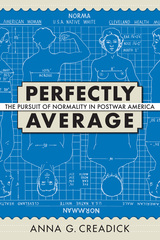
At the end of World War II, many Americans longed for a return to a more normal way of life after decades of depression and war. In fact, between 1945 and 1963 the idea of “normality” circulated as a keyword in almost every aspect of American culture. But what did this term really mean? What were its parameters? Whom did it propose to include and exclude?
In Perfectly Average, Anna Creadick investigates how and why “normality” reemerged as a potent homogenizing category in postwar America. Working with scientific studies, material culture, literary texts, film, fashion, and the mass media, she charts the pursuit of the “normal” through thematic chapters on the body, character, class, sexuality, and community.
Creadick examines such evidence as the “Norm and Norma” models produced during the war by sexologists and anthropologists—statistical composites of “normal” American bodies. In 1945, as thousands of Ohio women signed up for a Norma Look-Alike contest, a “Harvard Study of Normal Men” sought to define the typical American male according to specific criteria, from body shape to upbringing to blood pressure. By the early 1950s, the “man in the gray flannel suit” had come to symbolize what some regarded as the stultifying sameness of the “normalized” middle class. Meanwhile, novels such as From Here to Eternity and Peyton Place both supported and challenged normative ideas about gender, race, and sexuality, even as they worked to critique the postwar culture of surveillance—watching and being watched—through which normalizing power functioned.
As efforts to define normality became increasingly personal, the tensions em-bedded in its binary logic multiplied: Was normal descriptive of an average or prescriptive of an ideal? In the end, Creadick shows, a variety of statistics, assumptions, and aspirations converged to recast “normality” not as something innate or inborn, but rather as a quality to be actively pursued—a standard at once highly seductive and impossible to achieve because it required becoming perfectly average.

The concentration camp and Jewish ghetto at Terezín, or Theresienstadt, in what is now the Czech Republic, was a site of enormous suffering, fear, and death. But amid this horrific period, there was also a thriving and desperately vibrant cultural life. While the children’s drawings and musical pieces created in the ghetto have become justly famous, the prisoners’ theatrical works, though a lesser-known aspect of their artistic endeavors, deserves serious attention as well.
Performing Captivity, Performing Escape collects twelve theatrical texts—cabaret songs and sketches, historical and verse dramas, puppet plays, and a Purim play—written by Czech and Austrian Jews. Together these works reveal the wide range of ways in which the prisoners engaged with and escaped from life in the ghetto through performance. The anthology opens with an insightful prologue by novelist Ivan Klíma, who was interned in the ghetto as a child and contains a detailed introduction by editor Lisa Peschel about the pre-war theatrical influences and wartime conditions that inspired the theater of the ghetto. The array of theatrical forms collected in this anthology speaks of the prisoners’ persistence of hope in a harrowing time and will be a moving read for students and scholars of the Holocaust.

In a book addressing those interested in the transformation of monarchy into the modern state and in intersections of gender and political power, Katherine Crawford examines the roles of female regents in early modern France.
The reigns of child kings loosened the normative structure in which adult males headed the body politic, setting the stage for innovative claims to authority made on gendered terms. When assuming the regency, Catherine de Médicis presented herself as dutiful mother, devoted widow, and benign peacemaker, masking her political power. In subsequent regencies, Marie de Médicis and Anne of Austria developed strategies that naturalized a regendering of political structures. They succeeded so thoroughly that Philippe d’Orleans found that this rhetoric at first supported but ultimately undermined his authority. Regencies demonstrated that power did not necessarily work from the places, bodies, or genders in which it was presumed to reside.
While broadening the terms of monarchy, regencies involving complex negotiations among child kings, queen mothers, and royal uncles made clear that the state continued regardless of the king—a point not lost on the Revolutionaries or irrelevant to the fate of Marie-Antoinette.
For a half century, the American intellectual Fredric Jameson has been a driving force in literary and cultural theory. In Periodizing Jameson, Phillip E. Wegner builds upon Jameson’s unique dialectical method to demonstrate the value of Jameson’s tools—periodization, the fourfold hermeneutic, and the Greimasian semiotic square, among others—and to develop virtuoso readings of Jameson’s own work and the history of the contemporary American university in which it unfolds.
Wegner shows how Jameson’s work intervenes in particular social, cultural, and political situations, using his scholarship both to develop original explorations of nineteenth-century fiction, popular films, and other promiment theorists, and to examine the changing fortunes of theory itself. In this way, Periodizing Jameson casts new light on the potential of and challenges to humanist intellectual work in the present.
A new exploration of how digital media assert the relevance of dance in a wired world
How has the Internet changed dance? Dance performances can now be seen anywhere, can be looped endlessly at user whim, and can integrate crowds in unprecedented ways. Dance practices are evolving to explore these new possibilities. In Perpetual Motion, Harmony Bench argues that dance is a vital part of civil society and a means for building participation and community. She looks at how, after 9/11, it became a crucial way of recuperating the common character of public spaces. She explores how crowdsourcing dance contributes to the project of performing a common world, as well as the social relationships forged when we look at dance as a gift in the era of globalization. Throughout, she asks how dance brings people together in digital spaces and what dance’s digital travels might mean for how we experience and express community.
From original research on dance today to political economies of digital media to the philosophy of dance, Perpetual Motion provides an ambitious, invigorating look at a commonly shared practice.
Drawing on German and French sources, Wolfgang Seibel traces the twisted process of political decision-making that shaped the fate of the Jews in German-occupied France during World War II. By analyzing the German-French negotiations, he reveals the underlying logic as well as the actual course of the bargaining process as both the Vichy Regime and the Germans sought a stable relationship. Yet that relationship was continually reshaped by the progress of the war, Germany’s deteriorating prospects, France’s economic and geopolitical position, and the Vichy government’s quest for domestic political support. The Jews’ suffering intensified when the Germans had the upper hand; but when the French felt empowered, the Vichy Regime stopped collaborating in the completion of the “final solution.” Persecution and Rescue: The Politics of the “Final Solution” in France, 1940–1944 demonstrates the ways in which political circumstances can mitigate—or foster—mass crime.
Pragmatism has been reinvented in every generation since its beginnings in the late nineteenth century. This book, by one of today’s most distinguished contemporary heirs of pragmatist philosophy, rereads cardinal figures in that tradition, distilling from their insights a way forward from where we are now.
Perspectives on Pragmatism opens with a new accounting of what is living and what is dead in the first three generations of classical American pragmatists, represented by Charles Sanders Peirce, William James, and John Dewey. Post-Deweyan pragmatism at midcentury is discussed in the work of Wilfrid Sellars, one of its most brilliant and original practitioners. Sellars’ legacy in turn is traced through the thought of his admirer, Richard Rorty, who further developed James’s and Dewey’s ideas within the professional discipline of philosophy and once more succeeded, as they had, in showing the more general importance of those ideas not only for intellectuals outside philosophy but for the wider public sphere.
The book closes with a clear description of the author’s own analytic pragmatism, which combines all these ideas with those of Ludwig Wittgenstein, and synthesizes that broad pragmatism with its dominant philosophical rival, analytic philosophy, which focuses on language and logic. The result is a treatise that allows us to see American philosophy in its full scope, both its origins and its promise for tomorrow.

This new theory of reader response describes “perverse attachment,” or the powerful desire to intervene in a story, even when it is impossible to do so.
Fiction has long inspired resistance in its readers: making them, for example, wish for a different plot, cringe at a moment of social discomfort, or itch to warn a character about an approaching calamity. These are symptoms of a condition that Anastasia Eccles calls “perverse attachment,” in which a person feels an urge to act on something beyond their control. Eccles theorizes this form of frustrated agency as a constitutive part of the experience of reading fiction, especially under the influence of literary sentimentalism in the late eighteenth and early nineteenth centuries. It was also, significantly, a defining aspect of the mass politics that emerged in the same period, which rested on the demands of new political subjects to participate in a process that excluded them.
Perverse Attachments recovers a repertoire of aesthetic responses keyed to the psychodynamics of modern political life: complicity, suspense, historical regret, and cringing. Combining identification and disidentification, immersion and detachment, these experiences challenge deep-seated binaries in our theories of reading and point toward a new account of the political stakes of literary form.
Through readings of works by Charlotte Smith, Walter Scott, Jane Austen, and others Eccles shows how this distinctive aesthetic and political relation shaped the major genres of Romantic fiction and gave rise to some of the novel’s characteristic forms, like the character type of the witness-protagonist and the techniques of free indirect discourse. The result is a major work in the theory of the novel and the history of readerly experience.
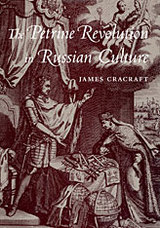
The reforms initiated by Peter the Great transformed Russia not only into a European power, but into a European culture--a shift, argues James Cracraft, that was nothing less than revolutionary. The author of seminal works on visual culture in the Petrine era, Cracraft now turns his attention to the changes that occurred in Russian verbal culture.
The forceful institutionalization of the tsar's reforms--the establishment of a navy, modernization of the army, restructuring of the government, introduction of new arts and sciences--had an enormous impact on language. Cracraft details the transmission to Russia of contemporary European naval, military, bureaucratic, legal, scientific, and literary norms and their corresponding lexical and other linguistic effects. This crucial first stage in the development of a "modern" verbal culture in Russia saw the translation and publication of a wholly unprecedented number of textbooks and treatises; the establishment of new printing presses and the introduction of a new alphabet; the compilation, for the first time, of grammars and dictionaries of Russian; and the initial standardization, in consequence, of the modern Russian literary language. Peter's creation of the St. Petersburg Academy of Sciences, the chief agency advancing these reforms, is also highlighted.
In the conclusion to his masterwork, Cracraft deftly pulls together the Petrine reforms in verbal and visual culture to portray a revolution that would have dramatic consequences for Russia, and for the world.
Phenomenal Blackness examines the changing interdisciplinary investments of key mid-century Black writers and thinkers, including the growing interest in German philosophy and critical theory. Mark Christian Thompson analyzes this shift in intellectual focus across the post-war decades, placing Black Power thought in a philosophical context.
Prior to the 1960s, sociologically oriented thinkers such as W. E. B. Du Bois had understood Blackness as a singular set of socio-historical characteristics. In contrast, writers such as Amiri Baraka, James Baldwin, Angela Y. Davis, Eldridge Cleaver, and Malcolm X were drawn to notions of an African essence, an ontology of Black being. With these perspectives, literary language came to be seen as the primary social expression of Blackness. For this new way of thinking, the works of philosophers such as Adorno, Habermas, and Marcuse were a vital resource, allowing for continued cultural-materialist analysis while accommodating the hermeneutical aspects of Black religious thought. Thompson argues that these efforts to reimagine Black singularity led to a phenomenological understanding of Blackness—a “Black aesthetic dimension” wherein aspirational models for Black liberation might emerge.
Presenting a wide-ranging selection of works and commentary in religious phenomenology
Phenomenology is a central method employed to study religious phenomena within religious studies, philosophy of religion, and philosophical theology. This expertly edited collection brings together historical sources and newly commissioned essays from various ways of investigating religion phenomenologically both to diversify the field and to make available important works that have not been previously translated into English. The Phenomenological Study of Religion includes not only representative texts from well-known phenomenological philosophers and scholars of religion but also selections from significant thinkers that have not been studied as widely, along with contributions from leading contemporary voices. This volume offers scholars and students at all levels of expertise broad exposure to the various configurations of the phenomenological study of religion.
After the war Heidegger disavowed Sartre, a move related to Heidegger's renunciation of his association with the phenomenological movement at large, and one that illustrates the dynamics of the history Cumming himself has completed. Serving as convincing punctuation for this remarkable series, this book demonstrates the importance of the history of philosophy in coming to grips with the proclaimed end of philosophy.
In this analysis Cumming deals with how a philosophy can be vulgarized (as Heidegger's was by Nazism but in Heidegger's own view by Sartre), with problems of periodization, with how the history of philosophy can be disinguished as a philosophical discipline from intellectual history. Cumming also elaborates an analogy between a philosophical method and style.
history of philosophy demonstrates how frequently one philosopher
misunderstands another. The most notorious such breakdown in
communication in twentieth-century philosophy was between Husserl and
Heidegger. In the third volume of his history of the phenomenological
movement, Robert Denoon Cumming argues that their differences involve
differences in method; whereas Husserl follows a "method of
clarification," with which he eliminates ambiguities by relying on an
intentional analysis that isolates its objects, Heidegger rejects the
criterion of "clarity" and embraces ambiguities as exhibiting
overlapping relations.
Cumming also explores the differences between how
deconstruction—Heidegger's procedure for dealing with other
philosophers—is carried out when Heidegger interprets Husserl versus
when Derrida interprets Husserl. The comparison enables Cumming to
show how deconstruction is associated with Heidegger's arrival at the
end of philosophy, paving the way for the deconstructionist movement.
Cumming also shows that conversion is not merely a personal predisposition of Sartre's—further manifest in his later conversions to Heidegger and to a version of Marxism. Conversion is also philosophical preoccupation, illustrated by the "conversion to the imaginary" whereby Sartre explains how he himself, as well as Genet and Flaubert, became writers. Finally, Cumming details how Husserl's phenomenological method contributed both to the shaping of Sartre's style as a literary writer and to his theory of style.

The first study of its kind to appear in English, The Phenomenology of Merleau-Ponty is a sustained ontological reading of Merleau-Ponty which traces the evolution of his philosophy of being from his early work to his late, unfinished manuscripts and working notes. Merleau-Ponty, who contributed greatly to the theoretical foundations of hermeneutics, is here approached hermeneutically.
Most commentators are agreed that towards the end Merleau-Ponty’s philosophy underwent a strange and interesting mutation. The exact nature of this mutation or conceptual shift is what this study seeks to disclose. Thus, although Madison proceeds in a generally progressive, chronological fashion, examining Merleau-Ponty’s major works in the order of their composition, his reading is ultmately regressive in that Merleau-Ponty’s earlier works are viewed in the light of the new and enigmatic ontological orientation which makes its appearance in his later work. The merit of this approach is that, as Paul Ricoeur has remarked, it enables the author to expose the “anticipatory, hollowed-out presence” of Merleau-Ponty’s late philosophy “in the difficulties of his early phenomenology,” such that “the unifying intention between his first philosophy of meaning and the body and the late, more ontological philosophy is made manifest.”
This book begins with a detailed study of Merleau-Ponty’s two major early works, The Structure of BehaviorThe Phenomenology of Perception. In the following three chapters, Madison traces the development of Merleau-Ponty’s thought from the beginning to the end of his philosophical career in regard to three topics of special concern to the French phenomenologist: painting, language, philosophy. In the final chapter, he is concerned to articulate, as much as the unfinished state of Merleau-Ponty’s final work allows, the unspoken thought of this work and of The Visible and Invisible in particular. Merleau-Ponty’s notion of “wild being” and his attempt to work out an “indirect” or “negative” ontology are thoroughly analyzed.
In the end the reader will see that through his self-criticism and the development in his own phenomenology Merleau-Ponty has brought phenomenology itself to its limits and to the point where it must transcend itself as a philosophy of consciousness in the Husserlian sense if it is to remain faithful to Husserl’s own goal of bringing “experience to the full expression of its own meaning.” Because Madison submits Merleau-Ponty to the same kind of interpretive retrieval as the latter did with Husserl, Roger Cailloise has said of this “clear and very complete book” that it “goes will beyond a simple exposition and merits being read as an original work.”
From Kant to Kierkegaard, from Hegel to Heidegger, continental philosophers have indelibly shaped the trajectory of Western thought since the eighteenth century. Although much has been written about these monumental thinkers, students and scholars lack a definitive guide to the entire scope of the continental tradition. The most comprehensive reference work to date, this eight-volume History of Continental Philosophy will both encapsulate the subject and reorient our understanding of it. Beginning with an overview of Kant’s philosophy and its initial reception, the History traces the evolution of continental philosophy through major figures as well as movements such as existentialism, phenomenology, hermeneutics, and poststructuralism. The final volume outlines the current state of the field, bringing the work of both historical and modern thinkers to bear on such contemporary topics as feminism, globalization, and the environment. Throughout, the volumes examine important philosophical figures and developments in their historical, political, and cultural contexts.
The first reference of its kind, A History of Continental Philosophy has been written and edited by internationally recognized experts with a commitment to explaining complex thinkers, texts, and movements in rigorous yet jargon-free essays suitable for both undergraduates and seasoned specialists. These volumes also elucidate ongoing debates about the nature of continental and analytic philosophy, surveying the distinctive, sometimes overlapping characteristics and approaches of each tradition. Featuring helpful overviews of major topics and plotting road maps to their underlying contexts, A History of Continental Philosophy is destined to be the resource of first and last resort for students and scholars alike.
This untold history is brought to life by focusing on the incredible journey of synagogue cantor Joseph Cysner. Drawing from oral histories, memoirs, and personal papers, Harris documents Cysner's harrowing escape from the Nazis and his heroic rescue by the American-led Jewish community of the Philippines in 1939. Moving and rich in historical detail, Philippine Sanctuary reveals new insights for an overlooked period in our recent history, and emphasizes the continued importance of humanitarian efforts to aid those being persecuted.
Informed by work in both classical philosophy and performance studies, Donovan Sherman argues that Stoicism infused the complex theatrical culture of early modern England. Plays written and performed during this period gave life to Stoic exercises that instructed audiences to cultivate their virtue, self-awareness, and creativity. By foregrounding Stoicism’s embodied nature, Sherman recovers a vital dimension too often lost in reductive portrayals of the Stoics by early modern writers and contemporary scholars alike. The Philosopher’s Toothache features readings of dramatic works by William Shakespeare, Cyril Tourneur, and John Marston alongside considerations of early modern adaptations of classical Stoics (Seneca, Epictetus, and Marcus Aurelius) and Neo-Stoics such as Justus Lipsius. These plays model Stoic virtues like unpredictability, indifference, vulnerability, and dependence—attributes often framed as negative but that can also rekindle a sense of responsible public action.
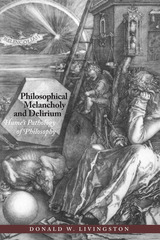
By demonstrating how a philosophical method can be used to expose the political motivations behind intellectual positions, historical events, and their subsequent interpretations, Livingston revitalizes Hume's thought and reveals its relevance for contemporary dicussions of politics, nationalism, and ideology for the first time.
Volume 1 includes essays on Spinoza, Descartes, Bradley, Collingwood, Russell, Moore, and Popper, as well as two previously unpublished papers on the history of philosophy as a discipline, and on Ryle and Wittgenstein's nature of philosophy. Linked by Donagan's commitment to the central importance of history for philosophy and his interest in problems of historical understanding, these essays represent the remarkable scope of Donagan's thought.
Volume 2 addresses issues in the philosophy of action and moral theory. With papers on Kant, von Wright, Sellars, and Chisholm, this volume also covers a range of questions in applied ethics—from the morality of Truman's decision to drop atomic bombs on Hiroshima and Nagasaki to ethical questions in medicine and law.
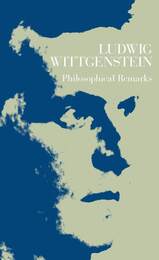
"[Philosophical Remarks] contains the seeds of Wittgenstein's later philosophy of mind and of mathematics. Principally, he here discusses the role of indispensable in language, criticizing Russell's The Analysis of Mind. He modifies the Tractatus's picture theory of meaning by stressing that the connection between the proposition and reality is not found in the picture itself. He analyzes generality in and out of mathematics, and the notions of proof and experiment. He formulates a pain/private-language argument and discusses both behaviorism and the verifiability principle. The work is difficult but important, and it belongs in every philosophy collection."—Robert Hoffman, Philosophy
"Any serious student of Wittgenstein's work will want to study his Philosophical Remarks as a transitional book between his two great masterpieces. The Remarks is thus indispensible for anyone who seeks a complete understanding of Wittgenstein's philosophy."—Leonard Linsky, American Philosophical Association
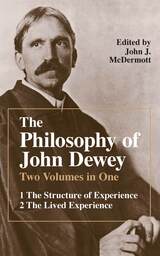
John J. McDermott's anthology, The Philosophy of John Dewey, provides the best general selection available of the writings of America's most distinguished philosopher and social critic. This comprehensive collection, ideal for use in the classroom and indispensable for anyone interested in the wide scope of Dewey's thought and works, affords great insight into his role in the history of ideas and the basic integrity of his philosophy.
This edition combines in one book the two volumes previously published separately. Volume 1, "The Structure of Experience," contains essays on metaphysics, the logic of inquiry, the problem of knowledge, and value theory. In volume 2, "The Lived Experience," Dewey's writings on pedagogy, ethics, the aesthetics of the "live creature," politics, and the philosophy of culture are presented. McDermott has prefaced each essay with a helpful explanatory note and has written an excellent general introduction to the anthology.
In this illuminating collection, Charles Parsons surveys the contributions of philosophers and mathematicians who shaped the philosophy of mathematics over the course of the past century.
Parsons begins with a discussion of the Kantian legacy in the work of L. E. J. Brouwer, David Hilbert, and Paul Bernays, shedding light on how Bernays revised his philosophy after his collaboration with Hilbert. He considers Hermann Weyl’s idea of a “vicious circle” in the foundations of mathematics, a radical claim that elicited many challenges. Turning to Kurt Gödel, whose incompleteness theorem transformed debate on the foundations of mathematics and brought mathematical logic to maturity, Parsons discusses his essay on Bertrand Russell’s mathematical logic—Gödel’s first mature philosophical statement and an avowal of his Platonistic view.
Philosophy of Mathematics in the Twentieth Century insightfully treats the contributions of figures the author knew personally: W. V. Quine, Hilary Putnam, Hao Wang, and William Tait. Quine’s early work on ontology is explored, as is his nominalistic view of predication and his use of the genetic method of explanation in the late work The Roots of Reference. Parsons attempts to tease out Putnam’s views on existence and ontology, especially in relation to logic and mathematics. Wang’s contributions to subjects ranging from the concept of set, minds, and machines to the interpretation of Gödel are examined, as are Tait’s axiomatic conception of mathematics, his minimalist realism, and his thoughts on historical figures.
McCumber begins with the story of Max Otto, whose appointment to the UCLA Philosophy Department in 1947 was met with widespread protest charging him as an atheist. Drawing on Otto’s case, McCumber details the hugely successful conservative efforts that, by 1960, had all but banished the existentialist and pragmatist paradigms—not to mention Marxism—from philosophy departments all across the country, replacing them with an approach that valorized scientific objectivity and free markets and which downplayed the anti-theistic implications of modern thought. As he shows, while there have since been many instances of definitive and even explosive rejection of this conservative trend, its effects can still be seen at American universities today.
Njelle W. Hamilton's Spotify playlist to accompany Phonographic Memories: https://spoti.fi/2tCQRm8
Art historian Ajay Sinha uses these hitherto unpublished photographs and archival research to raise provocative and important questions about photographic technology, colonial histories, race, sexuality and transcultural desires. Challenging the assumption that Gopal was merely objectified by Van Vechten’s Orientalist gaze, he explores the ways in which the Indian dancer co-authored the photos. In Sinha’s reading, Van Vechten’s New York studio becomes a promiscuous contact zone between world cultures, where a “photo-erotic” triangle is formed between the American photographer, Indian dancer, and German camera.
A groundbreaking study of global modernity, Photo-Attractions brings scholarship on American photography, literature, race and sexual economies into conversation with work on South Asian visual culture, dance, and gender. In these remarkable historical documents, it locates the pleasure taken in cultural difference that still resonates today.
The Victorians were image obsessed. The middle decades of the nineteenth century saw an unprecedented growth in the picture industry. Technological advances enabled the Victorians to adorn with images the pages of their books and the walls of their homes. But this was not a wholly visual culture. Pictorial Victorians focuses on two of the most popular mid-nineteenth-century genres—illustration and narrative painting—that blurred the line between the visual and textual.
Illustration negotiated text and image on the printed page, while narrative painting juxtaposed the two media in its formulation of pictorial stories. Author Julia Thomas reassesses mid-nineteenth-century values in the light of this interplay. The dialogue between word and image generates meanings that are intimately related to the Victorians' image of themselves. Illustrations in Victorian publications and the narrative scenes that lined the walls of the Royal Academy reveal the Victorians' ideas about the world in which they lived and their notions of gender, class, and race.
Pictorial Victorians surveys a range of material, from representations of the crinoline, to the illustrations that accompanied Harriet Beecher Stowe’s novel Uncle Tom's Cabin and Tennyson's poetry, to paintings of adultery. It demonstrates that the space between text and image is one in which values are both constructed and questioned.

Pierre Guyotat est une figure majeure, avant même Tombeau pour cinq cent mille soldats et bien au-delà, de la mémoire de la guerre d’indépendance algérienne. Idiotie est l’une des œuvres récentes les plus importantes sur ce sujet. C’est le fait de la guerre, vécue en appelé jugé récalcitrant et mis au cachot, mais aussi des voyages post-indépendance, de la rencontre avec la langue, la géologie, la faune et la flore algériennes, de la défense publique de Mohamed Laïd Moussa. Les fictions, les carnets sont marqués par l’empreinte de la terre, des langues, des corps algériens.
Guyotat contribua aussi à établir, dans la création et l’action publique, des relations nouvelles avec l'Algérie, ses auteurs, comme avec celles et ceux qui, en France, venaient de ce pays.
Cet ouvrage offre la parole à des figures de la recherche et de la création issues d’Algérie, de France et d’ailleurs. Il permet de découvrir un regard unique sur l’Algérie, affectueux et savant, celui d’un des plus grands auteurs de langue française.
Contributions de Ferroudja Allouache, Amina Azza Bekkat, Catherine Brun, Donatien Grau, Denis Hollier, Karima Lazali, Gérard Nguyen Van Khan, Philippe Roger, Tiphaine Samoyault, Nadia Sebkhi, Todd Shepard, Noura Wedell.

China’s modern history has been marked by deep spatial inequalities between regions, between cities, and between rural and urban areas. Contemporary observers and historians alike have attributed these inequalities to distinct stages of China's political economy: the dualistic economy of semicolonialism, rural-urban divisions in the socialist period, and capital concentration in the reform era. In Pivot of China, Mark Baker shows how different states across twentieth-century China shaped these inequalities in similar ways, concentrating resources in urban and core areas at the expense of rural and regional peripheries.
Pivot of China examines this dynamic through the city of Zhengzhou, one of the most dramatic success stories of China’s urbanization: a railroad boomtown of the early twentieth century, a key industrial center and provincial capital of Henan Province in the 1950s, and by the 2020s a “National Central City” of almost ten million people. However, due to the spatial politics of resource concentration, Zhengzhou’s twentieth-century growth as a regional city did not kickstart a wider economic takeoff in its hinterland. Instead, unequal spatial politics generated layers of inequality that China is still grappling with in the twenty-first century.
Planet Auschwitz website (https://planetauschwitz.com)

Inspiration, happy accidents, and outright obsessions have all had their way with gardens—but nothing has done more to shape the modern garden than plants themselves. In a story that ranges from continent to continent and spans four centuries, botanist and gardener David Stuart reveals how the garden as we know it was created not by garden designers but by ordinary gardeners responding to exotic and novel plants that suggested new spaces, places, and means of display. The history begins with two earth-changing events—the establishment of colonies in the Americas and the spread of the Turkish empire. Both brought the first astonishing wave of flowering exotics to gardens across Europe. Stuart relates how, over the following centuries, the influx of new plants inspired a frenzy of hybridization (at first by a new breed of gardener, the “florist,” later by nurserymen), which in turn led to such features as the familiar herbaceous border, flower bed, and rose garden, as well as the now little-known rockery, shrubbery, and “wilderness.”
From the Dutch tulip mania, the eighteenth-century European passion for “American gardens,” and on to the rhododendron craze of the nineteenth century, Stuart’s book traces the shape of the modern garden as it changed with the fashion, returning at last to classic, cottage garden varieties long neglected in favor of the foreign and new. In conclusion, Stuart looks at plant prospecting today—now that the collecting of plants may prove essential to protecting botanical diversity and preserving plant species rapidly disappearing from the wild.
Published by Bucknell University Press. Distributed worldwide by Rutgers University Press.
Hardworking actor, playwright, and stage manager Harry Watkins (1825–94) was also a prolific diarist. For fifteen years Watkins regularly recorded the plays he saw, the roles he performed, the books he read, and his impressions of current events. Performing across the U.S., Watkins collaborated with preeminent performers and producers, recording his successes and failures as well as his encounters with celebrities such as P. T. Barnum, Junius Brutus Booth, Edwin Forrest, Anna Cora Mowatt, and Lucy Stone. His is the only known diary of substantial length and scope written by a U.S. actor before the Civil War—making Watkins, essentially, the antebellum equivalent of Samuel Pepys. Theater historians Amy E. Hughes and Naomi J. Stubbs have selected, edited, and annotated excerpts from the diary in an edition that offers a vivid glimpse of how ordinary people like Watkins lived, loved, struggled, and triumphed during one of the most tumultuous periods in U.S. history. The selections in A Player and a Gentleman are drawn from a more expansive digital archive of the complete diary. The book, like its digital counterpart, will richly enhance our knowledge of antebellum theater culture and daily life in the U.S. during this period.
In Giovan Francesco Straparola’s The Pleasant Nights, a group of men and women gather together in a villa on the Venetian island of Murano during Carnival to sing songs, tell tales, and solve riddles. A sixteenth-century bestseller, The Pleasant Nights is today a fundamental text for European folk and fairy tale studies, for alongside triumphal and tragic love stories, comical tales of practical jokes, and accounts of witty retorts, Straparola (1480? – 1557?) placed some of the first fairy tales printed in Europe. Straparola’s eloquent female narrators and the fairy tales they recount became a model for a generation of French women writers in Parisian salons, who used the fairy tale to interrogate the gender norms of their day. This book presents the first new and complete English translation of Straparola’s tales and riddles to be published since the nineteenth century.
The working classes, colonial subjects, European nationalists, and Roman Catholics—these groups generated intense anxiety for Victorian England’s elite public, which often responded by accusing them of being dangerous conspirators. Bringing together a wide range of literary and historical evidence, Albert D. Pionke argues that the pejorative meanings attached to such opportunistic accusations of conspiracy were undermined by the many valorized versions of secrecy in Victorian society.
After surveying England’s evolving theories of representative politics and individual and collective secretive practices, Pionke traces the intersection of democracy and secrecy through a series of case histories. Using works by Thomas Carlyle, Wilkie Collins, Charles Dickens, Benjamin Disraeli, John Henry Newman, and others, along with periodicals, histories, and parliamentary documents of the period, he shows the rhetorical prominence of groups such as the Freemasons, the Thugs, the Carbonari, the Fenians, and the Jesuits in Victorian democratic discourse.
By highlighting the centrality of representations of conspiracy in every case, Plots of Opportunity shows for the first time the markedly similar strategies of repression, resistance, and concealment used by competing agents in the democracy debate.
For long periods in history, the Austrian capital found itself on the geographical edge of western civilisation. Yet from the 18th century on, Vienna has been a vibrant centre of European culture. This city is the scene of the formidable meeting of the two outstanding intellectuals that are at the core of this book.
The warm relationship between W.H. Auden, the celebrated British-American poet (1907–1973), and his fellow expatriate, the Welsh-Austrian journalist, translator and writer Stella Musulin (1915–1996) lasted while Auden resided in the nearby small town of Kirchstetten starting in 1958. It was here that the poet was laid to rest in the autumn of 1973. This book is based on the unpublished letters of Auden to Musulin and her private journals.
The study of this inspiring material yields new insights into Auden’s last, prolific, creative period and underscores the ‘Austrian Auden.’ In addition, Michael O’Sullivan pays tribute to the closest ‘Austrian’ friend of the poet. Baroness Stella von Musulin was an intellectual whose two books for Faber & Faber are acknowledged as classics: Vienna in the Age of Metternich and Austria: People & Landscape (with a foreword by Auden). The author situates the close relationship of two individuals in the context of Austria’s complex political, social, and cultural history in the Cold War years.
The period between 1920 and 1950 saw an epochal shift in the American cultural economy. The shocks of the 1929 market crash and the Second World War decimated much of the support for high modernist literature, and writers who had relied on wealthy benefactors were forced to find new protectors from the depredations of the free market. Private foundations, universities, and government organizations began to fund the arts, and in this environment writers were increasingly obliged to become critics, elucidating and justifying their work to an audience of elite administrators.
In Poet-Critics and the Administration of Culture, Evan Kindley recognizes the major role modernist poet-critics played in the transition from aristocratic patronage to technocratic cultural administration. Poet-critics developed extensive ties to a network of bureaucratic institutions and established dual artistic and intellectual identities to appeal to the kind of audiences and entities that might support their work. Kindley focuses on Anglo-American poet-critics including T. S. Eliot, Marianne Moore, W. H. Auden, Archibald MacLeish, Sterling A. Brown, and R. P. Blackmur. These artists grappled with the task of being “village explainers” (as Gertrude Stein described Ezra Pound) and legitimizing literature for public funding and consumption.
Modernism, Kindley shows, created a different form of labor for writers to perform and gave them an unprecedented say over the administration of contemporary culture. The consequences for our understanding of poetry and its place in our culture are still felt widely today.

Engaging the poetic to expand our imagination of Maghrebi literature in French
Poetry, as the Moroccan writer Abdelkébir Khatibi describes it, is a form of dissymmetry that exposes readers to the unexpected, and to the possibility of a transformative encounter with the text. Drawing on literary, philosophical, theoretical, and theological texts in multiple languages and scripts, as well as on the visual arts, Thomas C. Connolly delves into the poetic works of Khatibi and six other major Maghrebi authors—Jean Amrouche, Tahar Djaout, Nabile Farès, Mohammed Khaïr-Eddine, Abdelwahab Meddeb, and Jean Sénac—as well as the French poet Arthur Rimbaud, to think anew about the origins and legacy of Francophone poetry in the Maghreb. Instead of turning away from the poetic when it becomes indecipherable, A Poetic Genealogy of North African Literature engages poetic texts on their own terms, allowing them to dictate the search for meaning, thereby expanding our understanding of what Maghrebi literature in French was, is, and might become.
Published by Bucknell University Press. Distributed worldwide by Rutgers University Press.
Story, in the largest sense of the term, is arguably the single most important aspect of narrative. But with the proliferation of antimimetic writing, traditional narrative theory has been inadequate for conceptualizing and theorizing a vast body of innovative narratives. In A Poetics of Plot for the Twenty-First Century: Theorizing Unruly Narratives, Brian Richardson proposes a new model for evaluating literature—returning to the basis of narrative theory to illuminate how authors play with and help clarify the boundaries of narrative theory. While he focuses on late modernist, postmodern, and contemporary narratives, the study also includes many earlier works, spanning from Aristophanes and Shakespeare through James Joyce and Virginia Woolf to Salman Rushdie and Angela Carter.
By exploring fundamental questions about narrative, Richardson provides a detailed, nuanced, and comprehensive theory that includes neglected categories of storytelling and significantly enhances our treatment of traditional areas of analysis. Ultimately, this book promises to transform and expand the study of story and plot.

“We are given a vivid sense of how songs were circulated and performed on the streets of Paris…Darnton has opened up another rich vein of research in the eighteenth century.” —Times Literary Supplement
In spring 1749, François Bonis, a medical student in Paris, found himself unexpectedly hauled off to the Bastille for distributing an “abominable poem about the king.” So began the Affair of the Fourteen, a police crackdown on ordinary citizens for unauthorized poetry recitals. Why was the official response to these poems so intense?
In this captivating book, Robert Darnton follows the poems as they passed through several media: copied on scraps of paper, dictated from one person to another, memorized and declaimed to an audience. But the most effective dispersal occurred through music, when poems were sung to familiar tunes. Lyrics often referred to current events or revealed popular attitudes toward the royal court. The songs provided a running commentary on public affairs, and Darnton brilliantly traces how the lyrics fit into song cycles that carried messages through the streets of Paris during a period of rising discontent. He uncovers a complex communication network, illuminating the way information circulated in a semi-literate society.
This lucid and entertaining book reminds us of both the importance of oral exchanges in the history of communication and the power of “viral” networks long before our internet age.

In the early decades of the postwar period, the planetary metaphor of “spaceship Earth” was everywhere in the West. It exerted its power on sites as various as Caribbean research stations, the shipping lanes of the U.S.-occupied Pacific, Palestinian refugee camps, and the internal colonies of segregated nations. At its heart was a new ideology and infrastructure of managing, administering, and rationalizing nature through which Western powers sought to maintain their grip on a decolonizing planet.
Poetry from Spaceship Earth retrieves a diverse array of postwar American poets—Robert Duncan, June Jordan, Joanne Kyger, Lorine Niedecker, and Charles Olson—who contested and cultivated alternatives to this emergent mode of environmentalism. By placing the major innovations of postwar poetry into conversation with environmental politics, Cold War science and technology studies, and postcolonial and Black studies, Samia Rahimtoola develops an original theoretical and historical account of the racial and colonial logics that underpin the supposedly neutral project of managing nature.
of poetic indifference began to emerge.
The Poetry of Indifference analyzes nineteenth-century works by Wordsworth, Keats, Byron, Tennyson, Robert Browning, and Edward FitzGerald, among others—works that do not merely declare themselves to be indifferent but formally enact the indifference they describe. Each poem consciously disregards some aspect of poetry that is usually considered to be crucial or definitive, even at the risk of seeming "indifferent" in the sense of "mediocre." Such gestures discourage critical attention, since the poetry of indifference refuses to make claims for itself.
This is particularly true of FitzGerald's Rubáiyát, one of the most popular poems of the nineteenth century, but one that recent critics have almost entirely ignored. In concentrating on this underexplored mode of poetry, Gray not only traces a major shift in recent literary history, from a Romantic poetics of sympathy to a Modernist poetics of alienation, but also considers how this literature can help us understand the sometimes embarrassing but unavoidable presence of indifference in our lives.
READERS
Browse our collection.
PUBLISHERS
See BiblioVault's publisher services.
STUDENT SERVICES
Files for college accessibility offices.
RECENTLY PUBLISHED




UChicago Accessibility Resources
home | accessibility | search | about | contact us
BiblioVault ® 2001 - 2026
The University of Chicago Press