
 A SCHOLARLY BOOK REPOSITORY

This collection offers a wide variety of fascinating studies that consider multicultural aspects among deaf people worldwide. Mala Kleinfeld and Noni Warner investigate variation in the use of gay, lesbian, and bisexual signs in the Deaf community; Jan Branson, Don Miller, and I Gede Marsaja, assisted by I Wayan Negara, profile a deaf village in Bali, Indonesia in which hearing people are fluent in both sign and spoken languages. Alejandro Oviedo in Venezuela comments on bilingual deaf education in Venezuela, and Sara Schley outlines the sociolinguistic and educational implications of comparing ASL and English word definitions.
Susan Mather discusses initiation in visually constructed dialogue from reading books with 3- to 8-year-old students who are deaf or hard of hearing. Pietro Celo offers insights on the interrogative in Italian Sign Language, and Julie Wilson examines narrative structure in American Sign Language ASL) through her analysis of “the tobacco story.” Rhonda Jacobs completes this significant, wide-ranging volume with her research on second language learning, as she presents the case for ASL as a truly foreign language by posing the question, “Just how hard is it to learn ASL?”
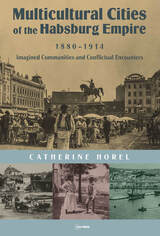
Catherine Horel has undertaken a comparative analysis of the societal, ethnic, and cultural diversity in the last decades of the Habsburg Monarchy as represented in twelve cities: Arad, Bratislava, Brno, Chernivtsi, Lviv, Oradea, Rijeka, Sarajevo, Subotica, Timișoara, Trieste, and Zagreb. By purposely selecting these cities, the author aims to counter the disproportionate attention that the largest cities in the empire receive.
With a focus on the aspects of everyday life faced by the city inhabitants (associations, schools, economy, and municipal politics) the book avoids any idealization of the monarchy as a paradise of peaceful multiculturalism, and also avoids exaggerating conflicts. The author claims that the world of the Habsburg cities was a dynamic space where many models coexisted and created vitality, emulation, and conflict. Modernization brought about the dissolution of old structures, but also mobility, the progress of education, the explosion of associative life, and constantly growing cultural offerings.

Multicultural Comics: From Zap to Blue Beetle is the first comprehensive look at comic books by and about race and ethnicity. The thirteen essays tease out for the general reader the nuances of how such multicultural comics skillfully combine visual and verbal elements to tell richly compelling stories that gravitate around issues of race, ethnicity, gender, and sexuality within and outside the U.S. comic book industry. Among the explorations of mainstream and independent comic books are discussions of the work of Adrian Tomine, Grant Morrison, and Jessica Abel as well as Marv Wolfman and Gene Colan's The Tomb of Dracula; Native American Anishinaabe-related comics; mixed-media forms such as Kerry James Marshall's comic-book/community performance; DJ Spooky's visual remix of classic film; the role of comics in India; and race in the early Underground Comix movement. The collection includes a "one-stop shop" for multicultural comic book resources, such as archives, websites, and scholarly books. Each of the essays shows in a systematic, clear, and precise way how multicultural comic books work in and of themselves and also how they are interconnected with a worldwide tradition of comic-book storytelling.
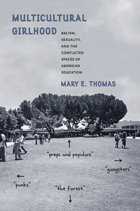
High school turf wars are often a teenage rite of passage, but there are extremes—as when a race riot at a Los Angeles campus in the spring of 2005 resulted in a police lockdown. In her fascinating book,Multicultural Girlhood, Mary Thomas interviewed 26 Latina, Armenian, Filipina, African-American, and Anglo girls at this high school to gauge their responses to the campus violence. They all denounced the outbreak, calling for multicultural understanding and peaceful coexistence.
However, as much as the girls want everyone to just “get along,” they also exhibit strong racist beliefs and validate segregated social spaces on campus and beyond. How can teenagers and “girl power” work together to empower instead of alienate multicultural groups? In her perceptive book, Thomas foregrounds the spaces of teen girlhood and the role that space plays in girls' practices that perpetuate social difference, and she explains the ways we navigate the intellectual terrain between scholarship and school yard.

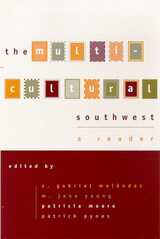
As Americans debate what it means to be a multicultural society, one need only turn for lessons to the Southwest, where distinct peoples have coexisted over centuries. Here difference has not only survived but thrived in a melting pot of races and customs.
This book presents a montage of differing perspectives demonstrating that there is no single, definitive description of the Southwest. It brings together a host of writers, from early travelers and historians to contemporary commentators, who explore a region diverse in its people and ecology and show it to be not just a segment of the nation, but rather a border contact zone.
The editors have assembled an interdisciplinary composite, drawing on history, sociology, anthropology, and geography. Fiction, essays, poetry, newspaper articles, and interviews with local inhabitants add a colorful dimension to the coverage. All of the contributions reveal the tremendous impact that everyday occurrences can have and show how life in the Southwest is affected by the interweaving of social, cultural, and ecological forces. Together they demonstrate the role played by personal and cultural memory in creating alternative views of environment, landscape, human social interaction, conquest, dispossession, technological change, and the survival of cultures.
The Multicultural Southwest is a multifaceted work that shows the many ways in which the past continues to affect the present. It will create in readers an awareness of the phenomena that fuel human imagination and creativity as it opens their eyes to the possibilities of the future.
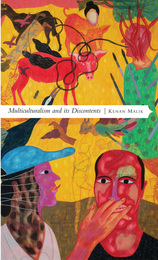
In the wake of September 11, 2001 and the many terrorist attacks that have occurred since then, there has been much debate about the degree of diversity that Western nations can tolerate. In Multiculturalism and its Discontents, Kenan Malik looks closely at the role of multiculturalism within terrorism and societal discontent. He examines whether it is possible—or desirable—to try to build a cohesive society bound by common values and he delves into the increasing anxiety about the presence of the Other within our borders.
Multiculturalism and its Discontents not only explores the relationship between multiculturalism and terrorism, but it analyzes the history of the idea of multiculturalism alongside its political roots and social consequences.
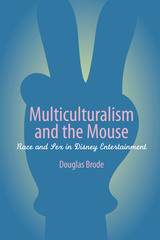
In his latest iconoclastic work, Douglas Brode—the only academic author/scholar who dares to defend Disney entertainment—argues that "Uncle Walt's" output of films, television shows, theme parks, and spin-off items promoted diversity decades before such a concept gained popular currency in the 1990s. Fully understood, It's a Small World—one of the most popular attractions at the Disney theme parks—encapsulates Disney's prophetic vision of an appealingly varied world, each race respecting the uniqueness of all the others while simultaneously celebrating a common human core. In this pioneering volume, Brode makes a compelling case that Disney's consistently positive presentation of "difference"—whether it be race, gender, sexual orientation, ideology, or spirituality—provided the key paradigm for an eventual emergence of multiculturalism in our society.
Using examples from dozens of films and TV programs, Brode demonstrates that Disney entertainment has consistently portrayed Native Americans, African Americans, women, gays, individual acceptance of one's sexual orientation, and alternatives to Judeo-Christian religious values in a highly positive light. Assuming a contrarian stance, Brode refutes the overwhelming body of "serious" criticism that dismisses Disney entertainment as racist and sexist. Instead, he reveals through close textual analysis how Disney introduced audiences to such politically correct principles as mainstream feminism. In so doing, Brode challenges the popular perception of Disney fare as a bland diet of programming that people around the world either uncritically deem acceptable for their children or angrily revile as reactionary pabulum for the masses.
Providing a long overdue and thoroughly detailed alternative, Brode makes a highly convincing argument that with an unwavering commitment to racial diversity and sexual difference, coupled with a vast global popularity, Disney entertainment enabled those successive generations of impressionable youth who experienced it to create today's aura of multiculturalism and our politically correct value system.
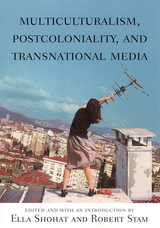
To explore this complexity, the editors have forged links between usually compartmentalized fields (especially media studies, literary theory, visual culture, and critical anthropology) and areas of inquiry-particularly postcolonial and diasporic studies and a diverse set of ethnic and area studies. This book, which links all these issues in suggestive ways, provides an indispensable guide for students and scholars in a wide variety of disciplines. Essays in this groundbreaking volume include Julianne Burton-Carvajal on ethnic identity in Lone Star; Manthia Diawara on diasporic documentary; Hamid Naficy on independent transnational film genres; Robyn Wiegman on whiteness studies; Faye Ginsburg on indigenous media; and Jennifer Gonzßles on race in cyberspace; Ana M. Lopez on modernity and Latin American cinema; and Inderpal Grewal and Caren Kaplan on Warrior Marks and multiculturalism and globalization.

Contributors:
Larry D. Agenbroad
Eric J. Arnould
Walter H. Birkby
Vorsila L. Bohrer
Jeffrey S. Dean
Michael W. Graves
Sally J. Holbrook
Gerald K. Kelso
William A. Longacre
Charmion R. McKusick
J. Jefferson Reid
John W. Olsen
Stanley J. Olsen
William Reynolds
William J. Robinson
Izumi Shimada
Stephanie M. Whittlesey
David R. Wilcox


The emphasis is on politics within and also between multilateral institutions, analysing the relations – both competitive and collaborative – between, for example, the World Bank and UNDP. NGOs are also shown to be important actors, and the role they have played in recent years is critically assessed. The book concludes with some emerging trends: the ‘privatisation’ of the system, regionalisation, and ‘the politics of protest’.
Bøås and McNeill do not simply take the policies of multilateral institutions at face value, but ask how and why these policies came into existence. They seek to promote critical, but informed, engagement both with the member states of multilateral institutions and the institutions themselves.
This edited collection offers chapters based on presentations at the Second Latin American Association of Writing Studies in Higher Education and Professional Contexts International Congress (II ALES) held in Santiago, Chile, in 2018. Together, the contributors to the collection—drawn from nine countries and writing in three languages—highlight the many perspectives, resources, and traditions that enrich and expand international conversations about writing, writing instruction, and writing research. The multiple locations from which the chapters in this collection emerge contribute significantly to the situated findings and concerns they address, with the authors of each chapter considering the social, lingual, and institutional contexts shaping their work. Drawing on both robust traditions and cutting-edge research, this collection makes a distinctive contribution to discussions of writing in and beyond Latin America.
This book is also available as an open access ebook through the WAC Clearinghouse.
Multilingual writers—often graduate students with more content knowledge and broader cultural experience than a monolingual tuto—unbalance the typical tutor/client relationship and pose a unique challenge for the writing center. Multilingual Writers and Writing Centers explores how directors and tutors can better prepare for the growing number of one-to-one conferences with these multilingual writers they will increasingly encounter in the future.
This much-needed addition of second language acquisition (SLA) research and teaching to the literature of writing center pedagogy draws from SLA literature; a body of interviews Rafoth conducted with writing center directors, students, and tutors, and his own decades of experience. Well-grounded in daily writing center practice, the author addresses which concepts and practices directors can borrow from the field of SLA to help tutors respond to the needs of multilingual writers, what directors need to know about these concepts and practices, and how tutoring might change in response to changes in student populations.
Multilingual Writers and Writing Centers is a call to invigorate the preparation of tutors and directors for the negotiation of the complexities of multilingual and multicultural communication.

This longitudinal qualitative study follows Morgan and Leo through their undergraduate careers, collecting rich ethnographic data across private, academic, and digital spaces. The resulting theoretical framework conceptualizes multilingual writing as simultaneously strategic, agentive, creative, diffused, contingent, and messy—a phenomenon shaped by dynamic interplay between ephemeral encounters and established practices. Employing chronotopic figuring as a methodological tool, Wang illuminates aspects of multilingual writing often elided in research: fleeting encounters that energize composition, reciprocal relationships that distribute writing labor, unexpected detours that redirect the writing process, and the layering of writing and identity practices across multiple historical trajectories. This approach moves beyond examining writing in isolated moments to trace how meaning emerges across languages, modes, and spacetimes.
Multilingual Writing in Entanglement offers crucial insights into how international students strategically and improvisationally reconfigure their semiotic and rhetorical repertoires to write multilingual lives into meaning. This work is influential for scholars and educators in composition, literacy studies, multilingual education, ESL, and linguistics.
The 12th Volume in the Sociolinguistics in Deaf Communities Series
The latest entry in the Sociolinguistics in Deaf Communities series continues to mine the rich resources found in signing communities throughout the world. Divided into four parts, this collection features 16 internationally renowned linguistics experts whose absorbing studies reflect an astonishing range of linguistic diversity.
The sole essay in Part One: Multilingualism describes historic and contemporary uses of North American Indian Sign Language. Part Two: Language Contact examines language-contact phenomena between Auslan/English interpreters and Deaf people in Australia, and the features of bimodal bilingualism in hearing, Italian, native signers. Part Three: Variation reports the results of a study on location variation in Australian Sign Language.
Part Four: Discourse Analysis begins with an analysis of how deaf parents and their hearing toddlers establish and maintain sight triangles when conducting signed conversations. The ensuing chapter explores the use of evaluation within an informal narrative in Langue des Signes Québécoise. The final chapter explicates how a signer depersonalizes the concept of “self” in an American Sign Language narrative through the use of signs for “he” and “I.”
Just as the majority of books about computer literacy deal more with technological issues than with literacy issues, most computer literacy programs overemphasize technical skills and fail to adequately prepare students for the writing and communications tasks in a technology-driven era. Multiliteracies for a Digital Age serves as a guide for composition teachers to develop effective, full-scale computer literacy programs that are also professionally responsible by emphasizing different kinds of literacies and proposing methods for helping students move among them in strategic ways.
Defining computer literacy as a domain of writing and communication, Stuart A. Selber addresses the questions that few other computer literacy texts consider: What should a computer literate student be able to do? What is required of literacy teachers to educate such a student? How can functional computer literacy fit within the values of teaching writing and communication as a profession? Reimagining functional literacy in ways that speak to teachers of writing and communication, he builds a framework for computer literacy instruction that blends functional, critical, and rhetorical concerns in the interest of social action and change.
Multiliteracies for a Digital Age reviews the extensive literature on computer literacy and critiques it from a humanistic perspective. This approach, which will remain useful as new versions of computer hardware and software inevitably replace old versions, helps to usher students into an understanding of the biases, belief systems, and politics inherent in technological contexts. Selber redefines rhetoric at the nexus of technology and literacy and argues that students should be prepared as authors of twenty-first-century texts that defy the established purview of English departments. The result is a rich portrait of the ideal multiliterate student in a digital age and a social approach to computer literacy envisioned with the requirements for systemic change in mind.
Over the past two decades the concepts of multimodal composing and writing transfer have grown and reshaped the nature of writing studies, but rarely have the ways in which these areas overlap been studied. This collection shows how this shift in writing studies has been mutually informative, covering a wider range of contexts for multimodality and writing transfer than just in first-year composition courses. It places composition teaching practices and multimodal research in conversation with learning transfer theory to provide an in-depth examination of how they influence one another.
Multimodal Composing and Writing Transfer develops these intersections to connect multimodal composition and writing practices across a wide array of fields and contexts. Scholars across disciplines, postsecondary writing teachers, writing program administrators, writing center directors, and graduate students will find this collection indispensable.
Multimodal Composing explores the relationship between rhetorical choices, design thinking, accessibility, and technological awareness in the writing center. Each chapter deepens consultants’ understanding of multimodal composing by introducing them to important features and practices in a variety of multimodal texts. The chapters’ activities provide consultants with an experience that familiarizes them with design thinking and multimodal projects, and a companion website (www.multimodalwritingcenter.org) offers access to additional resources that are difficult to reproduce in print (and includes updated links to resources and tools).
Multimodal projects are becoming the norm across disciplines, and writers expect consultants to have a working knowledge of how to answer their questions. Multimodal Composing introduces consultants to key elements in design, technology, audio, and visual media and explains how these elements relate to the rhetorical and expressive nature of written, visual, and spoken communication. Peer, graduate student, professional tutors and writing center directors will benefit from the activities and strategies presented in this guide.
Contributors:
Patrick Anderson, Shawn Apostel, Jarrod Barben, Brandy Ball Blake, Sarah Blazer, Brenta Blevins, Russell Carpenter, Florence Davies, Kate Flom Derrick, Lauri Dietz, Clint Gardner, Karen J. Head, Alyse Knorr, Jarret Krone, Sohui Lee, Joe McCormick, Courtnie Morin, Alice Johnston Myatt, Molly Schoen, James C. W. Truman
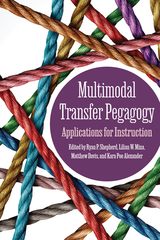
Multimodal Transfer Pedagogy provides practical methods and materials for composition teachers and directors to facilitate multimodal transfer. This rich collection of resources presents new ways of incorporating digital texts, exploring modes of meaning beyond traditional print and encouraging students to think about rhetorical approaches to meaning making.
Together with its online companion materials, the book delivers a distinctive synthesis of multimodal composing practices, writing transfer research, and theory to provide clear, actionable guidance to teachers and directors to apply multimodal composition pedagogy effectively. Twenty-three chapters cover multimodal transfer pedagogy—including social media, composing with AI, visual rhetoric and design, public advocacy, tabletop games, podcasting, and more.
Multimodal Transfer Pedagogy is built from contextualized pedagogical approaches and course materials—syllabi, assignments, assessment documents—that specifically direct pedagogical application toward multimodal transfer in a range of contexts, from first-year writing to the science writing classroom and writing center. A natural follow-up to Multimodal Composition and Writing Transfer, the book introduces a unique practical-pedagogical model for implementing multimodal work in the classroom.


This book uses the Kenyan political system to address issues relevant to recent political developments throughout Africa.
The authors analyze the construction of the Moi state since 1978. They show the marginalization of Kikuyu interests as the political economy of Kenya has been reconstructed to benefit President Moi’s Kalenjin people and their allies. Mounting Kikuyu dissatisfaction led to the growth of demands for multi-party democracy.
The book places contemporary Kenyan politics and the 1992 election in their historical context, contrasting the present multi-party era with the previous one during the sixties.
The authors question the hopes for a “second independence” in Africa by demonstrating the problems faced by fledgling opposition parties in weak civil societies.

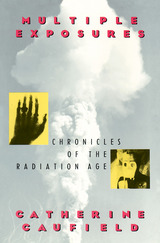
the history behind the safety standards limiting the effects of high energy
radiation on human beings. . . . Provides an immense amount of information
in a very readable form."—W. Alan Runciman, Prometheus
"From fallout and radon to radioactive smoke detectors and dental X-rays,
Caufield traces the proliferation of the uses of radiation in medicine,
industry and the military, and in generating energy. An intelligent,
non-alarmist history."—Publishers Weekly
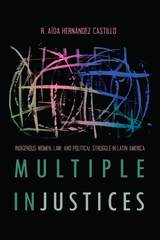
Multiple InJustices synthesizes R. Aída Hernández Castillo’s twenty-four years of activism and research among indigenous women’s organizations in Latin America. As both feminist and critical anthropologist, Hernández Castillo analyzes the context of legal pluralism wherein the indigenous women of Mexico, Guatemala, and Colombia struggle for justice. Through ethnographical research in community, state, and international justice, she reflects on the possibilities and limitations of customary, national, and international law for indigenous women.
Colonialism, racism, and patriarchal violence have been fundamental elements for the reproduction of capitalism, Hernández Castillo asserts. Only a social policy that offers economic alternatives based on distribution of wealth and a real recognition of cultural and political rights of indigenous peoples can counter the damage of outside forces such as drug cartels on indigenous lands.
She concludes that the theories of indigenous women on culture, tradition, and gender equity—as expressed in political documents, event reports, public discourse, and their intellectual writings—are key factors in the decolonization of Latin American feminisms and social justice for all.


Much of the past work on midlife has been limited by its use of cross-sectional data, its focus on clinical populations, and the analysis of only one target group. Using a diverse set of longitudinal data, this volume provides a broader perspective by examining the similarities and differences in the midlife experience as a function of gender, social class, and birth cohort.
Of interest to scholars as well as to those interested in the midlife period for clinical or personal reasons, this volume informs us of the enormous potential and promise amid the gains and losses of the middle years.

Multiples in Pre-Modern Art looks at the production and reception of replicas and multiples before the nineteenth century. A wide variety of media are considered, including metal, marble, terra cotta, textiles, plaster, porcelain, canvas, wood, and wax. Through a series of questions—What happens if a copy purposely points not to an original but to another copy? What does it matter that some serially made multiples are not identical?—many of the works are reappraised as significant art forms in their own right.
Plants produce a considerable number of structures of one kind, like leaves, flowers, fruits, and seeds, and this reiteration is a quintessential feature of the body plan of higher plants. But since not all structures of the same kind produced by a plant are identical—for instance, different branches on a plant may be male or female, leaf sizes in the sun differ from those in the shade, and fruit sizes can vary depending on patterns of physiological allocation among branches—a single plant genotype generally produces a multiplicity of phenotypic versions of the same organ.
Multiplicity in Unity uses this subindividual variation to deepen our understanding of the ecological and evolutionary factors involved in plant-animal interactions. On one hand, phenotypic variation at the subindividual scale has diverse ecological implications for animals that eat plants. On the other hand, by choosing which plants to consume, these animals may constrain or modify plant ontogenetic patterns, developmental stability, and the extent to which feasible phenotypic variants are expressed by individuals.
An innovative study of the ecology, morphology, and evolution of modular organisms, Multiplicity in Unity addresses a topic central to our understanding of the diversity of life and the ways in which organisms have coevolved to cope with variable environments.
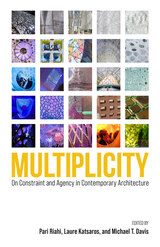
Today, the field of architecture faces a reckoning. While there is no longer consensus on what defines an architectural work, theorists, historians, and practitioners are grappling with urgent issues—among them the impact of climate change, the dynamics of power and race in relation with the built environment, and the technological, practical, and ethical dimensions of architecture. As established practices, academic objectives, and professional expectations come under scrutiny, architecture is in search of new definitions, identities, and voices.
Inspired by Italo Calvino’s memos about literature in the twenty-first century, this volume—the second in a series— situates architecture within a broad framework, exploring its complex interactions with environmental, cultural, political, social, artistic, and technological forces. The editors’ objective is to spur conversation across the boundaries that divide architecture’s theorists and historians from practitioners. In addition to the editors, the contributors include Sanford Kwinter, Aleksandra Jaeschke, Jennifer Mack, Rahul Mehrotra, Charles Waldheim, Kristi Cheramie, Jesse Reiser, Julian Harake, Jenny E. Sabin, Charles Davis, Esra Akcan, and David Karmon.
Understanding the entanglement of language education with ethnicity and racialization
Who has the “right” to learn Mandarin Chinese? In Multiracial Mandarin, author David Shuang Song examines how matters of race and privilege shape US Mandarin language education and who has access to it. Through a two-year ethnographic study of two Bay Area high schools where diasporic and heritage speakers learn Mandarin alongside Black and Latinx students, Song advances a sociological and educational–linguistic inquiry into how language interacts with our understanding of identity and equity.
Comparing classroom activities in two public schools, Song investigates teachers who seek to make Mandarin accessible while detaching it from its cultural roots. As he explores the difficulties of limited resources, racial inequality, and pedagogical practices inherent in multiracial Mandarin instruction, Song shows how language education complicates how educators understand Asian American students and troubles conventional conversations around race and racial equity in schools.
Arguing that language practice and instruction must always be considered in relation to diaspora, ethnicity, and racialization, Multiracial Mandarin offers a frank analysis of the risks and benefits of teaching a diasporic language and asks if this practice ought to be replicated in more schools. As he applies innovative conceptual frameworks for talking about language among Asian Americans, Song’s timely and theoretically sophisticated analysis has wide-ranging implications for how students, teachers, and administrators approach essential questions around education, privilege, and language survival.
Retail e-book files for this title are screen-reader friendly.

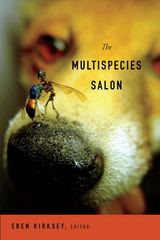
Delectable mushrooms flourishing in the aftermath of ecological disaster, microbial cultures enlivening the politics and value of food, and nascent life forms running wild in the age of biotechnology all figure in this curated collection of essays and artifacts. Recipes provide instructions on how to cook acorn mush, make cheese out of human milk, and enliven forests after they have been clear-cut. The Multispecies Salon investigates messianic dreams, environmental nightmares, and modest sites of biocultural hope.
For additional materials see the companion website: www.multispecies-salon.org/
Contributors. Karen Barad, Caitlin Berrigan, Karin Bolender, Maria Brodine, Brandon Costelloe-Kuehn, David S. Edmunds, Christine Hamilton, Donna J. Haraway, Stefan Helmreich, Angela James, Lindsay Kelley, Eben Kirksey, Linda Noel, Heather Paxson, Nathan Rich, Anna Rodriguez, Dorion Sagan, Craig Schuetze, Nicholas Shapiro, Miriam Simun, Kim TallBear, Anna Lowenhaupt Tsing

The emerging field of multispecies studies, grounded in passionate immersion in the lives of fungi, microorganisms, animals, plants, and others, is opening up novel ways of engaging with worlds around us. This issue brings together some of the leading scholars in this field to explore what is at stake—epistemologically, politically, ethically—for different forms of life caught up in diverse relationships of knowing and living together. The collection takes us into the worlds of sheep and shepherds; of stones, worms, salmon, and forest-devouring beetles; of viruses and their elephants; of seals, crows, and lava flows in Hawaii; and finally of frogs-as-pregnancy-tests and possible agents of pathogenic fungal spread. Each of the contributors explores what difference curious and careful attention to others might make in our efforts to inhabit and coconstitute flourishing worlds in these difficult times.
This issue is freely available online at environmentalhumanities.org; a print version is available for purchase.

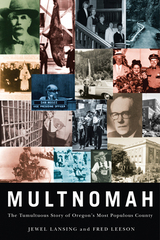
Covering people and events from 1854 to the present day, this definitive history of Multnomah County provides compelling details about public works triumphs and political scandals.
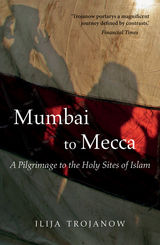
This book presents Ilija Trojanow’s journey from Mumbai to Mecca in the tradition of the rihla, one of the oldest genres of classical Arabic literature, describing the Hajj, the pilgrimage to the holy sites of Islam. Every Muslim, regardless of geographical location, is implored by tradition to undertake the Hajj at least once in their life if they are able. Trojanow, with the help of his friends, donned the ihram, the traditional garb of the pilgrim, and joined the hundreds of thousands of Muslims who each year go on the Hajj. Over the course of a mere three weeks he experienced a tradition dating back over a thousand years. This personal and enlightening account will provide insights not only for Muslims who have yet to embark on the Hajj, but for those who have already made the journey and want to see a different perspective on it. Mumbai to Mecca also presents a unique glimpse into this pivotal tradition for those non-Muslims who remain barred from the most holy Muslim sites.
the pilgrimage to the holy sites of Islam, through the eyes of a Westener, but with the heart of a Muslim.
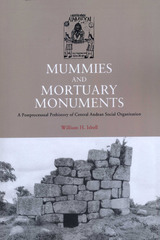
Since prehistoric times, Andean societies have been organized around the ayllu, a grouping of real or ceremonial kinspeople who share labor, resources, and ritual obligations. Many Andean scholars believe that the ayllu is as ancient as Andean culture itself, possibly dating back as far as 6000 B.C., and that it arose to alleviate the hardships of farming in the mountainous Andean environment.
In this boldly revisionist book, however, William Isbell persuasively argues that the ayllu developed during the latter half of the Early Intermediate Period (around A.D. 200) as a means of resistance to the process of state formation. Drawing on archaeological evidence, as well as records of Inca life taken from the chroniclers, Isbell asserts that prehistoric ayllus were organized around the veneration of deceased ancestors, whose mummified bodies were housed in open sepulchers, or challups, where they could be visited by descendants seeking approval and favors. By charting the temporal and spatial distribution of chullpa ruins, Isbell offers a convincing new explanation of where, when, and why the ayllu developed.
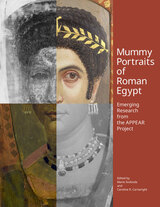
Once interred with mummified remains, nearly a thousand funerary portraits from Roman Egypt survive today in museums around the world, bringing viewers face-to-face with people who lived two thousand years ago. Until recently, few of these paintings had undergone in-depth study to determine by whom they were made and how.
An international collaboration known as APPEAR (Ancient Panel Paintings: Examination, Analysis, and Research) was launched in 2013 to promote the study of these objects and to gather scientific and historical findings into a shared database. The first phase of the project was marked with a two-day conference at the Getty Villa. Conservators, scientists, and curators presented new research on topics such as provenance and collecting, comparisons of works across institutions, and scientific studies of pigments, binders, and supports. The papers and posters from the conference are collected in this publication, which offers the most up-to-date information available about these fascinating remnants of the ancient world.
The free online edition of this open-access publication is available at www.getty.edu/publications/mummyportraits/ and includes zoomable illustrations and graphs. Also available are free PDF, EPUB, and Kindle/MOBI downloads of the book.
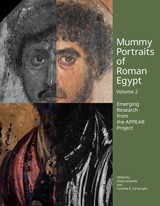
Nearly a thousand funerary portraits from Roman Egypt, once interred with mummified remains, survive in museums around the world. These fascinating paintings offer the unparalleled opportunity for viewers to come face-to-face with people who lived and died some two thousand years ago.
The international collaboration known as APPEAR (Ancient Panel Paintings: Examination, Analysis, and Research) was launched in 2013 to promote the study of these objects and gather research findings in a shared database. This second volume of Mummy Portraits of Roman Egypt compiles seventeen scholarly papers from the APPEAR conference hosted in October 2022 at the Allard Pierson Museum, Amsterdam. Conservators, scientists, and curators presented new research on topics such as technical imaging; nondestructive analytical techniques; provenance and collecting; treatment histories; connoisseurship and forgeries; comparisons of works across institutions; and scientific studies of woods, pigments, coatings, binders, and supports. This volume will be a valuable resource to conservators, scientists, curators, and collectors.
The free online edition of this open-access publication is available at getty.edu/publications/mummy-portraits-2/ and includes zoomable illustrations and graphs. Also available are free PDF and EPUB downloads of the book.
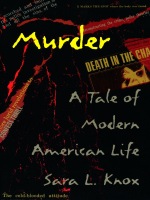
In her approach to the telling of this cultural phenomenon, Knox draws on historical analysis and original research. She discusses such subjects as the continuing existence of capital punishment, the “sensational” American murderers Martha Beck and Ray Fernandez (aka the Honeymoon Killers), the connection between true crime books and romance narratives, and pulp murder novels of the 1930s and 1940s. Analyzing widespread interest in forensic psychiatry, sexuality, mortality, and the relation of gender to society’s reactions to murder, Knox refers to the early work of David Brion Davis, Bill Ellis, and Joel Black. While demonstrating how society’s focus has shifted from the act itself to the psychology of the murderer to the broader social forces at work, she discusses the writings of Willard Motley, William March, Curtis Bok, James Baldwin, and Kate Millett, among others.
Full of anecdotes and insights, Murder is a lively meditation on American culture that includes not only close critical readings of individual texts but also everyday matters of murder’s meaning. It will interest those involved with American studies, cultural studies, and true crime accounts.
The essays in Murder and Its Consequences span several periods in the history of capital punishment in America and the professional career of Leigh Bienen, a leading researcher on the death penalty. “A Good Murder” describes the subtle relationship between high-profile murders and the death penalty, while “The Proportionality Review of Capital Cases” places the well-known study of proportionality in New Jersey within a nationwide context.
“Anomalies” suggests that the arcane protocols written for lethal injection have little to do with insuring humane executions, but rather are concerned with protecting the sensibilities of witnesses and the liability of corrections officials. Other essays address the groundbreaking developments surrounding the death penalty in Illinois, and take a retrospective look at the evolution of her own and the country’s thinking about this complex, divisive topic.

The introduction to this study deftly situates Biron's work in relation to previous theoretical arguments on the social and political dimensions of Latin American writing. The five subsequent chapters offer superb analyses of the individual texts. Like their male protagonists who experiment with the psychological and legal extremes of gender division, these narratives risk nonconformity to the laws of genre in their quest for liberation from violent social and literary conventions. In combining elements of detective stories, crime narratives, psychological case studies, and magical or grotesque realism, they offer metafictional commentary on a network of discourses that confuses images of masculinity, national identity, and political autonomy in postcolonial Latin America.

For more than 300 years Massachusetts executed men and women convicted of murder, but with a sharp eye on “due proceeding” and against the backdrop of popular ambivalence about the death penalty's morality, cruelty, efficacy, and constitutionality. In this authoritative book, Alan Rogers offers a comprehensive account of how the efforts of reformers and abolitionists and the Supreme Judicial Court's commitment to the rule of law ultimately converged to end the death penalty in Massachusetts.
In the seventeenth century, Governor John Winthrop and the Massachusetts General Court understood murder to be a sin and a threat to the colony's well-being, but the Puritans also drastically reduced the crimes for which death was the prescribed penalty and expanded a capital defendant's rights. Following the Revolution, Americans denounced the death penalty as “British and brutish” and the state's Supreme Judicial Court embraced its role as protector of the rights extended to all men by the Massachusetts Constitution. In the 1830s popular opposition nearly stopped the machinery of death and a vote in the Massachusetts House fell just short of abolishing capital punishment.
A post–Civil War effort extending civil rights to all men also stimulated significant changes in criminal procedure. A “monster petition” begging the governor to spare the life of a murderer convicted on slight circumstantial evidence and the grim prospect of executing nine Chinese men found guilty of murder fueled a passionate debate about the death penalty in the decade before World War I.
The trials and executions of Sacco and Vanzetti focused unwanted international and national attention on Massachusetts. This was a turning point. Sara Ehrmann took charge of the newly formed Massachusetts Council Against the Death Penalty, relentlessly lobbied the legislature, and convinced a string of governors not to sign death warrants. In the 1970s the focus shifted to the courts, and eventually, in 1980, the Supreme Judicial Court abolished the death penalty on the grounds that it violated the Massachusetts Constitution.
Over fifty years ago, it became unfashionable—even forbidden—for students of literature to talk about an author’s intentions for a given work. In Murder by Accident, Jody Enders boldly resurrects the long-disgraced concept of intentionality, especially as it relates to the theater.
Drawing on four fascinating medieval events in which a theatrical performance precipitated deadly consequences, Enders contends that the marginalization of intention in critical discourse is a mirror for the marginalization—and misunderstanding—of theater. Murder by Accident revisits the legal, moral, ethical, and aesthetic limits of the living arts of the past, pairing them with examples from the present, whether they be reality television, snuff films, the “accidental” live broadcast of a suicide on a Los Angeles freeway, or an actor who jokingly fired a stage revolver at his temple, causing his eventual death. This book will force scholars and students to rethink their assumptions about theory, intention, and performance, both past and present.
Taggart is annoyed at having to navigate the political structure of the bureaucracy, but he cannot bring himself to leave. He is able to teach, and he likes his proximity to Church archives, local bookstores, and the woman who, according to fate, is still seeing the policeman from The Angel Acronym. All the major characters are back, and Taggart’s romantic rival is given the new murder case, meaning that he has to rely once again on Taggart for his knowledge of the Church’s secrets. This gives both men a reason to keep an eye on the other, making for entertaining situations in a funny, insider send-up of the RLDS community.

When murder is the crime, the clash in the courts is likely to be between two constitutionally enshrined rights—freedom of speech and the right to a fair trial.
Peter E. Kane shows what happened in seven famous court cases when First Amendment rights (concerning freedom of speech) conflicted with Sixth Amendment rights (concerning fair trial). He reports the circumstances of each crime, the court proceedings, and the conduct of the press in the trials of Sam Sheppard, Charles Manson and his followers, John Paul Stevenson, Claus von Bülow, and Arthur Shawcross and the cases involving the Kellie family and the Wayne Clapp murders. Kane’s narrative and analytical approach illuminates legal principles and shows the roles of actual human beings underlying the abstractions of court opinions.
In this revised and expanded edition, Kane considers two new topics stemming from recent court cases: cameras in the courtroom and a code of ethics for crime reporting. Kane explores the issue of cameras through the famous Claus von Bülow retrial, which featured live television broadcasts; regarding a journalistic code, Kane examines the massive pretrial reporting of the serial murders of Arthur Shawcross. Kane notes that sensational crime stories serve the interests of many people: the public wants to read them; journalists want to write them because they can make a reporter’s fortune and reputation; and editors and publishers want to sell papers. The sensational crime story serves everyone’s purpose except that of the accused.
In addition to exploring journalistic ethics and the proper procedures for trial judges in guaranteeing a fair trial, these cases also provide an introduction to the operation of the courts in criminal justice. "The trial court is the arena in which the conflicts between a free press and a fair trial are played out," Kane writes. "This play is described here as are the subsequent evaluations of that play by the appellate courts. Thus the legal process is considered from its beginning with the original crime to the final resolution of the case in the United States Supreme Court."


Murder in Canton takes place in the year 680, as Judge Dee, recently promoted to lord chief justice, is sent incognito to Canton to investigate the disappearance of a court censor. With the help of his trusted lieutenants Chiao Tai and Tao Gan, and that of a clever blind girl who collects crickets, Dee solves a complex puzzle of political intrigue and murder through the three separate subplots "the vanished censor," "the Smaragdine dancer," and "the Golden Bell."
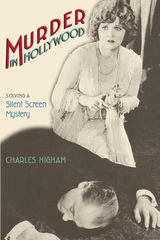
When it was discovered that a famous star of the day had probably killed Taylor, a massive cover-up began—from the removal of crucial evidence to the naming of innocent people as killers—which has continued until now to protect the truth. Murder in Hollywood goes beyond the killing to unearth unknown details about the life of Taylor before his arrival in Hollywood, as well as the stories and histories buried by the crooked authorities and criminals involved the case. The author’s exclusive interviews with the culpable star, his unique possession of long-vanished police records, and the support of the present-day Los Angeles county coroner—who examined the evidence as if the murder had taken place now—have ensured a hair-raising thriller.
Charles Higham successfully presents the most plausible and convincing solution yet to the mystery. In the process he paints a vivid portrait of Hollywood in the 1920s—from its major stars to its bisexual subculture. The result is a compelling answer to a long-standing mystery and a fascinating study of a place, and an industry that, as today, let people reinvent themselves. Murder in Hollywood is more extraordinary than any crime of fiction and more exciting than any action adventure movie.
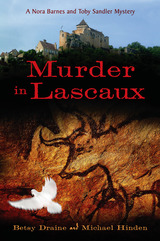
The cave of Lascaux may be closed to the public, but five scholars a day are allowed inside, and Nora Barnes has finagled an appointment. True, she may have fudged a bit in her letter to the authorities, but she does teach art history, and she isn’t about to miss her chance to see the world’s most famous prehistoric paintings. Nora and her high-spirited husband, Toby, are visiting the Dordogne, in the southern French region of the Aquitaine. Aware that the Dordogne’s renown for cave art is matched only by its reputation for delicious cuisine, the couple has also signed up for a cooking class at a nearby château, but they soon find that more than food is on their minds.
During their tour of the cave, another visitor is murdered. When the local inspector pegs Nora and Toby as suspects, they embark on a mission to solve the crime, tracing strange links between a Cro-Magnon symbol and a thirteenth-century religious cult. As they match wits with the crusty inspector, Nora finds herself immersed in the notebooks of a forgotten artist who once lived in the château. In sifting through the artist’s papers and uncovering old secrets, she begins to piece together the motives for the murder. But has she cooked up more trouble than she can handle?
Best Books for General Audiences, selected by the Public Library Reviewers

The MICHIGAN Reading Plus Readers are original fiction written for students who wish to improve their reading skills. The MICHIGAN Reading Plus Readers support the need for extensive reading on topics of interest to today's students. The Readers offer students books in the genres of mystery, science-fiction, and romance. Activities that practice vocabulary and reading skills are provided on the companion website.

New Orleans in the 1920s and 1930s was a deadly place. In 1925, the city’s homicide rate was six times that of New York City and twelve times that of Boston. Jeffrey S. Adler has explored every homicide recorded in New Orleans between 1925 and 1940—over two thousand in all—scouring police and autopsy reports, old interviews, and crumbling newspapers. More than simply quantifying these cases, Adler places them in larger contexts—legal, political, cultural, and demographic—and emerges with a tale of racism, urban violence, and vicious policing that has startling relevance for today.
Murder in New Orleans shows that whites were convicted of homicide at far higher rates than blacks leading up to the mid-1920s. But by the end of the following decade, this pattern had reversed completely, despite an overall drop in municipal crime rates. The injustice of this sharp rise in arrests was compounded by increasingly brutal treatment of black subjects by the New Orleans police department. Adler explores other counterintuitive trends in violence, particularly how murder soared during the flush times of the Roaring Twenties, how it plummeted during the Great Depression, and how the vicious response to African American crime occurred even as such violence plunged in frequency—revealing that the city’s cycle of racial policing and punishment was connected less to actual patterns of wrongdoing than to the national enshrinement of Jim Crow. Rather than some hyperviolent outlier, this Louisiana city was a harbinger of the endemic racism at the center of today’s criminal justice state. Murder in New Orleans lays bare how decades-old crimes, and the racially motivated cruelty of the official response, have baleful resonance in the age of Black Lives Matter.

The quintessential international genre, detective fiction often works under the guise of popular entertainment to expose its extensive readership to complex moral questions and timely ethical dilemmas. The first book-length study of interwar Japanese detective fiction, Murder Most Modern considers the important role of detective fiction in defining the country’s emergence as a modern nation-state.
Kawana explores the interactions between the popular genre and broader discourses of modernity, nation, and ethics that circulated at this pivotal moment in Japanese history. The author contrasts Japanese works by Edogawa Ranpo, Unno Juza, Oguri Mushitaro, and others with English-language works by Edgar Allan Poe, Dashiell Hammett, and Agatha Christie to show how Japanese writers of detective fiction used the genre to disseminate their ideas on some of the most startling aspects of modern life: the growth of urbanization, the protection and violation of privacy, the criminalization of abnormal sexuality, the dehumanization of scientific research, and the horrors of total war.
Kawana’s comparative approach reveals how Japanese authors of the genre emphasized the vital social issues that captured the attention of thrill-seeking readers-while eluding the eyes of government censors.
Sari Kawana is assistant professor of Japanese at the University of Massachusetts, Boston.

In Murder on Shades Mountain Melanie S. Morrison tells the gripping and tragic story of the attack and its aftermath—events that shook Birmingham to its core. Having first heard the story from her father—who dated Nell's youngest sister when he was a teenager—Morrison scoured the historical archives and documented the black-led campaigns that sought to overturn Peterson's unjust conviction, spearheaded by the NAACP and the Communist Party. The travesty of justice suffered by Peterson reveals how the judicial system could function as a lynch mob in the Jim Crow South. Murder on Shades Mountain also sheds new light on the struggle for justice in Depression-era Birmingham. This riveting narrative is a testament to the courageous predecessors of present-day movements that demand an end to racial profiling, police brutality, and the criminalization of black men.

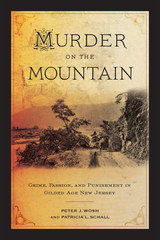
Was Margaret the calculating murderess and adulteress portrayed by the press? Or was she a battered wife pushed to the edge? Or was she, as she claimed to the end, innocent? Murder on the Mountain considers all sides of this fascinating and mysterious true crime story. In turn, it examines why this murder trial became front-page news, as it resonated with public discussions about capital punishment, mental health, anti-immigrant sentiment, domestic violence, and women’s independence. This is a gripping and thought-provoking study of a murder that shocked the nation.
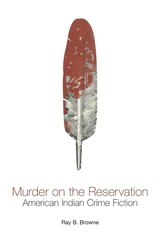

---Kenneth Ledford, Case Western Reserve University

This book explores the inter-relationships between Agatha Christie and her works to seek the wholeness in the Christie experience. The authors perceive an integration in personal experience and moral and aesthetic values between the woman and her art.

Far too many poor Black communities struggle with gun violence and homicide. The result has been the unnatural contortion of Black families and the inter-generational perpetuation of social chaos and untimely death. Young people are repeatedly ripped away from life by violence, while many men are locked away in prisons. In neighborhoods like those of Wilmington, Delaware, residents routinely face the pressures of violence, death, and incarceration. Murder Town, USA is thus a timely ethnography with an innovative structure: the authors helped organize fifteen residents formerly involved with the streets and/or the criminal justice system to document the relationship between structural opportunity and experiences with violence in Wilmington's Eastside and Southbridge neighborhoods.
Earlier scholars offered rich cultural analysis of violence in low-income Black communities, and yet this literature has mostly conceptualized violence through frameworks of personal responsibility or individual accountability. And even if acknowledging the pressure of structural inequality, most earlier researchers describe violence as the ultimate result of some moral failing, a propensity for crime, and the notion of helplessness. Instead, in Murder Town USA, Payne, Hitchens, and Chamber, along with their collaborative team of street ethnographers, instead offer a radical re-conceptualization of violence in low-income Black communities by describing the penchant for violence and involvement in crime overall to be a logical, "resilient" response to the perverse context of structural inequality.
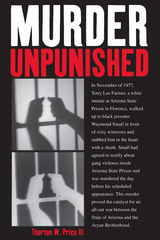
Thornton Price, one of the defense attorneys, now tells how Farmer and Small became cannon fodder in this war to reclaim Arizona’s prisons from rival gangs. These gangs—the Aryan Brotherhood, the Mau Maus, and the Mexican Mafia—were suspected of committing more than a dozen murders over the previous two years, motivating politicians to crack down after the violence could no longer be ignored or contained. To reconstruct the case, Price reviewed 16,000 pages of court records and conducted interviews with key participants to piece together an insider’s account of the crime and the politics behind its investigation. Prison murders should be easy to solve, but investigators quickly learned that the convicts’ code of silence makes these cases often impossible to win in court.
Price focuses on the special problems posed by prison crime by getting inside the skins of men like murderer Terry "Crazy" Farmer and William "Red Dog" Howard, one of the Florence Eleven and a founder of the Aryan Brotherhood. He also presents the perspectives of state investigators and reveals how they calculated to pit black witnesses against white killers until one black would break the code of silence and provoke feuding within the Brotherhood.
Murder Unpunished tells how society’s most outrageous criminals ran the prison through gang violence as outside the walls Arizona struggled to outgrow its Wild West past. Like few other books, it reveals how prisons incubate predatory criminals and gangs, and it exposes the unique difficulties of prosecuting prison crimes. It is a gripping account that cuts to the heart of our penal system and a cautionary tale for citizens who prefer to keep prisons out of sight, out of mind.
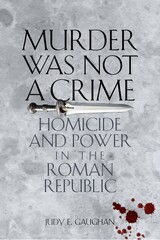
Embarking on a unique study of Roman criminal law, Judy Gaughan has developed a novel understanding of the nature of social and political power dynamics in republican government. Revealing the significant relationship between political power and attitudes toward homicide in the Roman republic, Murder Was Not a Crime describes a legal system through which families (rather than the government) were given the power to mete out punishment for murder.
With implications that could modify the most fundamental beliefs about the Roman republic, Gaughan's research maintains that Roman criminal law did not contain a specific enactment against murder, although it had done so prior to the overthrow of the monarchy. While kings felt an imperative to hold monopoly over the power to kill, Gaughan argues, the republic phase ushered in a form of decentralized government that did not see itself as vulnerable to challenge by an act of murder. And the power possessed by individual families ensured that the government would not attain the responsibility for punishing homicidal violence.
Drawing on surviving Roman laws and literary sources, Murder Was Not a Crime also explores the dictator Sulla's "murder law," arguing that it lacked any government concept of murder and was instead simply a collection of earlier statutes repressing poisoning, arson, and the carrying of weapons. Reinterpreting a spectrum of scenarios, Gaughan makes new distinctions between the paternal head of household and his power over life and death, versus the power of consuls and praetors to command and kill.

The Murderer’s Mother takes readers to the late 1970s in the Indian state of West Bengal, where the Communist Party–led Left Front has just been voted into power. It tells the story of Tapan, who has been installed as a gang leader by the most powerful man in the locality in order to kill “unwanted obstacles,” which he does, one after another. Tapan knows there is no other way he can earn a living, but at the same time, he is desperate to protect his family. He tries to stop petty crime and assaults on women, even as he protects his patron’s interests. Through the dissonance, he becomes both a feared and revered figure, but his patron’s game becomes clear: now the murderer, too, must be eliminated.
Examining revenge narratives as a feminist response to slavery and settler colonialism
From Octavia Butler’s Kindred to The Round House by Louise Erdrich, themes of retribution resound throughout the work of renowned Black and Indigenous women and queer authors. Revealing how the Black Power Movement and the American Indian Movement influenced literature from the 1960s onward, Murderous Feeling explores how these writers have employed revenge narratives as a response to white supremacy and colonialism.
Chad Benito Infante shows how, rather than using retributive violence to cultivate a heroic, masculine ideal, Black and Native women and queer writers use revenge as a way to raise philosophical questions about justice and the reclamation of power in the face of white supremacy. Pairing canonical texts—including work by James Baldwin, Leslie Marmon Silko, Craig Womack, Toni Morrison, and others—he demonstrates how this uniquely queer and feminist literary tradition, the “grammar of interrogation,” allows for generative ambivalence and curiosity about the possibilities and failures of violence.
In highlighting these narratives’ potential to steer anticolonial efforts, Murderous Feeling reconceptualizes literary violence not as an individualized act of cleansing but as a tool for revolutionary inquiry.
Retail e-book files for this title are screen-reader friendly.
Rupert Murdoch's News Corporation is the most powerful media organisation in the world. Murdoch's commercial success is obvious, but less well understood is his successful pursuit of political goals, using News Corporation as his vehicle.
In Murdoch's Politics David McKnight tracks Murdoch's influence, from his support for Reagan and Thatcher, his deal with Tony Blair and attacks on Barack Obama. He examines the secretive corporate culture of News Corporation: its private political seminars for editors, its support for think tanks and its global campaigns on issues like Iraq and climate change.
Including analysis of the phone hacking crisis, possible bribery charges and Murdoch's appearance at the Leveson enquiry, this book is a highly topical study of one of the most influential and controversial figures of the modern age.

Highlights the role of transnational space making in the construction of diasporic Muridiyya identity.
The construction of collective identity among the Muridiyya abroad is a communal but contested endeavor. Differing conceptions of what should be the mission of Muridiyya institutions in the diaspora reveal disciples’ conflicting politics and challenge the notion of the order’s homogeneity. While some insist on the universal dimension of Ahmadu Bamba Mbakke’s calling and emphasize dawa (proselytizing), others prioritize preserving Muridiyya identity abroad by consolidating the linkages with the leadership in Senegal. Diasporic reimaginings of the Muridiyya abroad, in turn, inspire cultural reconfigurations at home.
Drawing from a wide array of oral and archival sources in multiple languages collected in five countries, The Muridiyya on the Move reconstructs over half a century of the order’s history, focusing on mobility and cultural transformations in urban settings. In this groundbreaking work, Babou highlights the importance of the dahira (urban prayer circle) as he charts the continuities and ruptures between Muridiyya migrations. Throughout, he delineates the economic, socio-political, and other forces that powered these population movements, including colonial rule, the economic crises of the postcolonial era, and natural disasters.

Spark achieved international celebrity with The Prime of Miss Jean Brodie (1961), later adapted into a successful play and film. John Updike, Tennessee Williams, Evelyn Waugh, and Graham Greene, among others, applauded her work. She lived part-time in New York City, had an office at the New Yorker, and became friends with Shirley Hazzard and W. H. Auden. Spark ultimately settled in Italy, where for more than thirty years—until her death in 2006—she shared a house with the artist Penelope Jardine. Spark gave Martin Stannard full access to her papers. He interviewed her many times as well as speaking to her colleagues, friends, and family members. The result is an indelible portrait of one of the most significant and emotionally complicated writers of the twentieth century, full of strong feeling, sharp wit, and unabashed ambition.
A Murmuration of Starlings elegizes the martyrs of the civil rights movement, whose names are inscribed on the stone table of the Civil Rights Memorial in Montgomery, Alabama. Individually, Jake Adam York’s poems are elegies for individuals; collectively, they consider the violence of a racist culture and the determination to resist that racism.
York follows Sun Ra, a Birmingham jazz musician whose response to racial violence was to secede from planet Earth, considers the testimony in the trial of J. W. Milam and Roy Bryant for the murder of Emmet Till in 1955, and recreates events of Selma, Alabama, in 1965. Throughout the collection, an invasion of starlings imagesthe racial hatred and bloodshed. While the 1950s spawned violence, the movement in the early 1960s transformed the language of brutality and turned the violence against the violent, says York. So, the starlings, first produced by violence, become instruments of resistance.
York’s collection responds to and participates inrecent movements to find and punish the perpetrators of the crimes that defined the civil rights movement. A Murmuration of Starlings participates in the search for justice, satisfaction, and closure.
READERS
Browse our collection.
PUBLISHERS
See BiblioVault's publisher services.
STUDENT SERVICES
Files for college accessibility offices.
RECENTLY PUBLISHED




UChicago Accessibility Resources
home | accessibility | search | about | contact us
BiblioVault ® 2001 - 2026
The University of Chicago Press