
 A SCHOLARLY BOOK REPOSITORY
2476 start with C start with C
The U.S.-Mexico borderlands have long supported a web of relationships that transcend the U.S. and Mexican nations. Yet national histories usually overlook these complex connections. Continental Crossroads rediscovers this forgotten terrain, laying the foundations for a new borderlands history at the crossroads of Chicano/a, Latin American, and U.S. history. Drawing on the historiographies and archives of both the U.S. and Mexico, the authors chronicle the transnational processes that bound both nations together between the early nineteenth century and the 1940s, the formative era of borderlands history.
A new generation of borderlands historians examines a wide range of topics in frontier and post-frontier contexts. The contributors explore how ethnic, racial, and gender relations shifted as a former frontier became the borderlands. They look at the rise of new imagined communities and border literary traditions through the eyes of Mexicans, Anglo-Americans, and Indians, and recover transnational border narratives and experiences of African Americans, Chinese, and Europeans. They also show how surveillance and resistance in the borderlands inflected the “body politics” of gender, race, and nation. Native heroine Bárbara Gandiaga, Mexican traveler Ignacio Martínez, Kiowa warrior Sloping Hair, African American colonist William H. Ellis, Chinese merchant Lee Sing, and a diverse cast of politicos and subalterns, gendarmes and patrolmen, and insurrectos and exiles add transnational drama to the formerly divided worlds of Mexican and U.S. history.
Contributors. Grace Peña Delgado, Karl Jacoby, Benjamin Johnson, Louise Pubols, Raúl Ramos, Andrés Reséndez, Bárbara O. Reyes, Alexandra Minna Stern, Samuel Truett, Elliott Young
The Continental Dollar is a revelatory history of how the fledgling United States paid for its first war. Farley Grubb upends the common telling of this story, in which the United States printed cross-colony money, called Continentals, to serve as an early fiat currency—a currency that is not tied to a commodity like gold, but rather to a legal authority. As Grubb details, the Continental was not a fiat currency, but a “zero-coupon bond”—a wholly different species of money. As bond payoffs were pushed into the future, the money’s value declined, killing the Continentals’ viability years before the Revolutionary War would officially end.
Drawing on decades of exhaustive mining of eighteenth-century records, The Continental Dollar is an essential origin story of the early American monetary system, promising to serve as the benchmark for critical work for decades to come.

Among the many topics Apter explores are the fate of national literatures in an increasingly transnational literary climate; the volatile stakes of Albert Camus's life and reputation against the backdrop of Algerian civil strife; the use of literary and theatrical productions to "script" national character for the colonies; belly-dancing and aesthetic theory; and the impact of new media on colonial and postcolonial representation, from tourist photography to the videos of Digital Diaspora.
Continental Drift advances debates not just in postcolonial studies, but also in gender, identity, and cultural studies; ethnography; psychoanalysis; and performance studies.
Using recently opened archival documents, including reams of testimony from the épuration (purification) hearings conducted shortly after the war, Christine Leteux has produced the most authoritative and complete history of the company and its impact on the French film industry—both during the war and after. She captures the wide range of responses to the firm from those who were eager to work for a company whose ideology matched their own, to others who reluctantly accepted contracts out of necessity, to those who abhorred the company but felt compelled to participate in order to protect family members from Nazi reprisals. She examines not only the formation and management of Continental Films but also the personalities involved, the fraught and often deadly political circumstances of the period, the critical reception of the films, and many of the more notorious and controversial events.
As Bertrand Tavernier explains in his foreword, Leteux overturns many of the preconceptions and clichés that have come to be associated with Continental Films. Published to rave reviews in French and translated by the author into English, this work shatters expectations and will reinvigorate study of a lesser-known but significant period of French film history.
From Emerson to Rorty, American criticism has grappled in one way or another with the problem of modernity—specifically, how to determine critical and cultural standards in a world where every position seems the product of an interpretation. Part intellectual history, part cultural critique, this provocative book is an effort to shake American thought out of the grip of the nineteenth century—and out of its contingency blues.
Paul Jay focuses his analysis on two strands of American criticism. The first, which includes Richard Poirier and Giles Gunn, has attempted to revive what Jay insists is an anachronistic pragmatism derived from Emerson, James, and Dewey. The second, represented most forcefully by Richard Rorty, tends to reduce American criticism to a metadiscourse about the contingent grounds of knowledge. In chapters on Emerson, Whitman, Santayana, Van Wyck Brooks, Dewey, and Kenneth Burke, Jay examines the historical roots of these two positions, which he argues are marked by recurrent attempts to reconcile transcendentalism and pragmatism. A forceful rejection of both kinds of revisionism, Contingency Blues locates an alternative in the work of the “border studies” critics, those who give our interest in contingency a new, more concrete form by taking a more historical, cultural, and anthropological approach to the invention of literature, subjectivity, community, and culture in a pan-American context.
In the United States today, almost three-quarters of the people teaching in two- and four-year colleges and universities work as contingent faculty. They share the hardships endemic in the gig economy: lack of job security and health care, professional disrespect, and poverty wages that require them to juggle multiple jobs.
This collection draws on a wide range of perspectives to examine the realities of the contingent faculty system through the lens of labor history. Essayists investigate structural changes that have caused the use of contingent faculty to skyrocket and illuminate how precarity shapes day-to-day experiences in the academic workplace. Other essays delve into the ways contingent faculty engage in collective action and other means to resist austerity measures, improve their working conditions, and instigate reforms in higher education. By challenging contingency, this volume issues a clear call to reclaim higher education’s public purpose.
Interdisciplinary in approach and multifaceted in perspective, Contingent Faculty and the Remaking of Higher Education surveys the adjunct system and its costs.
Contributors: Gwendolyn Alker, Diane Angell, Joe Berry, Sue Doe, Eric Fure-Slocum, Claire Goldstene, Trevor Griffey, Erin Hatton, William A. Herbert, Elizabeth Hohl, Miguel Juárez, Aimee Loiselle, Maria C. Maisto, Anne McLeer, Steven Parfitt, Jiyoon Park, Claire Raymond, Gary Rhoades, Jeff Schuhrke, Elizabeth Tandy Shermer, Steven Shulman, Joseph van der Naald, Anne Wiegard, Naomi R Williams, and Helena Worthen
Contingent Maps demonstrates how employing place as an analytical tool transforms Western women’s history. Gray and Gullett depict place as not only a physical location but as a way of understanding, as the spatial configuration of power relations that are always in flux. As a place and many places, the West is therefore always being constructed. All maps are contingent, as Gray and Gullett’s reading of the articles in this collection attest. Contingent Maps offers histories of Wests ranging from the nineteenth century to the near present. This synthesis of feminist history and geography has the potential to revitalize the field of Western women’s history.
Moten emphasizes the ways in which Black women transformed the urban landscape by simultaneously occupying spaces from which they had been historically excluded and creating their own spaces. Black women refused to be marginalized within the historically white and middle‑class Milwaukee Young Women's Christian Association (MYWCA), an association whose mission centered on supporting women in urban areas. Black women forged interracial relationships within this organization and made it, not without much conflict and struggle, one of the most socially progressive organizations in the city. When Black women could not integrate historically white institutions, they created their own. They established financial and educational institutions, such as Pressley School of Beauty Culture, which beautician Mattie Pressley DeWese opened in 1946 as a result of segregation in the beauty training industry. This school served economic, educational, and community development purposes as well as created economic opportunities for Black women. Historically and contemporarily, Milwaukee has been and is still known as one of the most segregated cities in the nation. Black women have always contested urban inequality, by making space for themselves and others on the margins. In so doing, they have transformed both the urban landscape and urban history.
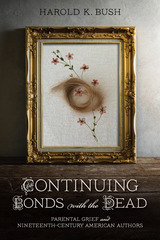
Grief transformed into legacy—how loss shaped the soul of American literature.
Harold K. Bush's Continuing Bonds with the Dead examines the profound transfiguration that the death of a child wrought on the literary work of nineteenth-century American writers. Taking as his subjects Harriet Beecher Stowe, Abraham Lincoln, William Dean Howells, Mark Twain, and W. E. B. Du Bois, Bush demonstrates how the death of a child became the defining "before-and-after moment" in their lives as adults and as artists. In narrating their struggles, Bush maps the intense field of creative energy induced by reverberating waves of parental grief and the larger nineteenth-century culture of mortality and grieving.
Bush explores in detail how each of these five writers grappled with and were altered by the loss of a child. He writes, for example, with moving insights about how the famed author of Adventures of Huckleberry Finn found himself adrift on a river of grief when meningitis struck down his daughter, Susy. In his deeply learned exploration of Twain's subsequent work, Bush illuminates how Twain wrote to cope with Susy's death, to make sense of her persistent presence in his life, and possibly to redeem her loss. Passionate and personal, Bush's insightful prose traces the paths of personal transformation each of these emblematic American writers took in order to survive the spiritual trauma of loss.
The savage Civil War was America's shared "before and after moment," the pivot upon which the nation's future swung. Bush's account of these five writers' grief amplifies our understanding of America's evolving, national relationship to mourning from then to the present.
Gerrish devotes three essays to each of four topics: Martin Luther and the Reformation; religious belief and the Age of Reason; Friedrich Schleiermacher and the renewal of Protestant theology; and Schleiermacher's disciple Ernst Troeltsch, for whom the theological task was to give a rigorous account of the faith prevailing in a particular religious community at a particular time. Gerrish shows how faith itself has become a primary object of inquiry, not only in the newly emerging philosophy of religion but also in a new style of church theology which no longer assumes that faith rests on immutable dogmas. For Gerrish, the new theology of Protestant liberalism takes for its primary object of inquiry the changing forms of the religious life. This important book will interest scholars of systematic Christian theology, modern intellectual and cultural history, and the history and philosophy of religion.


The authors present the first comprehensive examination of the shifting role of the Courts of Appeals, investigating changes over time and presenting the first systematic analyses of those changes. Their work is the first book to utilize the database of the U.S. Courts of Appeals, analyzing over 15,000 cases to examine trends between 1925 and 1988. The book answers questions such as who are the judges? What are their decisional tendencies? What has been the role of region and partisan politics? Who are the litigants? And who has won and who has lost throughout the twentieth century? It is the only current, up-to-date book on the Courts of Appeals and an essential read for all scholars and students interested in American politics and judicial behavior.
Donald R. Songer is Professor of Political Science, University of South Carolina. Reginald S. Sheehan is Associate Professor of Political Science and Director of the Program for Law and Juridical Politics, Michigan State University. Susan B. Haire is Assistant Professor of Political Science, University of Georgia
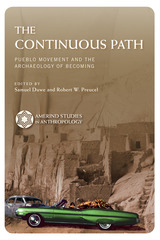
The Continuous Path challenges archaeologists to take Pueblo notions of movement seriously by privileging Pueblo concepts of being and becoming in the interpretation of anthropological data. In this volume, archaeologists, anthropologists, and Native community members weave multiple perspectives together to write histories of particular Pueblo peoples. Within these histories are stories of the movements of people, materials, and ideas, as well as the interconnectedness of all as the Pueblo people find, leave, and return to their middle places. What results is an emphasis on historical continuities and the understanding that the same concepts of movement that guided the actions of Pueblo people in the past continue to do so into the present and the future.
Movement is a never-ending and directed journey toward an ideal existence and a continuous path of becoming. This path began as the Pueblo people emerged from the underworld and sought their middle places, and it continues today at multiple levels, integrating the people, the village, and the individual.

Geographic knowledge generated for the Cold War was a form of power, Farish argues, and it was given an urgency in the panels, advisory boards, and study groups established to address the challenges of an atomic world. He investigates how the scales of the city, the continent, the region, the globe, and, by extension, outer space, were brought together as strategic spaces, categories that provided a cartographic orientation for the Cold War and influenced military deployments, diplomacy, espionage, and finance.
Farish analyzes the surprising range of knowledge production involved in the project of claiming and classifying American space. Backed by military and intelligence funding, physicists and policy makers, soldiers and social scientists came together to study and shape the United States and its place in a divided world.

The anthology challenges undifferentiated, stereotypical images of South Asians in North America, portraying instead the subtleties of their varied, sometimes invisible experiences. It includes fiction, poetry, essays, and photography.

Contraband Cultures reframes smuggling activities across Latin America (including the Caribbean) and its diasporas through the lenses of kinship, political movements, economic exchange, and resistance to capitalist state hegemony, countering the popular representations of smuggling in the region as chaotic, lawless, violent, and exotic.
This book includes a broad range of chapters from social science and humanities scholars, and it uses various methodologies, theoretical traditions, and analytic approaches to explore the efficacy and valence of smuggling as a lens to examine personhood, materiality, statehood, and political (dis)connection across Latin America. Its combination of historic documentation and contemporary ethnographic research highlights the development of these cultural practices while grounding them in the capitalist and colonial refashioning of the entire region since the sixteenth century.

Debra Sabia describes and analyzes the rise, growth, and fragmentation of the popular church and assesses the effect of the Christian base communities on religion, politics, and the nation's social revolutionary experiment.

This history of the political economy of Kenya is the first full length study of the development of the colonial state in Africa.
Professor Berman argues that the colonial state was shaped by the contradictions between maintaining effective political control with limited coercive force and ensuring the profitable articulation of metropolitan and settler capitalism with African societies.
This dialectic of domination resulted in both the uneven transformation of indigenous societies and in the reconstruction of administrative control in the inter-war period.
The study traces the evolution of the colonial state from its skeletal beginnings in the 1890s to the complex bureaucracy of the post-1945 era which managed the growing integration of the colony with international capital. These contradictions led to the political crisis of the Mau Mau emergency in 1952 and to the undermining of the colonial state.
The book is based on extensive primary sources including numerous interviews with Kenyan and British participants. The analysis moves from the micro-level of the relationship of the District Commissioners and the African population to the macro-level of the state and the political economy of colonialism.
Professor Berman uses the case of Kenya to make a sophisticated contribution to the theory of the state and to the understanding of the dynamics of the development of modern African political and economic institutions.
Control and Order in French Colonial Louisbourg, 1713-1758 is the culmination of nearly a quarter century of research and writing on 18th-century Louisbourg by A. J. B. Johnston. The author uses a multitude of primary archival sources-official correspondence, court records, parish registries, military records, and hundreds of maps and plans-to put together a detailed analysis of a distinctive colonial society. Located on Cape Breton Island (then known as Île Royale), the seaport and stronghold of Louisbourg emerged as one of the most populous and important settlements in all of New France. Its economy was based on fishing and trade, and the society that developed there had little or nothing to do with the fur trade, or the seigneurial regime that characterized the Canadian interior. Johnston traces the evolution of a broad range of controlling measures that were introduced and adapted to achieve an ordered civil and military society at Louisbourg. Town planning, public celebrations, diversity in the population, use of punishments, excessive alcohol consumption, the criminal justice system, and sexual abuse are some of the windows that reveal attempts to control and regulate society. A. J. B. Johnston's Control and Order in French Colonial Louisbourg offers both a broad overview of the colony's evolution across its half-century of existence, and insightful analyses of the ways in which control was integrated into the mechanisms of everyday life.
Control of the Imaginary was first published in 1989. Minnesota Archive Editions uses digital technology to make long-unavailable books once again accessible, and are published unaltered from the original University of Minnesota Press editions.
In Control of the Imaginary Luiz Costa Lima explains how the distinction between truth and fiction emerged at the beginning of modern times and why, upon its emergence, fiction fell under suspicion. Costa Lima not only describes the continuous relationship between Western notions of reason and subjectivity over a broad time-frame—the Renaissance to the first decade of the twentieth century—but he uses this occasion to reexamine the literary traditions of France, Italy, Spain, Portugal, England, and Germany. The book reconstructs the dominant frames in the European tradition between the Middle Ages and the nineteenth century from the perspective of a Latin American who sees the culture of his native Brazil haunted by unresolved questions from the Northern Hemisphere. Costa Lima manages to synthesize positions from philosophy, anthropology, sociology, psychology, linguistics, and history without separating the theoretical discussion from his historical reconstructions.
The first chapter situates the problem and grounds the emergent distinction between truth and fiction in a very close analysis of one of the first European historians, Fernao Lopes, who sets the tone for the condemnation of fiction in the name of the truth of history and the potential for individual interpretation. Costa Lima pursues these notions through the aesthetic debates of the seventeenth and eighteenth centuries to the writings of the French historian Michelet. He also devotes an illuminating chapter to the invention of the strictures imposed on fiction.
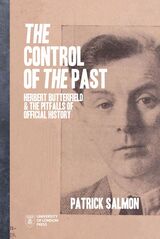
In 1949, English historian Herbert Butterfield published “Official History: Its Pitfalls and Its Criteria,” a now-famous diatribe against the practice of publishing official history. Butterfield was one of the earliest and strongest critics of what he saw as the British government’s attempts to control the past through the writing of history. But why was Butterfield so hostile to state-sanctioned history, and why do his views still matter today?
This important new book details how successive governments have applied a selective approach to the past in order to tell or retell Britain’s national history. Providing a unique overview of the main trends of official history in Britain since World War II, the book details how Butterfield came to suspect that the British government was trying to suppress vital documents revealing the Duke of Windsor’s dealings with Nazi Germany. This seemed to confirm his long-held belief that all governments would seek to manipulate history if they could and conceal the truth if they could not.
At the beginning of the twenty-first century, official history is still being written. The Control of the Past concludes with an insider’s perspective on the many issues it faces today—on freedom of information, social media, and reengaging with our nation’s colonial legacy. Governments have recently been given many reminders that history matters, and Butterfield’s work reminds us that we must remain vigilant in monitoring how they respond to the challenge.
Controlling Anger examines the dilemmas facing rural people who live within the broader context of political instability. Following Uganda’s independence from Britain in 1962, the Bagisu men of Southeastern Uganda developed a reputation for extreme violence.
Drawing on a wide range of historical sources including local court records, statistical survey analysis, and intensive fieldwork, Suzette Heald portrays and analyzes the civil violence that grew out of intense land shortage, the marginalization of the Gisu under British rule, and the construction of male gender identity among the Gisu. Now available in a paperback edition with a new preface by the author, Controlling Anger is an important contribution to rural sociology in Africa.
Controlling Hollywood features ten innovative and accessible essays that examine some of the major turning points, crises, and contradictions affecting the making and showing of Hollywood movies from the 1910s through the early 1970s. The articles included here examine landmark legal cases; various self-regulating agencies and systems in the film industry (from the National Board of Review to the ratings system); and, external to Hollywood, the religious and social interest groups and government bodies that took a strong interest in film entertainment over the decades.
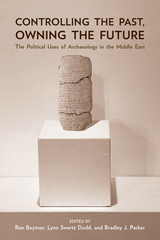
The diverse contributions to this volume share a common framework in which the political use of the past is viewed as a process of social discourse. According to this model, political appropriations are seen as acts of social communication designed to accrue benefits to particular groups. Thus the contributors pay special attention to competing social visions and the filters these impose on archaeological data. But they are also attentive to the potential consequences of their own work. Indeed, as the editors remind us, “people’s lives may be affected, sometimes dramatically, because of the material remains that surround them.”
Rounding out this important volume are critiques by two top scholars who summarize and synthesize the preceding chapters.
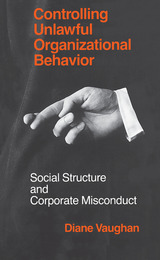
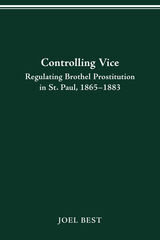
For eighteen years following the Civil War, the police in St. Paul, Minnesota, informally regulated brothel prostitution. Each month, the madams who ran the brothels were charged with keeping houses of ill fame and fined in the city’s municipal court. In effect, they were paying licensing fees in order to operate illegal enterprises. This arrangement was open; during this period, the city’s newspapers published hundreds of articles about vice and its regulation.
Joel Best claims that the sort of informal regulation in St. Paul was common in the late nineteenth century and was far more typical than the better known but brief experiment with legalization tried in St. Louis. With few exceptions, the usual approach to these issues of social control has been to treat informal regulation as a form of corruption, but Best’s view is that St. Paul’s arrangement exposes the assumption that the criminal justice system must seek to eradicate crime. He maintains that other policies are possible.
In a book that integrates history and sociology, the author has reconstructed the municipal court records for most of 1865–83, using newspaper articles, an arrest ledger kept by the St. Paul police, and municipal court dockets. He has been able to trace which madams operated brothels and the identities of many of the prostitutes who lived and worked in them.
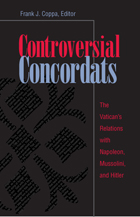
Many studies have shown that images—their presence in the daily lives of the faithful, the means used to control them, and their adaptation to secular uses—were at the heart of the Reformation crisis in northern Europe. But the question as it affects the art of Italy has been raised only in highly specialized studies.
In this book, Alexander Nagel provides the first truly synthetic study of the controversies over religious images that pervaded Italian life both before and parallel to the Reformation north of the Alps. Tracing the intertwined relationship of artistic innovation and archaism, as well as the new pressures placed on the artistic media in the midst of key developments in religious iconography, The Controversy of Renaissance Art offers an important and original history of humanist thought and artistic experimentation from one of our most acclaimed historians of art.

Surveying American political, social, and intellectual life from the late 17th to the end of the 19th century, Burke examines in detail the contested discourse about equality—the way Americans thought and wrote about class, class relations, and their meaning in society.
Burke explores a remarkable range of thought to establish the boundaries of class and the language used to describe it in the works of leading political figures, social reformers, and moral philosophers. He traces a shift from class as a legal category of ranks and orders to socio-economic divisions based on occupations and income. Throughout the century, he finds no permanent consensus about the meaning of class in America and instead describes a culture of conflicting ideas and opinions.

The Conundrum of Russian Capitalism looks at the nature of Russian capitalism following the fall of the Soviet Union, showing how the system originated in the degenerated Soviet bureaucracy and the pressures of global capital. Ruslan Dzarasov provides a detailed analysis of Russian corporate governance, labour practices and investment strategies.
By comparing the practices of Russian companies to the typical models of corporate governance and investment behaviour of big firms in the West, Dzarasov sheds light on the relationship between the core and periphery of the capitalist world-system.
This groundbreaking study shows that Russia's new capitalism is not a break with the country's Stalinist past, but in fact the continuation of that tradition.

However, problems occurred during the development process and costs risings went so out of control that the whole project was almost cancelled a few times. Strategic Air Command was initially against ordering the B-58 for service, not only because of its complexity but also since they saw no advantage of a Mach 2 bomber over other types. Despite this the B-58 entered service at S.A.C. in 1960. It would have a relatively short operational career.
An unprecedented study of how Christianity reshaped Black South Africans’ ideas about gender, sexuality, marriage, and family during the first half of the twentieth century.
This book demonstrates that the primary affective force in the construction of modern Black intimate life in early twentieth-century South Africa was not the commonly cited influx of migrant workers but rather the spread of Christianity. During the late nineteenth and early twentieth centuries, African converts developed a new conception of intimate life, one that shaped ideas about sexuality, gender roles, and morality.
Although the reshaping of Black intimacy occurred first among educated Africans who aspired to middle-class status, by the 1950s it included all Black Christians—60 percent of the Black South African population. In turn, certain Black traditions and customs were central to the acceptance of sexual modernity, which gained traction because it included practices such as lobola, in which a bridegroom demonstrates his gratitude by transferring property to his bride’s family. While the ways of understanding intimacy that Christianity informed enjoyed broad appeal because they partially aligned with traditional ways, other individuals were drawn to how the new ideas broke with tradition. In either case, Natasha Erlank argues that what Black South Africans regard today as tradition has been unequivocally altered by Christianity.
In asserting the paramount influence of Christianity on unfolding ideas about family, gender, and marriage in Black South Africa, Erlank challenges social historians who have attributed the key factor to be the migrant labor system. Erlank draws from a wide range of sources, including popular Black literature and the Black press, African church and mission archives, and records of the South African law courts, which she argues have been underutilized in histories of South Africa. The book is sure to attract historians and other scholars interested in the history of African Christianity, African families, sexuality, and the social history of law, especially colonial law.
The Other Voice in Early Modern Europe - The Toronto Series volume 73
Sperling explains how women were not allowed to marry beneath their social status while men could, especially if their brides were wealthy. Faced with a shortage of suitable partners, patrician women were forced to offer themselves as "a gift not only to God, but to their fatherland," as Patriarch Giovanni Tiepolo told the Senate of Venice in 1619. Noting the declining birth rate among patrician women, Sperling explores the paradox of a marriage system that preserved the nobility at the price of its physical extinction. And on a more individual level, she tells the fascinating stories of these women. Some became scholars or advocates of women's rights, some took lovers, and others escaped only to survive as servants, prostitutes, or thieves.
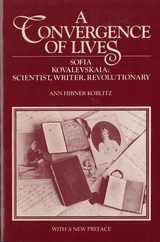
Sofia Kovalevskaia's interest in mathematics was roused at an early age--her attic nursery had been wallpapered with lecture notes for a course on calculus. She spent hours studying the mysterious walls, trying to figure out which page followed from the next. Kovalevskaia (1850-1891) became the only woman mathematician whose name all mathematicians recognize, thanks to her contributions to mathematical analysis. Indeed, she was the first professional woman scientist to win international eminence in any field: the first woman doctorate in mathematics, the first to hold a chair in mathematics, the first to sit on the editorial board of a major scientific journal.
She was also an accomplished writer, a proponent of women's rights and education, a wife and mother in an unconventional marriage, and a champion of radical political causes in Russia and Western Europe--a friend and correspondent of Dostoyevsky, Chekhov, George Eliot, Kropotkin, Helmholtz, and Darwin. This sympathetic portrait of a remarkable woman will appeal to any reader, non-mathematicians and mathematicians alike.
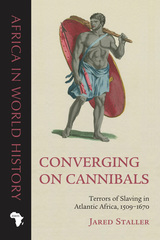
In Converging on Cannibals, Jared Staller demonstrates that one of the most terrifying discourses used during the era of transatlantic slaving—cannibalism—was coproduced by Europeans and Africans. When these people from vastly different cultures first came into contact, they shared a fear of potential cannibals. Some Africans and European slavers allowed these rumors of themselves as man-eaters to stand unchallenged. Using the visual and verbal idioms of cannibalism, people like the Imbangala of Angola rose to power in a brutal world by embodying terror itself.
Beginning in the Kongo in the 1500s, Staller weaves a nuanced narrative of people who chose to live and behave as “jaga,” alleged cannibals and terrorists who lived by raiding and enslaving others, culminating in the violent political machinations of Queen Njinga as she took on the mantle of “Jaga” to establish her power. Ultimately, Staller tells the story of Africans who confronted worlds unknown as cannibals, how they used the concept to order the world around them, and how they were themselves brought to order by a world of commercial slaving that was equally cannibalistic in the human lives it consumed.

When Charles Ping first arrived at Ohio University in 1975, the university was experiencing a decline in student enrollment and confronting serious financial challenges. But rather than focusing on its problems, Ping instead concentrated on Ohio University’s potential.
During the nineteen years that Ping served as president, he guided Ohio University in scholarship, research, and service while substantially increasing the size of the campus through the acquisition of The Ridges. “What attracted me was, essentially, the richness of the campus in people and programs,” said Ping.
A Conversation about Ohio University and the Presidency, 1975–1994 is an edited version of the transcript of videotaped interviews recorded in May and June 2011. “It is a conversation between two old friends,” said Ping of the series of interviews conducted by Sam Crowl, Shakespearean scholar and now trustee professor emeritus.
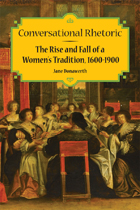
Donawerth traces the development of women’s rhetorical theory through the voices of English and American women (and one much-translated French woman) over three centuries. She demonstrates how they cultivated theories of rhetoric centered on conversation that faded once women began writing composition textbooks for mixed-gender audiences in the latter part of the nineteenth century. She recovers and elucidates the importance of the theories in dialogues and defenses of women’s education by Bathsua Makin, Mary Astell, and Madeleine de Scudéry; in conduct books by Hannah More, Lydia Sigourney, and Eliza Farrar; in defenses of women’s preaching by Ellen Stewart, Lucretia Mott, Catherine Booth, and Frances Willard; and in elocution handbooks by Anna Morgan, Hallie Quinn Brown, Genevieve Stebbins, and Emily Bishop. In each genre, Donawerth explores facets of women’s rhetorical theory, such as the recognition of the gendered nature of communication in conduct books, the incorporation of the language of women’s rights in the defenses of women’s preaching, and the adaptation of sentimental culture to the cultivation of women’s bodies as tools of communication in elocution books.
Rather than a linear history, Conversational Rhetoric follows the starts, stops, and starting over in women’s rhetorical theory. It covers a broad range of women’s rhetorical theory in the Anglo-American world and places them in their social, rhetorical, and gendered historical contexts. This study adds women’s rhetorical theory to the rhetorical tradition, advances our understanding of women’s theories and their use of rhetoric, and offers a paradigm for analyzing the differences between men’s and women’s rhetoric from 1600 to 1900.
Conversations with Third Reich Contemporaries presents excerpts from filmed interviews conducted by British documentary filmmaker Luke Holland across a span of over a decade. These interviews were compiled into the German-language documentary film Final Account (2020), completed shortly before Holland’s death. Most interviewees were young adults when the war ended; some had benefited from Nazism, and others had directly enacted persecution or state violence. In addition to making this vital interview collection more widely accessible, the sourcebook raises critical awareness of issues around representation, authenticity, memory, and the co-production of narratives, reshaping discussions around the role of “ordinary” citizens under the Third Reich. It is the first sourcebook to engage directly with issues of representation and identity after 1945.
Redford examines six masters of the "talking letter": Lady Mary Wortley Montagu, William Cowper, Thomas Gray, Horace Walpole, James Boswell, and Samuel Johnson. All seek the paradoxical goal of artful spontaneity. Each exploits the distinctive resources of the eighteenth-century letter writer: a flexible conversational manner, a repertoire of literary and social allusion, a flair for dramatic impersonation. The voices of these letter writers "make distance, presence," in Samuel Richardson's phrase, by devising substitutes for gesture, vocal inflection, and physical context, turning each letter into a performance—an act. The resulting verbal constructs create a mysterious tension between the claims of fact and the possibilities of art. Redford recovers a neglected literary form and makes possible a deeper understanding of major eighteenth-century writers who devoted much of their talent and time to "the converse of the pen."

The Jewish community of medieval Spain was the largest and most important in the West for more than a thousand years, participating fully in cultural and political affairs with Muslim and Christian neighbors. This stable situation began to change in the 1390s, and through the next century hundreds of thousands of Jews converted to Christianity. Norman Roth argues here with detailed documentation that, contrary to popular myth, the conversos were sincere converts who hated (and were hated by) the remaining Jewish community. Roth examines in depth the reasons for the Inquisition against the conversos, and the eventual expulsion of all Jews from Spain.
“With scrupulous scholarship based on a profound knowledge of the Hebrew, Latin, and Spanish sources, Roth sets out to shatter all existing preconceptions about late medieval society in Spain.”—Henry Kamen, Journal of Ecclesiastical History
“Scholarly, detailed, researched, and innovative. . . . As the result of Roth’s writing, we shall need to rethink our knowledge and understanding of this period.”—Murray Levine, Jewish Spectator
“The fruit of many years of study, investigation, and reflection, guaranteed by the solid intellectual trajectory of its author, an expert in Jewish studies. . . . A contribution that will be particularly valuable for the study of Spanish medievalism.”—Miguel Angel Motis Dolader, Annuario de Estudios Medievales

In a stunning combination of scholarship and storytelling, the award-winning anthropologist Richard Price draws on long-term ethnography, archival documents, cinema and street theater, and Caribbean fiction and poetry to explore how one generation’s powerful historical metaphors could so quickly become the next generation’s trivial pursuit, how memories of oppression, inequality, and struggle could so easily become replaced by nostalgia, complicity, and celebration.
“A superb callaloo of a book. . . . Richard Price has a remarkable grasp of the literatures of the Caribbean, and draws on this resource to explore the underlying insanity of the colonial experience, as well as the bewildering complexities of the postcolonial world where memory is erased or invented according to the demands of a market modernity.”—George Lamming, author of The Pleasures of Exile
“By beautifully crafting elements as disparate as biographical data, sociological studies, literary sources, and archival documents, Richard Price’s research is more fascinating than a piece of fiction.”—Maryse Condé, author of I, Tituba, Black Witch of Salem
“Price does it again. Mixing eras, genres, and voices, he carries the reader through the contradictory streams of historical consciousness in the Caribbean island of Martinique. The result is as complex and as enticing as the sea it evokes.”—Michel-Rolph Trouillot, author of Silencing the Past
“Filled with insights that are at once theoretical, methodological, and ethnographic, The Convict and the Colonel is required reading for anyone interested in colonialism, memory, and contemporary Caribbean societies.”—Jennifer Cole, American Ethnologist

Corbett first worked within the law to help refugees process applications for asylum, but the U.S. Immigration and Naturalization Service soon began a program of arrests; then he began to smuggle refugees from the Mexican border to the homes of citizens willing to provide shelter, making hundreds of trips over the next two years; finally he enlisted the support of the Tucson Ecumenical Council and persuaded John Fife, pastor of the Southside Presbyterian Church, to open that building as a refuge. When legal action against Corbett and the others seemed imminent, Southside became, on March 24, 1982, the first of two hundred churches in the country to declare itself a sanctuary.
Convictions of the Heart takes readers inside the santuary movement to reveal its founders' motives and underlying beliefs, and inside the courtroom to describe the government's efforts to stop it. Although the book addresses many points of view, its primary focus is on the philosophy of Jim Corbett. Rooted in the nonviolence of Gandhi, the Society of Friends, and Martin Luther King, Corbett's beliefs challenged individuals and communities of faith across the country to examine the strength of their commitment to the needs and rights of others.
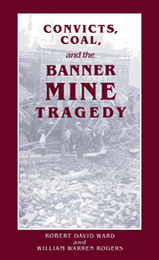
In the late 1870s, Jefferson County, Alabama, and the town of Elyton (near the future Birmingham) became the focus of a remarkable industrial and mining revolution. Together with the surrounding counties, the area was penetrated by railroads. Surprisingly large deposits of bituminous coal, limestone, and iron ore—the exact ingredients for the manufacture of iron and, later, steel—began to be exploited. Now, with transportation, modern extractive techniques, and capital, the region’s geological riches began yielding enormous profits.
This book is about the men who worked involuntarily in the Banner Coal Mine, owned by the Pratt Consolidated Coal Company. And it is about the repercussions and consequences that followed an explosion at the mine in the spring of 1911 that killed 128 convict miners.


The rhetoric of contemporary food production and consumption with a focus on social boundaries
The rhetoric of food is more than just words about food, and food is more than just edible matter. Cookery: Food Rhetorics and Social Production explores how food mediates both rhetorical influence and material life through the overlapping concepts of invention and production. The classical canon of rhetorical invention entails the process of discovering one’s persuasive appeals, whereas the contemporary landscape of agricultural production touches virtually everyone on the planet. Together, rhetoric and food shape the boundaries of shared living.
The essays in this volume probe the many ways that food informs contemporary social life through its mediation of bodies—human and extra-human alike—in the forms of intoxication, addiction, estrangement, identification, repulsion, and eroticism. Our bodies, in turn, shape the boundaries of food through research, technology, cultural trends, and, of course, by talking about it.
Each chapter explores food’s persuasive nature through a unique prism that includes intoxication, dirt, “food porn,” strange foods, and political “invisibility.” Each case offers new insights about the relations between rhetorical influence and embodied practice through food. As a whole Cookery articulates new ways of viewing food’s powers of persuasion, as well as the inherent role of persuasion in agricultural production.
The purpose of Cookery, then, is to demonstrate the deep rhetoricity of our modern industrial food system through critical examinations of concepts, practices, and tendencies endemic to this system. Food has become an essential topic for discussions concerned with the larger social dynamics of production, distribution, access, reception, consumption, influence, and the fraught question of choice. These questions about food and rhetoric are equally questions about the assumptions, values, and practices of contemporary public life.
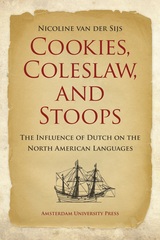
From Santa Claus (after the Dutch folklore saint Sinterklaas) and his sleigh (the pronunciation of the Dutch slee is almost identical) to a dumbhead talking poppycock, the contributions of the Dutch language to American English are indelibly embedded to some of our most vernacular terms and expressions. The menu in most of our restaurants sports some originally Dutch names, and even our dollar is named after a Dutch coin (daalder). In this captivating volume, the renowned linguist Nicoline van der Sijs glosses over 300 Dutch loan words like these that travelled to the New World on board the Dutch ship the Halve Maan, captained by Henry Hudson, which dropped anchor in Manhattan more than 400 years ago. Surprisingly, the Dutch also gave several Native American languages words for everyday things like “pants”, “cat” and “turkey”. Lively and accessible, the information presented in this volume charts the journey of these words into the American territory and languages, from more obscure uses which maybe have survived in only regional dialects to such ubiquitous contributions to our language like Yankee, cookie, and dope. Each entry marks the original arrival of its term into American English and adds up-to-date information on its evolving meaning, etymology, and regional spread. Not to be missed by anyone with a passion for the history behind our everyday expressions, Cookies, Coleslaw and Stoops is the perfect gift for the linguistic adventurer in us all.
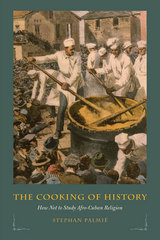

Cooking Plain, Illinois Country Style by Helen Walker Linsenmeyer presents a collection of family recipes created prior to 1900 and perfected from generation to generation, mirroring the delicious and distinctive kind of cookery produced by the mix of people who settled the Illinois Country during this period. Some recipes reflect a certain New England or Southern influence, while others echo a European heritage. All hark back to a simpler style of living, when cooking was plain yet flavorful.
The recipes specify the use of natural ingredients (including butter, lard, and suet) rather than synthetic or ready-mixed foods, which were unavailable in the 1800s. Cooking at the time was pure and unadulterated, and portions were large. Strength-giving food was essential to health and endurance; thus fare was pure, hearty, flavorful, and wholesome.
The many treasures of Cooking Plain, Illinois Country Style include
• basic recipes for mead, originally served to the militiamen of Jackson County; sumac lemonade, made the Indian way; root beer, as it was originally made;
• soups of many kinds—from wholesome vegetable to savory sorrel leaf, enjoyed by the Kaskaskia French;
• old-fashioned fried beefsteak, classic American pot roast and gravy, as well as secret marinades to tenderize the tougher but more flavorful cuts of meat;
• methods for preparing and cooking rabbit, squirrel, wild turkey, venison, pheasant, rattlesnake, raccoon, buffalo, and fish;
• over one hundred recipes for wheat breads, sweet breads, corn breads, and pancakes;
• an array of delectable desserts and confections, including puddings, ice cream, taffy, and feathery-light cakes and pies;
• sections on the uses of herbs, spices, roots, and weeds; instructions for making sausage, jerky, and smoked fish and for drying one’s own fruits and vegetables; and household hints on everything from making lye soap to cooking for the sick.
And there are extra-special nuggets, too, for Mrs. Linsenmeyer laces her cookbook with interesting biographical notes on a number of the settlers and the origin of many of the foods they used. There is also a wealth of historical information on lifestyles and cooking before 1900, plus helpful tips on the use of old-fashioned cooking utensils.
A working cookbook complete in its coverage of every area of food preparation, Cooking Plain, Illinois Country Style will be used and treasured as much today as its recipes were by families of an earlier century. The recipes are not gourmet, but they are certain to please today’s cooks, especially those interested in using local ingredients and getting back to a more natural way of cooking and eating.

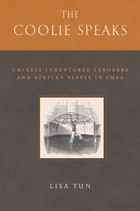
Introducing radical counter-visions of race and slavery, and probing the legal and philosophical questions raised by indenture, The Coolie Speaks offers the first critical reading of a massive testimony case from Cuba in 1874. From this case, Yun traces the emergence of a "coolie narrative" that forms a counterpart to the "slave narrative." The written and oral testimonies of nearly 3,000 Chinese laborers in Cuba, who toiled alongside African slaves, offer a rare glimpse into the nature of bondage and the tortuous transition to freedom. Trapped in one of the last standing systems of slavery in the Americas, the Chinese described their hopes and struggles, and their unrelenting quest for freedom.
Yun argues that the testimonies from this case suggest radical critiques of the "contract" institution, the basis for free modern society. The example of Cuba, she suggests, constitutes the early experiment and forerunner of new contract slavery, in which the contract itself, taken to its extreme, was wielded as a most potent form of enslavement and complicity. Yun further considers the communal biography of a next-generation Afro-Chinese Cuban author and raises timely theoretical questions regarding race, diaspora, transnationalism, and globalization.
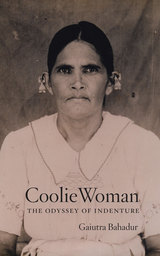
Shunned by society, and sometimes in mortal danger, many coolie women were either runaways, widows, or outcasts. Many of them left husbands and families behind to migrate alone in epic sea voyages—traumatic “middle passages”—only to face a life of hard labor, dismal living conditions, and, especially, sexual exploitation. As Bahadur explains, however, it is precisely their sexuality that makes coolie women stand out as figures in history. Greatly outnumbered by men, they were able to use sex with their overseers to gain various advantages, an act that often incited fatal retaliations from coolie men and sometimes larger uprisings of laborers against their overlords. Complex and unpredictable, sex was nevertheless a powerful tool.
Examining this and many other facets of these remarkable women’s lives, Coolie Woman is a meditation on survival, a gripping story of a double diaspora—from India to the West Indies in one century, Guyana to the United States in the next—that is at once a search for one’s roots and an exploration of gender and power, peril and opportunity.
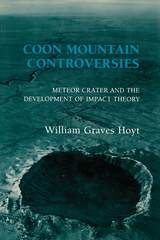
"This meticulously prepared and lucidly written work will surely prove the definitive account of one of the most stimulating intellectual confrontations in the whole history of the earth and planetary sciences. I can recommend it without reservation."—William A. S. Sarjeant,Geoscience Canada
"An important book by an extraordinary author, of interest to anyone fascinated by the ways in which unorthodox science becomes part of conventional wisdom."—Earth Sciences History
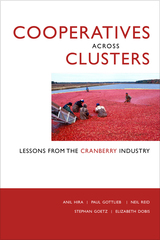
Most agricultural production is of commodity or undifferentiated products. Producers suffer from a roller-coaster ride of price swings, over- or under-production, weather and pest threats, and the inability of family famers to capture anything beyond a small percentage of the final price.
Cooperatives Across Clusters provides lessons from the cranberry industry, a commodity product organized mostly into family farms in seven different clusters around North America. The industry is remarkable in that it's substantially organized around one large cooperative, Ocean Spray. The authors examine how the cooperative came to be, the challenges of coordination and industry leadership across the diverging clusters, and the lessons for cooperation for other agricultural industries.
The book provides a multi-layered contribution to agricultural economics. First, it examines location decisions and what factors supersede growing conditions to allow industries to arise around production. Second, it explores pathways available for farmers to try to overcome, through cooperative organization, the natural boom-bust cycles of commodity price swings. Third, it looks at how cooperative decisions are made, and the challenges of providing industry leadership, including research and development and collective marketing, through a cooperative that faces continual defections and new problems. Finally, through in-depth historical, statistical, and field research, it provides a comprehensive study of the cranberry industry and suggests ways farmers can grow the industry. Agricultural policymakers, farmers, industry specialists, and researchers of agriculture and clusters more generally will find this to be an important and informative new resource.
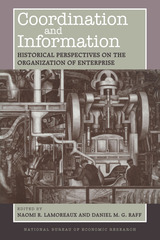
In an ideal world, the market would be the optimal provider of coordination, but in the real world of incomplete information, some activities are better coordinated in other ways. Divided into three parts, this book addresses coordination within firms, at the borders of firms, and outside firms, providing a picture of the overall incidence and logic of economic coordination. The case studies—drawn from the late nineteenth and early twentieth century, when the modern business enterprise was evolving, address such issues as the relationship between coordination mechanisms and production techniques, the logic of coordination in industrial districts, and the consequences of regulation for coordination.
Continuing the work on information and organization presented in the influential Inside the Business Enterprise, this book provides material for business historians and economists who want to study the development of the dissemination of information and the coordination of economic activity within and between firms.
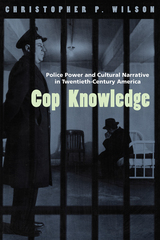
Christopher P. Wilson explores these questions by examining narratives of police power in crime news, popular fiction, and film, showing how they both reflect and influence the real strategies of law enforcement on the beat, in the squad room, and in urban politics. He takes us from Theodore Roosevelt's year of reform with the 1890s NYPD to the rise of "community policing," from the classic "police procedural" film The Naked City to the bestselling novels of LAPD veteran Joseph Wambaugh. Wilson concludes by demonstrating the ways in which popular storytelling about police power has been intimately tied to the course of modern liberalism, and to the rising tide of neoconservatism today.
"A thorough, brilliant blend that crosses disciplines."—Choice
"[S]ophisticated, highly theoretical and ambitious. . . . Connects the history of policing to cultural representations of crime, criminals and cops."—Times Literary Supplement
"[A] deeply satisfying approach to the crime narrative. . . . [Wilson] focuses, ultimately, on the role of police power in cultural storytelling."—American Quarterly

Copenhagen has long been celebrated for its unique fashion, design, innovation, and sustainability practices, yet there has never been a comprehensive history of Copenhagen fashion and its current innovation and sustainability drive. This book fills that gap, assembling a multidisciplinary roster of contributors to examine all aspects of Copenhagen fashion and culture. Grounded in a broad context of Danish culture, industry, media, technology, sustainability, and innovation practices within the wider cultural and economic fields of fashion, the book helps us understand what makes Copenhagen unique.
An extensively documented chronicle of the rise and fall of individual mines, companies, and regions, Copper for America will prove an essential resource for economic and business historians, historians of technology and mining, and western historians.
Cops and Kids analyzes how police regulated juvenile behavior in turn-of-the-century America. Focusing on Los Angeles, Chicago, and Detroit, it examines how police saw their mission, how they dealt with public demands, and how they coped daily with kids. Whereas most scholarship in the field of delinquency has focused on progressive-era reformers who created a separate juvenile justice system, David B. Wolcott’s study looks instead at the complicated, sometimes coercive, relationship between police officers and young offenders. Indeed, Wolcott argues, police officers used their authority in a variety of ways to influence boys’ and girls’ behavior. Prior to the creation of juvenile courts, police officers often disciplined kids by warning and releasing them, keeping them out of courts. Establishing separate juvenile courts, however, encouraged the police to cast a wider net, pulling more young offenders into the new system. While some departments embraced “child-friendly” approaches to policing, others clung to rough-and-tumble methods. By the 1920s and 1930s, many police departments developed new strategies that combined progressive initiatives with tougher law enforcement targeted specifically at growing minority populations.
Cops and Kids illuminates conflicts between reformers and police over the practice of juvenile justice and sheds new light on the origins of lasting tensions between America’s police and urban communities.
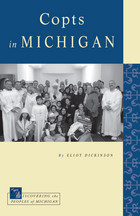
The Copts, or Egyptian Christians, are a relatively small and tight-knit ethno-religious group, numbering perhaps three thousand people and living mostly in the Detroit metropolitan area. Since they began immigrating to Michigan in the mid-1960s, their community has grown exponentially.
Granted exceptional access to the Coptic community, Eliot Dickinson provides the first in- depth profile of this unique and remarkably successful immigrant group. Drawing on personal interviews to infuse the book with warmth and depth. Copts in Michigan offers readers a compelling view into this vibrant community.
Explores literary theory’s fear of and fascination with the mechanical.
Anxieties about fixing the absolute difference between the human being and the mechanical replica, the automaton, are as old as the first appearance of the machine itself. Exploring these anxieties and the efforts they prompted, this book opens a window on one of the most significant, if subtle, ideological battles waged on behalf of the human against the machine since the Enlightenment—one that continues in the wake of technological and conceptual progress today.
A sustained examination of the automaton as early modern machine and as a curious ancestor of the twentieth-century robot, Copying Machines offers extended readings of mechanistic images in the eighteenth century through the prism of twentieth-century commentary. In readings of texts by Lafayette, Molière, Laclos, and La Bruyère—and in a chapter on the eighteenth-century inventor of automatons, Jacques Vaucanson—Catherine Liu provides a fascinating account of ways in which the automaton and the preindustrial machine haunt the imagination of ancien régime France and structure key moments of the canonical literature and criticism of the period.

In 1994, Salomon witnessed the use of khipus as civic regalia on the heights of Tupicocha, in Peru’s central Huarochirí region. By observing the rich ritual surrounding them, studying the village’s written records from past centuries, and analyzing the khipus themselves, Salomon opens a fresh chapter in the quest for khipu decipherment. He draws on a decade’s field research, early colonial records, and radiocarbon and fiber analysis. Challenging the prevailing idea that the use of khipus ended under early Spanish colonial rule, Salomon reveals that these beautiful objects served, apparently as late as the early twentieth century, to document households’ contribution to their kin groups and these kin groups’ contribution to their village. The Cord Keepers is a major contribution to Andean history and, more broadly, to understandings of writing and literacy.

Cordelia Harvey: Civil War Angel includes sidebars on medical care, early nursing, and military prisons. A timeline, glossary of terms, and suggestions for activities and discussion round out this spirited narrative.

Why, essays ask, is a cloistered monk solving murders? How can an author combine a valid detective and an effective healer?

Recent biographies of John Chapman, better known as Johnny Appleseed, have portrayed him as anything from a schizophrenic wandering ascetic to a hedonistic pleasure-seeker. But who was the real man behind the misconceptions?
In this spiritual biography, Ray Silverman explores the stories and the popular misconceptions about Johnny Appleseed as well as the truths behind the legends. As a businessman, Chapman owned nineteen nurseries and twenty other land holdings throughout Pennsylvania, Ohio, and Indiana, brokering deals that belie the popular image of him as a wandering nomad with a tin pot on his head. But it is only once we talk about Chapman’s spiritual convictions that we come to the core of who he was: a thoughtful and also joyful Christian who was deeply moved by the writings of Emanuel Swedenborg.
The picture that emerges is of a lighthearted person whose convictions led him to seek harmony not only in nature but in the spiritual realms also—and to share his bounty with as many people as he could.
Bay Area director, actor, and producer Sean San José takes on the themes of power and politics in his version of Coriolanus, Shakespeare’s exploration of militaristic might and political folly. San José’s take on this little-known classic reimagines the text to be spoken by and for a community of “others.” The translation, which brings Shakespeare’s language into our era, rendering its thematic and dramatic power broadly accessible, is powered by a reexamination of populism in our current political moment.
This translation of Coriolanus was written as part of the Oregon Shakespeare Festival’s Play On! project, which commissioned new translations of thirty-nine Shakespeare plays. These translations present the work of “The Bard” in language accessible to modern audiences while never losing the beauty of Shakespeare’s verse. Enlisting the talents of a diverse group of contemporary playwrights, screenwriters, and dramaturges from diverse backgrounds, this project reenvisions Shakespeare for the twenty-first century. These volumes make these works available for the first time in print—a new First Folio for a new era.
In Corn Kings and One-Horse Thieves, James Krohe Jr. presents an engaging history of an often overlooked region, filled with fascinating stories and surprising facts about Illinois’s midsection.
Krohe describes in lively prose the history of mid-Illinois from the Woodland period of prehistory until roughly 1960, covering the settlement of the region by peoples of disparate races and religions; the exploitation by Euro-Americans of forest, fish, and waterfowl; the transformation of farming into a high-tech industry; and the founding and deaths of towns. The economic, cultural, and racial factors that led to antagonism and accommodation between various people of different backgrounds are explored, as are the roles of education and religion in this part of the state. The book examines remarkable utopian experiments, social and moral reform movements, and innovations in transportation and food processing. It also offers fresh accounts of labor union warfare and social violence directed against Native Americans, immigrants, and African Americans and profiles three generations of political and government leaders, sometimes extraordinary and sometimes corrupt (the “one-horse thieves” of the title). A concluding chapter examines history’s roles as product, recreation, and civic bond in today’s mid-Illinois.
Accessible and entertaining yet well-researched and informative, Corn Kings and One-Horse Thieves draws on a wide range of sources to explore a surprisingly diverse section of Illinois whose history is America in microcosm.
Teddy Roosevelt’s head sculpted from butter. The Liberty Bell replicated in oranges. The Sioux City Corn Palace of 1891 encased with corn, grains, and grasses and stretching for two city blocks—with a trolley line running down its center. Between 1870 and 1930, from county and state fairs to the world’s fairs, large exhibition buildings were covered with grains, fruits, and vegetables to declare in no uncertain terms the rich agricultural abundance of the United States. At the same fairs—but on a more intimate level—ice-cooled cases enticed fairgoers to marvel at an array of butter sculpture models including cows, buildings, flowers, and politicians, all proclaiming the rich bounty and unending promise held by the region.
Often viewed as mere humorous novelties—fun and folksy, but not worthy of serious consideration—these lively forms of American art are described by Pamela H. Simpson in a fascinating and comprehensive history. From the pioneering cereal architecture of Henry Worrall at the Philadelphia Centennial Exposition to the vast corn palaces displayed in Sioux City, Iowa, and elsewhere between 1877 and 1891, Simpson brings to life these dazzling large-scale displays in turn-of-the-century American fairs and festivals. She guides readers through the fascinating forms of crop art and butter sculpture, as they grew from state and regional fairs to a significant place at the major international exhibitions. The Minnesota State Fair’s Princess Kay of the Milky Way contest, Lillian Colton’s famed pictorial seed art, and the work of Iowa’s “butter cow lady,” Norma “Duffy” Lyon, are modern versions of this tradition.
Beautifully illustrated with a bounty of never-before-seen archival images, Corn Palaces and Butter Queens is an accessible history of one of America’s most unique and beguiling Midwestern art forms—an amusing and peculiar phenomenon that profoundly affected the way Americans saw themselves and their country’s potential during times of drought and great depression.
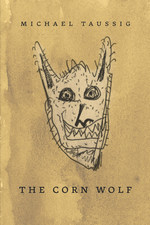
The leading figure of these projects is the corn wolf, whom Wittgenstein used in his fierce polemic on Frazer’s Golden Bough. For just as the corn wolf slips through the magic of language in fields of danger and disaster, so we are emboldened to take on the widespread culture of academic—or what he deems “agribusiness”—writing, which strips ethnography from its capacity to surprise and connect with other worlds, whether peasant farmers in Colombia, Palestinians in Israel, protestors in Zuccotti Park, or eccentric yet fundamental aspects of our condition such as animism, humming, or the acceleration of time.
A glance at the chapter titles—such as “The Stories Things Tell” or “Iconoclasm Dictionary”—along with his zany drawings, testifies to the resonant sensibility of these works, which lope like the corn wolf through the boundaries of writing and understanding.
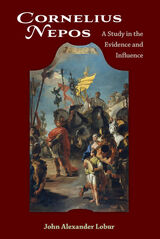
Cornelius Nepos: A Study in the Evidence and Influence begins by exploring the writer's ancient reception, which suggests he was in no way seen as beneath consideration by the Romans themselves. The volume then deconstructs the critical framework that cast him as an "inferior" author in the classical canon. What emerges is an author who reworked Greek historical narratives in a learned, sophisticated way, yet one still limited by the compositional logistics and limitations inherent in ancient scholarship. The study then explores his contemporary relationships and embeds his work among the crucial ideological activity at play in the late Republic and Triumviral periods. Cornelius Nepos spends considerable time on the fragmentary evidence (which highlights Nepos' interest in changes in fashion and consumption) to suggest that he was a valued cultural elder who informed a public eager to recover a sense of tradition during a period of bewilderingly fast social and cultural change. The book finishes with a thematic examination of the entire Lives of the Foreign Commanders (a set of biographies on ancient non-Roman generals) to show that despite the expression of very “Republican” sentiments, he was in fact fashioning an ideological framework for something imperial and quasi-monarchic which, though autocratic, was still antityrannical and imagined as resting on a broad and “democratic” foundation of social consent. Nepos saw that Rome would soon be ruled by one person, and his biographies show how the elites of the day both processed that reality and attempted to circumscribe it for good ends through the creation of new models of legitimacy.
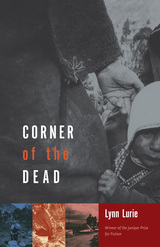
"I use the camera to block my view," says Lisette. This is the start of her double vision—trying to forget and trying to recall—and her struggle to come to terms with the human capacity for cruelty. But the grim reality in Peru is so overpowering that she carries it with her back to New York and through the rest of her life. Having abandoned a lover along with the fight, she desperately tries to find meaning beyond that of mere survival.
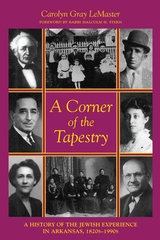

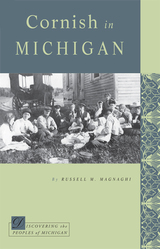
Several ethnic groups have come to Michigan from the British Isles. Each group of immigrants from this region—the Cornish, English, Irish, and Welsh—has played a significant role in American history.
Historic records show that some early nineteenth-century Cornish immigrants were farmers and settled in the Lower Peninsula of Michigan. However, the majority of early Cornish immigrants were miners, and much of their influence was felt in the Upper Peninsula of the state. Many of the underground miners from Cornwall got their start in this region before they migrated to other mining regions throughout the United States.
Hard-working families came from throughout the peninsula of Cornwall, bringing their history, recipes, songs, religions, and other traditions to Michigan’s northern mining country. This nineteenth-century migration brought them to new homes in Keweenaw County, Houghton County, Copper Harbor, Eagle Harbor, and Presque Isle. In the 1830s, newly arrived immigrants also settled in the lower parts of Michigan, in Macomb, Washtenaw, Lenawee, and Oakland counties. The automobile boom of the 1920s sent many of these immigrants and their children to Metro Detroit from the Upper Peninsula, where their traditions are perpetuated today.
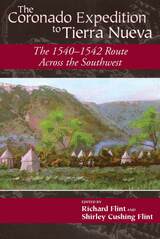
In search of where the expedition went and what peoples it encountered, this volume explores the fertile valleys of Sonora, the basins and ranges of southern Arizona, the Zuni pueblos and the Rio Grande Valley of New Mexico, and the Llano Estacado of the Texas panhandle.
The twenty-one contributors to the volume have pursued some of the most significant lines of research in the field in the last fifty years; their techniques range from documentary analysis and recording traditional stories to detailed examination of the landscape and excavation of campsites and Indian towns. With more confidence than ever before, researchers are closing in on the route of the conquistadors.
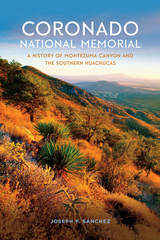
Sánchez is the foremost historian of the area, and he shifts through and decodes a number of key Spanish and English language documents from different archives that tell the story of an historical drama of epic proportions. He combines the regional and the global, starting with the prehistory of the area. He covers Spanish colonial contact, settlement missions, the Mexican Territorial period, land grants, and the ultimate formation of the international border that set the stage for the creation of the Coronado National Memorial in 1952.
Much has been written about southwestern Arizona and northeastern Sonora, and in many ways this book complements those efforts and delivers details about the region’s colorful past.
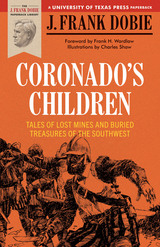
Written in 1930, Coronado's Children was one of J. Frank Dobie's first books, and the one that helped gain him national prominence as a folklorist. In it, he recounts the tales and legends of those hardy souls who searched for buried treasure in the Southwest following in the footsteps of that earlier gold seeker, the Spaniard Coronado.
"These people," Dobie writes in his introduction, "no matter what language they speak, are truly Coronado's inheritors.... l have called them Coronado's children. They follow Spanish trails, buffalo trails, cow trails, they dig where there are no trails; but oftener than they dig or prospect they just sit and tell stories of lost mines, of buried bullion by the jack load... "
This is the tale-spinning Dobie at his best, dealing with subjects as irresistible as ghost stories and haunted houses.
Winner of Two Colorado Book Awards
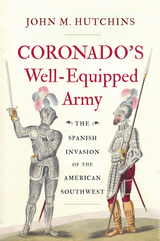
The historic 1540–1542 expedition of Captain-General Francisco Vasquez de Coronado is popularly remembered as a luckless party of exploration which wandered the American Southwest and then blundered onto the central Great Plains of Texas, Oklahoma, and Kansas. The expedition, as historian John M. Hutchins relates in Coronado’s Well-Equipped Army: The Spanish Invasion of the American Southwest, was a military force of about 1,500 individuals, made up of Spanish soldiers, Indian warrior allies, and camp followers. Despite the hopes for a peaceful conquest of new lands—including those of a legendary kingdom of Cibola—the expedition was obliged to fight a series of battles with the natives in present-day Sonora, California, Arizona, and New Mexico. The final phase of the invasion was less warlike, as the members of the expedition searched the Great Plains in vain for a wealthy civilization called Quivira.While much has been written about the march of Coronado and his men, this is the first book to address the endeavor as a military campaign of potential conquest like those conducted by other conquistadors. This helps to explain many of the previously misunderstood activities of the expedition. In addition, new light is cast on the non-Spanish participants, including Mexican Indian allies and African retainers, as well as the important roles of women.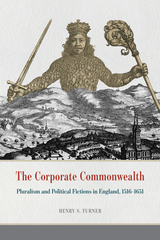
Henry S. Turner uses the resources of economic and political history, literary analysis, and political philosophy to demonstrate how a number of English institutions with corporate associations—including universities, guilds, towns and cities, and religious groups—were gradually narrowed to the commercial, for-profit corporation we know today, and how the joint-stock corporation, in turn, became both a template for the modern state and a political force that the state could no longer contain. Through innovative readings of works by Thomas More, William Shakespeare, Francis Bacon, and Thomas Hobbes, among others, Turner tracks the corporation from the courts to the stage, from commonwealth to colony, and from the object of utopian fiction to the subject of tragic violence. A provocative look at the corporation’s peculiar character as both an institution and a person, The Corporate Commonwealth uses the past to suggest ways in which today’s corporations might be refashioned into a source of progressive and collective public action.

Public trust in corporations plummeted in the wake of the 2008 financial crisis, when “Lehman Brothers” and “General Motors” became dirty words for many Americans. In Corporate Dreams, James Hoopes argues that Americans still place too much faith in corporations and, especially, in the idea of “values-based leadership” favored by most CEOs. The danger of corporations, he suggests, lies not just in their economic power, but also in how their confused and undemocratic values are infecting Americans’ visions of good governance.
Corporate Dreams proposes that Americans need to radically rethink their relationships with big business and the government. Rather than buying into the corporate notion of “values-based leadership,” we should view corporate leaders with the same healthy suspicion that our democratic political tradition teaches us to view our political leaders. Unfortunately, the trend is moving the other way. Corporate notions of leadership are invading our democratic political culture when it should be the reverse.
To diagnose the cause and find a cure for our toxic attachment to corporate models of leadership, Hoopes goes back to the root of the problem, offering a comprehensive history of corporate culture inAmerica, from the Great Depression to today’s Great Recession. Combining a historian’s careful eye with an insider’s perspective on the business world, this provocative volume tracks changes in government economic policy, changes in public attitudes toward big business, and changes in how corporate executives view themselves.
Whether examining the rise of Leadership Development programs or recounting JFK’s Pyrrhic victory over U.S. Steel, Hoopes tells a compelling story of how America lost its way, ceding authority to the policies and values of corporate culture. But he also shows us how it’s not too late to return to our democratic ideals—and that it’s not too late to restore the American dream.
"Elegantly written and sharply argued, Nick Robins' gripping account of the rise and fall of the English East India Company brings to life a crucial episode in the history of globalization."—Sankar Muthu, University of Chicago
The English East India Company was the mother of the modern multinational. Its trading empire encircled the globe, importing Asian luxuries such as spices, textiles, and teas. But it also conquered much of India with its private army and broke open China's markets with opium. The Company's practices shocked its contemporaries and still reverberate today, offering lessons about unfettered capitalism, corporate responsibility, and the legacy of colonialism.
The Corporation That Changed the World is the first book to reveal the Company's enduring legacy as a corporation. This expanded edition explores how the four forces of scale, technology, finance, and regulation drove its spectacular rise and fall. For decades, the Company was simply too big to fail, and stock market bubbles, famines, drug-running, and even duels between rival executives are to be found in this new account.
Table of Contents:
Introduction
Chronology
1 The Hidden Wound
2 The Imperious Company
3 Out of the Shadows
4 The Bengal Revolution
5 The Great East Indian Crash
6 Regulating the Company
7 Justice Will Be Done
8 The Toxic Exchange
10 The Unfettered Business
Epilogue
For Robins, the Company's story provides vital lessons on both the role of corporations in world history and the steps required to make global business accountable today.
Through the lens of “corporeal politics”—the close attention to bodily acts in specific cultural contexts—each study in this book challenges existing dance and theater histories to re-investigate the performer's role in devising the politics and aesthetics of their performance, as well as the multidimensional impact of their lives and artistic works. Corporeal Politics addresses a wide range of performance styles and genres, including dances produced for the concert stage, as well as those presented in popular entertainments, private performance spaces, and street protests.
This new fascicule of the CVA—the tenth issued by the J. Paul Getty Museum and the first ever to be published open access—presents a selection of Attic red-figure column and volute kraters ranging from 520 to 510 BCE through the early fourth century BCE. Among the works included are a significant dinoid volute krater and a volute krater with the Labors of Herakles that is attributed to the Kleophrades Painter.
The free online edition of this open-access catalogue is available at www.getty.edu/publications/cva10/. Also available are free PDF, EPUB, and Kindle/MOBI downloads of the book, CSV and JSON downloads of the object data, and JPG downloads of the catalogue images.
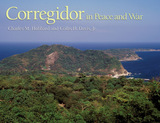
A picturesque island strategically located at the entrance of Manila Bay, Corregidor has had military significance since the days of the Spanish galleon trade. Although its dramatic role in the defense of the Philippines during World War II is well documented, relatively little is known about its history apart from military involvement. This richly illustrated book tells the story of the island and sheds new light on the geopolitical forces that shaped its destiny.
Corregidor in Peace and War is a biography of a mysterious island known simply as “the Rock.” It traces the buildup of armaments and fortifications on the island after the American occupation of the Philippines in 1898, then chronicles clandestine military preparations for an expected war with Imperial Japan. It vividly documents aspects of island life before World War II—including the enviable lifestyle of the American officer corps stationed there, the development of the island’s rail system using imported American streetcars, and the creation of the Philippine Scouts coastal artillery units—and then records its loss and recapture during the struggle with Japan. The final chapter reviews the island’s history since the war.
More than 150 illustrations include maps and photos from both the Spanish and American periods up to the present day—some photographs published more than a century ago and impeccably restored, many never before seen in print. Interweaving new and old photos with informative text, Charles Hubbard and Collis Davis, Jr., provide a guided tour that captures the natural beauty of an island once enjoyed by early residents but subsequently decimated by cannon fire and aerial bombardment. Brilliant color images evoke a place where flora and wildlife coexist alongside abandoned fortifications, documenting stark reminders from times of war. Other photographs show the majestic “suicide cliffs” where Japanese soldiers are said to have jumped to their deaths rather than become prisoners.
Now a tourist destination and historic monument, Corregidor remains a formidable island worthy of its nickname. Corregidor in Peace and War uncovers its many unknown facets and singularly reflects the experiences of both a place and a people that deserve a prominent place in history.
READERS
Browse our collection.
PUBLISHERS
See BiblioVault's publisher services.
STUDENT SERVICES
Files for college accessibility offices.
RECENTLY PUBLISHED




UChicago Accessibility Resources
home | accessibility | search | about | contact us
BiblioVault ® 2001 - 2026
The University of Chicago Press